The Chatbot Was Just the Beginning
Most marketers first touched AI through a chatbot or a copilot, type a prompt, get a draft, edit it, ship it. That's assisted AI. It's useful, but you're still doing most of the work.
An AI agent is different. It receives a goal, breaks it into steps, uses tools to execute each step, checks its own output, and loops until the job is done. You're not in the loop for every action, only when it hits a decision you've marked as requiring human sign-off.
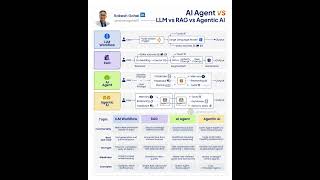
The spectrum looks like this: chatbot (answers questions) → copilot (helps you do a task) → agent (does the task, reports back) → autonomous agent (does the task, evaluates results, adapts, repeats). Most teams are moving from copilot to agent territory right now.
What's Already Agentic in Marketing
Its sales and marketing operations team Sales development reps were losing 282 working days a year to manual CRM admin, which was costing the company over $1 million in missed pipeline every year. Automated the CRM-triggered follow-up and pipeline-tracking workflows end-to-end with Zapier, replacing the manual, event-by-event process reps had been running by hand.
Result: Recovered $1 million in pipeline and saved 282+ workdays per year (Within one year of building the automation).
SourceYou don't need to build from scratch to see agentic AI at work. Several marketing workflows are already running fully or semi-autonomously in production teams.
Social scheduling + captioning pipelines pull content from a brand brief, generate captions in the right voice for each platform, select or generate images, schedule posts, then monitor early engagement and flag underperformers. A human approves the brief; the agent handles everything else.
SEO content pipelines take a keyword cluster, pull the top-ranking pages, identify gaps, outline an article, draft it, score it against SEO criteria, revise it, and push a draft to your CMS. Tools like n8n chained with Claude handle this end-to-end.
Email sequence generation from CRM triggers watches for events (new signup, trial expiration, purchase anniversary), selects the right sequence template, personalizes it with CRM data, writes the copy, and schedules delivery, without a human touching each contact.
Ad creative testing loops generate multiple headline/visual combinations, launch them as test ads, pull performance data after 48 hours, kill the losers, and scale the winners. The agent runs the optimization cycle; you set the budget guardrails.
The Human-in-the-Loop Spectrum
Fully autonomous sounds appealing, but it's rarely the right starting point. The smarter framing is: which steps can run unattended, and which need a human checkpoint?
McKinsey's 2025 research found that hybrid models, where machines handle execution and humans focus on strategy, achieve 40% better performance than fully automated approaches.
Three common operating modes:
- Fully autonomous: agent runs start-to-finish, no approval needed. Best for low-stakes, reversible tasks (internal reporting, research summaries, A/B test execution).
- Approval-gated: agent does the work, pauses at defined checkpoints for human review before publishing or spending. Best for brand-facing content and paid campaigns.
- Assisted: agent drafts, suggests, or flags, human makes every final decision. Best for high-stakes brand moments or regulated content.
Most teams run different workflows at different levels. Don't feel pressure to go fully autonomous, 66% of marketers report being comfortable with AI suggestions for strategy development, but far fewer are ready to remove themselves from the approval chain entirely.
Tools Marketers Are Using
Its marketing and support operations teams Lead data was flowing unreliably between marketing tools and the CRM, causing sync errors that slowed campaign launches and left sales working from incomplete lead records. Built agentic Zapier automations to sync lead data, launch campaigns, and route support work without manual handoffs between marketing and support teams.
Result: Cut lead sync errors by 87% and improved plan efficiency by 31%, while each support agent reclaimed about an hour a day (After rolling out the automation).
SourceYou don't need engineering resources to build agentic workflows. These tools are accessible to marketing ops and growth teams today.
n8n + Claude is the most powerful open-source combination. n8n 2.0 ships with 70+ AI nodes and native LangChain integration, by late 2025, more than 80% of workflows built on n8n incorporated AI agents. Claude handles reasoning, writing, and analysis while n8n handles the orchestration logic and integrations.
Zapier AI (Zapier Agents) lets non-technical marketers build agents that run across 8,000+ apps. You describe what the agent should do in plain language; Zapier builds the automation. Best for straightforward, trigger-based workflows.
Clay is the go-to for outbound and enrichment workflows. It pulls data from 150+ sources, enriches contact records with AI-generated research, and can write personalized first lines for cold emails at scale. It's more opinionated than n8n but faster to deploy for sales-adjacent marketing.
AutoGPT-style agents (CrewAI, LangGraph, custom agent stacks) are for teams with developer support. They allow multi-agent setups where specialized sub-agents handle research, writing, fact-checking, and publishing as separate roles in one pipeline.
What Agentic Marketing Gets Wrong
The failure modes are predictable, and avoidable if you know to look for them.
Hallucinations in brand context are the most common failure. An agent writing at scale doesn't know your brand voice is 'conversational but never slangy' unless that's explicitly in its system prompt. Without a detailed brand brief baked into every agent, output drifts toward generic.
No guardrails on spend or reach is the second failure. Agents connected to ad platforms or email tools can publish or spend before a human notices. Always set hard limits: maximum daily budget, maximum send volume, mandatory pause-and-review for audiences above a certain size.
Approval gaps happen when a workflow is designed for speed and removes checkpoints that were only there because 'someone always checked it.' Map every step and ask: what's the worst thing that happens if this runs wrong? If the answer involves a customer-facing mistake, add a checkpoint.
A 2026 Talkwalker report found that 45% of executives cite lack of visibility into agent decision-making as their primary adoption barrier. Logging every agent action isn't optional, it's how you debug failures and build trust with your team.
Building Your First Agentic Workflow
Start with something repeatable, low-risk, and currently manual. Good first candidates: weekly competitor content summaries, first-draft generation for internal newsletters, or keyword ranking reports.
The 3-step rule for your first agent: (1) choose a task you do the same way every time, (2) write out every step as if explaining to a new hire, (3) identify exactly one place where a human review makes the output safe to ship. Build around that structure.
Define inputs and outputs clearly before building anything. Vague goals produce vague agents. 'Write a social post' is not a spec, 'Write a LinkedIn post under 200 words in our brand voice, based on this blog URL, ending with one question' is.
Add a review step, then remove it only after 20 successful runs. Run the agent in 'draft mode' where every output goes to a Slack channel or Google Doc for human review before publishing. Once it's consistently right, automate the final step.
Measure output quality, not just speed. Track the percentage of outputs that need significant human edits. Above 30% means your system prompt needs work before you increase automation depth.
The 76% of marketers who now use AI for basic content creation (HubSpot 2026) are mostly using copilots. The next wave is agentic, and the teams building repeatable, guarded workflows today are the ones who will run laps around their competition in 2027.