Brand Archetypes (Jung's 12)
In 2025, 81% of consumers say they need to trust a brand before they will even consider buying from it, and archetypes are the fastest, most proven path to building that trust from the first impression.
Quick Summary
- Carl Jung identified 12 universal personality patterns that exist in every human culture. Marketing strategists Margaret Mark and Carol Pearson adapted them for brand building in the 1990s.
- When your brand consistently expresses one archetype, customers feel an immediate gut-level familiarity, the brand feels known even before they can articulate why.
- Emotionally connected customers are worth 52% more than customers who are merely highly satisfied, and archetypes are the structural tool for creating that connection deliberately.
- Brands with consistent identity frameworks for seven or more consecutive years post profit margins averaging 18.6%, more than twice the 8.9% average of brands with inconsistent identities (Omnibound, 2025).
- The single biggest mistake is choosing the archetype you wish you were instead of the one that matches what you actually are.
What It Actually Is
A brand archetype is a single, universal personality type that your brand commits to expressing across every touchpoint, your copy, your visuals, your customer service tone, your product naming, and your partnerships.
The analogy: think of the 12 archetypes as the 12 character types in every story ever told. Every culture in history has had a Hero, a Jester, a Sage, a Caregiver, and a Rebel. These are not invented categories. They are patterns burned into human psychology through thousands of years of shared storytelling. When your brand embodies one of them completely, customers recognize it at a level that bypasses conscious reasoning.
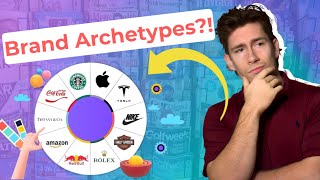
The 12 archetypes are: the Innocent, the Everyman, the Hero, the Outlaw, the Explorer, the Creator, the Ruler, the Magician, the Lover, the Caregiver, the Jester, and the Sage.
Why It Matters (with data)
The business case for archetypes is not theoretical. It runs through every layer of brand performance.
Emotional connection drives revenue directly. Consumers with emotional connections to brands are worth 50% more than highly satisfied customers, and 94% of emotionally connected customers actively recommend that brand to others (Shapo Branding Statistics, 2025). Emotional connection scores are 2.3x more predictive of growth than satisfaction scores alone.
Consistency compounds over time. Brands with consistent identity frameworks for seven or more consecutive years post profit margins averaging 18.6%, compared to 8.9% for inconsistently branded competitors, a 2.1x advantage (Omnibound, 2025). A 5% increase in emotional brand connection can deliver up to a 25% increase in profit.
Inconsistency is more common than you think. 95% of companies have brand guidelines, but only 25% actually enforce them (Shapo, 2025). That enforcement gap is a competitive opening. Archetypes give your team something concrete to enforce because the personality is clear and memorable, not a vague list of adjectives.
Trust is the purchase gateway. 81% of consumers need to trust a brand before considering a purchase, and 90% buy consistently from brands they trust (Shapo, 2025). Archetypes accelerate trust by making your brand feel familiar, customers recognize the personality pattern even if they have never heard of your company.
84% of consumers buy from brands that share their personal values, and 27% actively switch brands for values alignment (Shapo, 2025). Archetypes work because they signal values at a glance, the Hero signals courage, the Caregiver signals service, the Outlaw signals rebellion. Customers self-select the brands whose archetype matches their own self-image.
How It Works: The Playbook
The 12 archetypes are grouped around four core human drives. Your archetype lives in the group that matches your audience's deepest desire.
Step 1, Identify the core desire. Ask: what does my customer fundamentally want? Not what they want to buy, what emotional state they are trying to reach. Safety and predictability. A sense of belonging. The feeling of achievement. Or freedom from constraint.
Step 2, Choose one archetype. Within the matching group, pick the single archetype whose personality traits fit both your audience's desire and your brand's authentic character. Do not pick aspirationally. Pick honestly. A 10-person startup cannot authentically be the Ruler (prestige, authority, absolute control).
Step 3, Write your voice in 3 to 5 words. The Jester: witty, irreverent, surprising, warm. The Sage: precise, calm, authoritative, credible. The Outlaw: bold, direct, provocative, unapologetic. These words become the filter for every piece of content.
Step 4, Set three guardrails. For each archetype, define: "We will always..." (e.g., speak to the customer's capability, not their limitations). "We will never..." (e.g., use fear-based messaging). "We never, under any circumstances..." (e.g., mock the people we serve). Guardrails prevent drift.
Step 5, Audit your touchpoints. Review your website homepage, social bios, email templates, sales decks, and customer service scripts. Read each one and ask: does this sound like a Jester or a Ruler? Flag anything that sounds like a different archetype.
Step 6, Build a documented style guide. Include your archetype name, your voice words, your guardrails, and three to five example sentences that sound right and three to five that sound wrong. This is the document that lets a new copywriter or agency match your brand personality without a two-hour briefing.
The 12 Archetypes at a Glance
| Archetype | Core desire | Natural tone | Example brand |
|---|---|---|---|
| Innocent | Safety and happiness | Warm, simple, hopeful | Dove |
| Everyman | Belonging | Friendly, relatable, unpretentious | IKEA |
| Hero | Mastery and courage | Inspiring, direct, bold | Nike |
| Outlaw | Revolution | Provocative, rebellious, raw | Harley-Davidson |
| Explorer | Freedom and discovery | Adventurous, independent, restless | The North Face |
| Creator | Innovation and expression | Visionary, inventive, detail-driven | Adobe |
| Ruler | Control and order | Authoritative, refined, confident | Mercedes-Benz |
| Magician | Transformation | Visionary, mysterious, enchanting | Disney |
| Lover | Intimacy and pleasure | Sensual, passionate, indulgent | Chanel |
| Caregiver | Service and nurturing | Gentle, reassuring, compassionate | Johnson and Johnson |
| Jester | Fun and playfulness | Witty, irreverent, spontaneous | Old Spice |
| Sage | Truth and knowledge | Precise, calm, credible |
Real Company Examples
Nike, Hero archetype since 1988. Nike's entire brand is built on a single idea: every person has the capacity to push past their limits. The Hero archetype is about proving yourself through effort and overcoming real obstacles, not talent, but will. "Just Do It" launched in 1988 and every campaign since has reinforced the same personality. That value is not built on shoe specs. It is built on decades of consistent Hero storytelling. Every athlete partner, every product name, every ad executes the same archetype.
Global athletic apparel brand, worldwide marketing since 1988 Wanted every campaign to reinforce the same personality: proving yourself through effort against inner limitation, not talent Ran the 'Just Do It' campaign and Hero archetype storytelling consistently across product naming, athlete partnerships, and advertising for over three decades
Result: Retained the title of world's most valuable apparel brand, valued at $31.3 billion in Brand Finance's 2023 apparel brand ranking (1988-2023).
SourceWhat makes Nike's Hero archetype work is specificity in execution. The Villain is not a competitor, it is self-doubt, laziness, and the voice that says you cannot. The Hero customer is anyone willing to fight that voice. This framing lets Nike sell to a 15-year-old basketball player and a 60-year-old first-time marathon runner using the same brand personality. The archetype scales because the enemy (inner limitation) is universal.
Disney, Magician archetype since 1955. The Magician archetype is about transformation: entering an ordinary state and leaving changed, enchanted, or renewed. Disney's brand promise since Walt opened Disneyland in 1955 has been "the happiest place on Earth." That is not a product claim. It is a transformation promise. In MBLM's 2025 Brand Intimacy Study, Disney ranked number one overall, with intimate brands in that study generating $252 billion more in revenue than Fortune 500 benchmarks and achieving 18% higher annual profit growth. Disney has never sold rides or movies. It has always sold transformation from the ordinary to the magical.
Global entertainment and theme park brand, since Disneyland opened in 1955 Built every touchpoint around a transformation promise rather than a product claim Sustained a consistent 'happiest place on Earth' transformation narrative across parks, films, and consumer products for 70 years
Result: Ranked #1 overall in MBLM's 2025 Brand Intimacy Study; intimate brands in that study generated $252 billion more revenue than Fortune 500 benchmarks (1955-2025).
SourceRed Bull is a clean example of the Explorer archetype: "gives you wings" is a freedom promise, not an energy promise. Red Bull does not run ads about the product's ingredients. It sponsors extreme sports, cliff diving, and space jumps because those experiences express the Explorer's core desire: to push beyond normal human limits. The product is almost incidental. The archetype is everything.
Common Mistakes
Mistake 1, Choosing the archetype you wish you were. A fintech startup calling itself the Ruler archetype (power, prestige, absolute control) will feel inauthentic to every customer who interacts with its product. You cannot fake an archetype. Customers detect the mismatch instantly, even if they cannot name it.
Mistake 2, Blending two archetypes. "We are heroic AND caring" sounds like a values statement. It functions as a brand death sentence. Brands that try to be two archetypes end up expressing neither. You can have a secondary archetype influence (roughly 70-80% dominant, 20-30% secondary), but only one archetype should govern every major brand decision.
Mistake 3, Choosing from aesthetics, not values. Many teams pick their archetype based on visual mood boards. The Magician looks cool, so they pick it. But the Magician archetype requires a genuine transformation promise, your product must actually change people's state. If your product does not deliver transformation, the Magician archetype will feel fraudulent.
Mistake 4, Enforcing the archetype only in marketing. If your marketing sounds like the Caregiver (nurturing, service-first, compassionate) but your customer support is cold and scripted, the archetype collapses. Archetypes must govern product decisions, hiring language, customer service tone, and investor communications, not just ad copy.
Mistake 5, Picking a new archetype every year. Brand consistency compounds. Brands that maintained consistent identity frameworks for seven or more years posted 18.6% profit margins versus 8.9% for inconsistently branded competitors (Omnibound, 2025). Changing your archetype to chase a trend resets the compounding clock to zero.
95% of companies have brand guidelines but only 25% enforce them (Shapo, 2025). The most common failure mode is not choosing the wrong archetype, it is choosing the right one and then letting individual team members, agencies, and departments drift away from it over 12-18 months. Build your archetype into onboarding, creative briefs, and quarterly brand audits, not just a PDF that no one reads after the brand launch.
Key Takeaways
- Archetypes work because they tap universal human psychology, customers recognize the personality pattern faster than they process your product claims.
- There are exactly 12 archetypes grouped around four core drives: safety, belonging, mastery, and freedom. Your audience's deepest desire points to the right group.
- Emotionally connected customers are worth 52% more than highly satisfied customers. Archetypes are the structural tool for building emotional connection at scale.
- Choose one archetype honestly, based on what your brand actually is, not what you wish it were. You can evolve over years but you cannot fake it from day one.
- Enforce your archetype across every touchpoint: copy, design, customer service, hiring, product naming, and partnerships. Marketing-only enforcement does not work.
- Consistency compounds: brands maintaining a consistent identity for seven or more years achieve more than double the profit margins of inconsistently branded competitors.