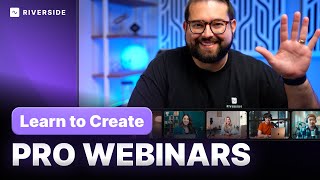
Webinars and Live Content
Webinar volume grew 225% year-over-year in 2025, and B2B brands now run an average of 47 webinars annually. If your competitors are not already running a webinar program, they will be soon.
Quick Summary
- Webinars convert 20-40% of attendees into qualified pipeline opportunities, making them one of the highest-converting content formats in B2B marketing.
- The average webinar attendance rate is 33%, so plan for two-thirds of your registrants to watch the recording instead of attending live. That is not failure, that is expected.
- The ideal webinar length in 2025 is 45-60 minutes. Anything longer bleeds engagement fast.
- Series-format webinars drive 30% more registrations than standalone events.
- The follow-up sequence after a webinar generates more pipeline than the live event itself. Most teams neglect it entirely.
What It Actually Is
A webinar is a live (or pre-recorded) online presentation where a host educates, demos, or discusses a topic with a registered audience. Attendees join by link, interact via chat or Q&A, and typically receive a recording afterward. Live content is the broader category: LinkedIn Live, YouTube Live, virtual summits, and live product demos all qualify.
Think of a webinar like a university lecture that doubles as a sales conversation. The audience signs up because they want to learn. You earn the right to show them what you sell because you taught them something valuable first. That exchange of value is what makes webinar leads so much warmer than any ad click or downloaded PDF.
Why It Matters (with data)
Webinars sit at an unusual intersection of reach and intent. A blog post can be skimmed in 90 seconds. A webinar asks for 45 minutes, and people say yes.
Key numbers from Goldcast's 2025 B2B Webinar Benchmark Report, which analyzed 19,000+ webinars across 418 companies:
- Average attendance per event reached 216 participants, up 7% year-over-year
- 33% attendance rate from registrants, up from 29% the year prior
- 31% of live attendees rewatch the on-demand recording after the event
- 45% of all webinar consumption now happens on-demand, not live
From ON24's 2025 Webinar Benchmark Report:
- Average webinar ROI: 213%
- Cost per lead from webinars: around $72, versus $800+ at trade shows
- 20-40% of attendees convert into qualified pipeline opportunities
From Martal's 2025 webinar lead generation analysis:
- Demo requests from webinars increased 56% since 2022
- 73% of B2B marketers rank webinars as their top source of high-quality leads
- Companies following structured webinar programs see 25-40% improvement in lead quality within the first quarter
Use webinars when:
- Your product or service needs to be seen to be understood
- Your sales cycle runs longer than 30 days
- You want to educate a new audience segment without a one-on-one call
- You have a customer story better demonstrated than written
- You want to generate pipeline that costs a fraction of paid channels
How It Works: The Webinar Playbook
A successful webinar program has five phases. Skipping any one of them cuts the pipeline value of the event significantly.
Phase 1: Topic Selection
This is the highest-leverage decision you make. A narrow, specific topic outperforms a broad one every time.
- Bad: "How to grow your B2B business in 2025"
- Good: "How SaaS CFOs cut churn in Q4 without discounting"
Test your topic with one question: would your ideal customer Google this phrase? If yes, run with it. If no, go narrower.
Adding the word "webinar" to your event title correlates with 66% higher registration rates according to Goldcast's 2025 data. Do not get clever with the naming.
Phase 2: Registration Page and Promotion
Promote for at least three weeks. Use email, LinkedIn organic, and LinkedIn paid if your budget allows.
- Email your existing list first, they convert best
- Post to LinkedIn 3 times per week in the lead-up
- Use a co-presenter from a partner company to double your reach
- Keep the registration page copy short: who is speaking, what you will learn, and when
Phase 3: The Reminder Sequence
Send three reminders: one week out, one day out, and one hour before.
Each reminder should add new value, not just say "don't forget." Include a teaser stat, a question the speaker will answer, or a preview slide. This alone can lift your show-up rate by 10-15 percentage points.
Phase 4: Running the Live Session
The 2025 sweet spot for webinar length is 45-60 minutes. Structure it like this:
- 0-5 min: Quick intro, set expectations, tell them what they will walk away with
- 5-35 min: Core content, keep slides minimal, use real data and examples
- 35-45 min: Live Q&A, this is where buying intent surfaces
- 45-50 min: Clear CTA (demo booking, free audit, resource download)
Use interactive elements throughout. Webinars with polls, Q&A, and chat see 2.3 times higher engagement than passive slide decks. The most-used feature in 2025 is chat, used in 56% of all webinars.
FloQast marketing and demand generation team. Passive slide webinars resulted in low attendee engagement and long sales cycles for accounting and finance software. Structured interactive live sessions with integrated Q&A, attendee engagement scoring, and automated sales follow-up routing for high-intent participants.
Result: Achieved 400% pipeline growth from digital events and launched their flagship virtual conference in 6 weeks. (6 weeks to launch; 12-month measurement).
SourcePhase 5: Follow-Up and Repurposing
This is where most teams fail, and where most pipeline is won or lost.
Send your first follow-up email within 24 hours. Segment your list by engagement:
- High engagement (attended 80%+ of session, asked a question): Offer a direct sales conversation or personalized demo
- Medium engagement (attended 40-80%): Send a case study or relevant resource
- Low engagement (registered but did not attend): Send the recording with a punchy subject line
Repurposing your recording multiplies its value. Goldcast's 2025 data shows teams using AI repurposing generated a 2,903% surge in video clips and an 11,464% increase in text assets from their webinar libraries. The most-used formats: emails (37.1%) and social posts (36.8%).
Uber for Business enterprise demand generation and marketing operations team. Webinar recordings were sitting as single-use archives without generating ongoing pipeline after the live broadcast concluded. Implemented Goldcast to automatically transform live webinar recordings into snackable video clips, social summaries, and automated nurture sequences synced with CRM workflows.
Result: Boosted webinar-influenced pipeline by 25% and scaled post-event content production 2x across enterprise target accounts. (12 months).
SourceSeries-format webinars drive 30% more registrations than standalone events. If your first webinar performs well, do not stop. Build it into a monthly series with a consistent name and format. The audience compounds over time as past attendees return and bring colleagues.
Real Company Examples
Drift, "Drift on Drift" Series (2019-2021)
Drift, the conversational marketing platform, launched a webinar series where their own marketing team showed exactly how they used their product to generate pipeline, including live dashboards and real revenue numbers.
By 2021, individual events in the series drew over 10,000 registrations and the program ranked among their top three demand generation channels. The key was specificity: they used their own data, not hypothetical B2B scenarios. Prospects could see the product working without a formal sales call.
Drift's approach collapsed the distance between education and demonstration. Instead of a product demo disguised as a webinar, they made the education so specific to their use case that the demo happened naturally. The result was high-intent registrants who had already self-qualified before anyone from sales reached out.
HubSpot, Webinar Academy and On-Demand Library (2022-2025)
HubSpot has consistently ranked webinars as one of their top three inbound channels. Their approach treats every live event as a content asset with a long tail. A single 45-minute webinar gets repurposed into a blog post, a short-form video series, a podcast episode, and an email nurture sequence.
By 2024, their on-demand webinar library was generating more qualified leads per month than their live events, because the content stayed relevant and searchable for 12-18 months after recording.
HubSpot's model proves that the live event is the beginning of a webinar's life, not the end. When 45% of webinar consumption happens on-demand, treating your recording as a permanent lead generation asset rather than an archive changes your ROI calculation entirely.
Common Mistakes
1. Treating the live event as the finish line. The most damaging mistake in webinar programs. Most pipeline comes from the 24-72 hour follow-up window, not the live Q&A. A generic "Here is the recording" email is not a follow-up sequence. Build a segmented 3-5 email nurture that routes each group to the right next step.
2. Choosing topics that only existing customers care about. Your webinar topic should be relevant to prospects who have never heard of you. "How to get more out of [Your Product Name]" is a customer success call, not a webinar. "How to reduce SaaS churn by 20% in one quarter" attracts buyers.
3. Measuring success by registrations instead of pipeline. Registrations are a vanity metric. A webinar with 300 registrants and 5 pipeline opportunities outperforms one with 1,000 registrants and zero. Track attendee-to-opportunity rate as your north star.
4. Running one-off webinars instead of a series. A single webinar is hard to optimize. A series gives you recurring promotion channels, a growing on-demand library, and audience compounding. Series format events generate 30% more registrations on average.
5. Ignoring the on-demand audience. 45% of all webinar consumption in 2025 happens on-demand. If your registration page goes dark after the live date, you are cutting your total reach nearly in half. Keep the registration page live, send on-demand viewers to the same follow-up sequence, and treat them the same as live attendees.
6. Using too many speakers without a clear structure. The average webinar in 2025 has 4 speakers. More voices add credibility but require tighter coordination. Without a clear moderator, webinars with multiple guests run over time, lose the Q&A window, and end without a CTA. Assign one person to own the clock and the close.
Key Takeaways
- Webinars generate qualified pipeline at a cost per lead around $72, compared to $800+ at trade shows.
- Aim for 45-60 minutes: enough time to deliver value and run a real Q&A, short enough to keep attention.
- The 33% live attendance rate is normal. The other 67% of your pipeline comes from on-demand viewers and follow-up sequences.
- Series formats compound: each event builds your audience for the next one. Start with one per month and optimize from there.
- Repurpose every webinar into clips, emails, and blog content. Teams using AI for repurposing see nearly 30x more content output from the same recording.
- Segment your follow-up by engagement level. High-engagement attendees deserve a direct sales conversation, not a generic nurture email.