AIDA, PAS, and the Core Frameworks
In 2025, only 20% of readers ever get past the headline. The copy that converts is almost always built on a framework, not talent alone.
Quick Summary
- AIDA (Attention, Interest, Desire, Action) and PAS (Problem, Agitate, Solution) are the two most battle-tested copywriting frameworks in use today.
- Frameworks prevent the single most common copy failure: skipping a stage that the reader needs to feel before buying.
- Personalized CTAs built around structured copy convert 202% better than generic ones, according to HubSpot research cited by Embryo (2024).
- Cold audiences respond best to AIDA; readers who already feel a pain point respond faster to PAS.
- Four frameworks cover nearly every scenario: AIDA, PAS, BAB (Before, After, Bridge), and 4Ps (Promise, Picture, Proof, Push).
What It Actually Is
A copywriting framework is a sequence of psychological states you move a reader through, one stage at a time, so they arrive at a buying decision naturally rather than feeling pushed.
Think of it like a map for a road trip. You already know the destination (a conversion). The framework tells you which roads to take in which order, so you never skip a turn and leave the reader stranded mid-journey.
AIDA and PAS are not magic formulas. They are thinking tools that encode decades of research into human attention and decision-making. Learning them gives you a reliable starting structure when you face a blank page and a deadline.
Why It Matters (with data)
Attention is collapsing at the same time that content volume is exploding. According to a joint SparkToro and Semrush study (2024), 58.5% of Google searches now end without a single external click. Readers make snap judgments in the first line, not the third paragraph.
The data on structured copy versus unstructured copy is clear:
- Only 20% of people read past a headline, according to research cited by Embryo (2024). The framework forces your hook into the first sentence, not buried in paragraph four.
- Landing pages with fewer than 100 words convert 50% better than 500-word versions (Embryo, 2024). Frameworks keep you disciplined about cutting what does not serve a stage.
- Personalized CTAs convert 202% better than generic ones (HubSpot data, via Embryo 2024). The Action stage of AIDA is where most writers write generic CTAs. Frameworks remind you to make it specific.
- Sales emails with 200 to 250 words hit a 19% response rate (Embryo, 2024). PAS is the most efficient structure for hitting that length without skipping urgency.
- Question-based headlines increase website traffic by up to 480% (Embryo, 2024). The Attention stage of AIDA is the natural home for these.
The reason frameworks matter is not that they are clever. It is that most copy fails not because the writer lacks talent but because it skips a stage. A headline grabs Attention, then jumps straight to a price (no Interest, no Desire). Or a blog post spends three paragraphs on a problem but never offers a Solution. Frameworks prevent those gaps structurally.
How It Works: The Playbook
AIDA, Four Stages
Launch video script and landing page flow (YouTube / homepage) Traditional razor giants locked up shelf space with expensive celebrity endorsements and high retail markups; DSC needed to capture cold traffic and convert strangers into monthly subscribers without a TV ad budget Built an irreverent 90-second launch video mapped strictly to AIDA: hooked Attention ('Our blades are f***ing great'), held Interest through a dry factory walkthrough, built Desire by contrasting $1/month home delivery with $20 drugstore razors, and closed on a singular Action to sign up
Result: Generated 12,000 paid subscribers within 48 hours of launch on a $4,500 video production budget, crashing company servers within an hour (48 hours post-launch).
SourceUse AIDA when you are introducing a product or brand to someone who does not know you yet. It works for ads, landing pages, product pages, and email sequences.
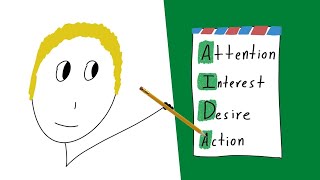
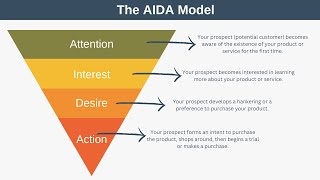
- Attention: Stop the scroll. Use a bold headline, a surprising stat, a direct question, or a provocative statement. This is the only stage where you compete with everything else on the screen.
- Interest: Keep them reading. Show you understand their specific situation. Use concrete details, relevant examples, and language that makes the reader feel seen. Generic language kills Interest faster than anything.
- Desire: Make them want the outcome, not just the product. Shift from features to benefits. Use testimonials, vivid before-and-after descriptions, and specific results. The reader should picture their life after the purchase.
- Action: Tell them exactly what to do next. One clear call to action. Not two options, not a vague "learn more." A single next step with a reason to take it now.
PAS, Three Stages
Landing page copy for an online account security and recovery tool The client was capturing high-intent organic search traffic for queries like 'my gmail account got hacked', but generic feature-heavy copy caused high bounce rates because panicking visitors needed their urgent crisis addressed immediately Rewrote the landing page using the PAS framework: stated the immediate Problem (compromised email account), agitated the real-world consequences (financial fraud, identity theft, locked contacts), and introduced the security recovery tool as the instant, friction-free Solution
Result: Delivered a 55% increase in conversion rate by matching the copy structure to the visitor's emotional crisis (single landing page test).
SourceUse PAS when your reader already feels a pain point and you need to move them to a solution quickly. It is the tightest framework for short-form copy: social ads, email subject lines, short landing pages.
- Problem: Name the exact pain the reader feels right now. Be specific. "You're losing leads" is weaker than "You're losing leads because your follow-up emails go out three days too late."
- Agitate: Show what happens if the problem goes unsolved. This is where most writers bail out early. Agitation is not about being negative. It is about helping the reader feel the real cost of inaction in time, money, or stress. Without Agitate, your solution feels like a nice-to-have.
- Solution: Present your offer as the clear, logical answer to the pain you just made vivid. The reader should feel relief, not persuasion.
BAB, Three Stages
Use BAB (Before, After, Bridge) for testimonials, case studies, and brand storytelling. It is especially powerful for social proof.
- Before: Describe the reader's current painful situation in their own language.
- After: Paint a vivid picture of life once the problem is solved.
- Bridge: Explain how your product or service is the path between those two states.
4Ps, Four Stages
Use 4Ps (Promise, Picture, Proof, Push) for long-form sales pages and direct response copy where you need to build maximum conviction.
- Promise: Make a specific, bold promise in the headline.
- Picture: Paint a vivid sensory image of the result the reader will experience.
- Proof: Provide evidence: data, testimonials, case studies, credentials.
- Push: Drive action with urgency, a clear CTA, and a reason to act now rather than later.
Choosing the Right Framework
Match the framework to audience temperature. Cold audiences (no awareness of your brand or product) need AIDA to build from scratch. Warm audiences (already aware of their pain) move faster with PAS. Existing customers or hot leads respond best to BAB or 4Ps, which assume prior context.
Real Company Examples
Dollar Shave Club (2012), AIDA
Dollar Shave Club launched with a 90-second video that is still taught in marketing courses today. The AIDA execution was textbook and nothing was skipped.
- Attention: The opening line "Our blades are f***ing great" stopped every viewer cold.
- Interest: The video used humor and a factory walkthrough to show exactly how the product worked.
- Desire: CEO Michael Dubin built desire by making the price ($1/month) feel almost embarrassing compared to drugstore alternatives.
- Action: The final screen showed one URL and one simple action: sign up.
The result: 12,000 new subscribers within 48 hours of the video going live, on a production budget of approximately $4,500. The company was acquired by Unilever in 2016 for $1 billion. The framework did not write the video. But it ensured not a single psychological stage was skipped.
Dollar Shave Club, 2012: $4,500 production budget, one AIDA-structured video, 12,000 subscribers in 48 hours. The Desire stage was critical: viewers were not just told the price, they were made to feel that paying more at the drugstore was irrational. That emotional shift is what frameworks build toward, stage by stage.
Basecamp (Ongoing), PAS
Basecamp has used PAS in its homepage copy for years, targeting teams drowning in email and chat tools.
- Problem: "Projects failing because communication is scattered across email, chat, and docs."
- Agitate: The copy elaborates on the chaos: missed deadlines, repeated questions, nobody sure what the latest version is.
- Solution: "Basecamp puts everything in one place so your team always knows what's happening."
The specificity of the Problem and the length of the Agitate section (often three to four sentences) is what separates high-converting PAS from average copy. Basecamp does not name the pain once and move on. They let it sit long enough to feel real.
Basecamp's homepage copy is a clinic in PAS done right. The Agitate section is longer than most writers are comfortable with. That discomfort is intentional: the reader needs to feel the cost of inaction before they will believe the Solution is worth their money and their team's time to switch.
Common Mistakes
1. Skipping Agitate in PAS. The most common PAS failure. Writers name the Problem, then leap to the Solution, leaving the reader with no urgency. Agitation is not optional. It is the stage that converts a problem from background noise to something the reader must solve today.
2. Using a generic Action in AIDA. "Click here" or "Learn more" is not an Action stage. It is a placeholder. A real Action stage names what happens next: "Start your free 14-day trial," "Download the 2025 checklist," "Book your 20-minute call." The more specific, the higher the conversion rate.
3. Writing Interest before earning Attention. Some writers front-load credentials or context before the reader is hooked. If the headline does not stop the scroll, nothing after it gets read. Attention is earned, not assumed. Treat it as a separate job from everything that follows.
4. Picking the wrong framework for the audience temperature. Using PAS on a cold audience (who does not yet feel the problem you are describing) creates confusion rather than urgency. Using AIDA on a warm audience (who already knows exactly what they need) wastes their time with context they do not need. Match framework to awareness level every time.
5. Overloading the Desire stage with features instead of benefits. "Our software has 47 integrations" is a feature. "Your team stops copying data between tools by hand" is a benefit. The Desire stage should be built entirely on outcomes and emotional states, not a product spec sheet.
Key Takeaways
- AIDA is for cold audiences: Attention, Interest, Desire, Action, in that order and never skipped.
- PAS is for pain-aware audiences: Problem, Agitate (long enough to feel real), Solution.
- The Agitate stage in PAS is the most skipped and most important step in short-form copy.
- Personalized, specific CTAs in the Action stage convert 202% better than generic ones.
- 80% of readers never get past the headline: the Attention stage is not a formality, it is the whole game.
- Choose the framework before you write the first word. Structure is what turns a good idea into copy that converts.