How Search Engines Actually Work
What It Is
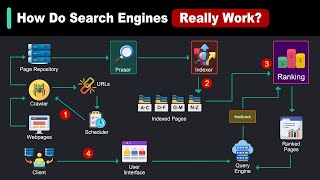
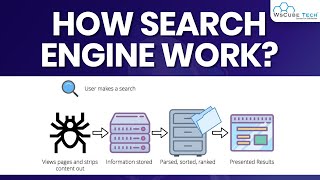
When you type something into Google and hit Enter, results appear in under a second. It feels instant and magical. But behind it is a massive machine that has been doing three distinct jobs around the clock: crawling the web, storing what it finds, and deciding what order to show it to you. Understanding these three stages is the foundation of everything in SEO.
Quick Summary
- Google discovers pages by following links with automated programs called crawlers (also called spiders or bots)
- Only pages that pass Google's quality filters get stored in its index, a database of hundreds of billions of pages
- Ranking happens in real time when you search, Google scores every relevant indexed page against 200+ signals in milliseconds
- A page that no other page links to is called an "orphan page" and crawlers rarely find it
- As of 2023, 96.55% of published pages on the internet get zero organic traffic from Google (Ahrefs study of 1 billion+ pages)
Why It Matters
Understanding the crawl-index-rank pipeline tells you exactly where things can go wrong.
- When your new page does not show up in Google after weeks, it is likely a crawl or indexing problem, not a ranking problem
- When you audit a site, knowing which pages are indexed (versus just published) tells you whether Google is even seeing your work
- When you plan a content strategy, knowing that Google ranks by relevance and authority shapes how you write and structure everything
- When you redesign your site, a poor crawl setup can accidentally block Google from re-indexing pages and wipe out rankings overnight
Google holds approximately 90% of the global search engine market as of mid-2026 (Statcounter), down slightly from over 92% a few years ago as AI-native search tools chip away at the edges. If you learn how Google works, you understand how most of the search market works.
How It Works
Stage 1: Crawling
a 15+ brand digital media company (Popular Science, Field & Stream, The Drive) auditing crawl efficiency across all its sites Googlebot was spending crawl budget on 404s, redirect chains, and low-value pages instead of new articles the SEO team used crawl-log and Search Console data to find and eliminate 404 errors, 3xx errors, and redirect chains draining crawl budget across 15+ sites
Result: a 102% decrease in click depth, a 91% reduction in 404 errors, and a 20% increase in search goal attainment across 4 brands (within a few months of the audit).
SourceCrawling is how search engines discover content. Google runs automated programs called crawlers (also known as spiders or bots) that follow links from page to page across the internet. Think of it like a postal worker who reads every sign on every street, then follows any new street they spot.
When Googlebot (Google's main crawler) visits your page, it reads the text, notes the links, and moves on. If no other pages link to yours, the crawler may never find it at all.
Google also allocates a crawl budget to each site: a rough limit on how many pages Googlebot will crawl per day. Sites with thousands of low-quality or duplicate pages can find that important pages get crawled infrequently, or skipped entirely. This is why keeping your site lean and well-linked matters.
Key facts about crawling:
- Googlebot has a 15 MB page size limit, content beyond that is ignored
- Google switched to mobile-first indexing in 2019, meaning it crawls and indexes the mobile version of your page by default
- Googlebot now uses HTTP/2, which lets it fetch multiple resources more efficiently
Stage 2: Indexing
Once a page is crawled, Google decides whether to add it to its index: a massive database of hundreds of billions of web pages. Indexing is essentially filing the page so it can be retrieved later.
Not every crawled page gets indexed. Google skips:
- Duplicate or near-duplicate content
- Thin pages with little useful information
- Pages blocked by
robots.txtor anoindextag - Pages it deems low-quality or spammy
Only indexed pages can appear in search results. Publishing a page does not mean Google will index it.
Stage 3: Ranking
Ranking happens in real time when someone searches. Google's algorithm evaluates all relevant indexed pages and sorts them by estimated usefulness, relevance, and trustworthiness. Google weighs pages against 200+ ranking signals before displaying results.
Key ranking signals include:
- Keyword relevance: Does the page match what the searcher typed?
- Backlink authority: Do trusted sites link to this page?
- Page experience: Is the page fast, mobile-friendly, and secure (HTTPS)?
- Content quality: Is the content accurate, in-depth, and up to date?
- Search intent match: Does the page give the user what they actually wanted?
Real-World Examples
Airbnb: From Invisible to #1
Airbnb's SEO team discovered in 2014 that millions of people searched for location-specific terms like "apartments in Paris" or "houses near Central Park", but Airbnb's pages were not ranking. The problem was not content quality. The pages were not structured in a way Googlebot could crawl and understand.
By rebuilding their URL structure, creating crawlable city and neighborhood landing pages, and fixing JavaScript rendering issues that blocked Googlebot, Airbnb made their entire inventory visible to Google's index for the first time at scale. Between 2014 and 2016, they restructured over 100,000 location landing pages. The result was a reported 2-3x increase in organic search traffic to those destination pages, with some city pages reaching positions 1-3 for high-intent travel queries.
The lesson from Airbnb: You can have excellent content that nobody sees because crawlers cannot access it. Fixing crawlability is often the highest-leverage SEO action a growing site can take, before writing a single new word.
HubSpot: The Compound Effect of Indexing Discipline
HubSpot publishes thousands of blog posts and pillar pages. In 2019, they ran an experiment: they audited all their low-traffic posts and either updated, merged, or removed them. By consolidating thin and outdated content, they reduced the number of indexed pages but dramatically improved the average quality of what remained. The result was a 106% increase in organic traffic to their blog within a year. Quality of indexed pages mattered far more than quantity.
Common Mistakes
Blocking Google while building your site. Many developers add a noindex tag or block crawlers in robots.txt during staging, then forget to remove it at launch. Google will not index a page that tells it to stay out. Always check your live site with Google Search Console's URL Inspection tool after launch.
Assuming published means indexed. Publishing a page does not guarantee Google will crawl or index it. A page that no other page links to is called an "orphan page", crawlers rarely find them. Always link to new content from somewhere already indexed on your site.
Submit a sitemap and request indexing proactively. Do not wait for Googlebot to wander in. Submit an XML sitemap via Google Search Console and use the URL Inspection tool to request indexing for important new pages immediately. For large sites, audit your crawl budget by checking which pages Googlebot visits most, and whether it is wasting time on low-value URLs like faceted navigation or thin tag pages.
How Search Has Changed Since 2024
an online homework-help and textbook subscription company reporting Q4 2024 earnings Google's AI Overviews began answering the same study questions that used to send searchers to Chegg's own pages Chegg publicly attributed a sharp traffic decline to AI Overviews absorbing homework-help searches directly on the results page, and later filed a formal complaint against Google over the impact
Result: non-subscriber traffic fell 49% year-over-year and total revenue dropped 24% in Q4 2024 (in the quarter following AI Overviews' mid-2024 rollout).
SourceSearch results are no longer just ten blue links. Google now shows:
- AI Overviews: AI-generated summaries that appear above all other results for many queries
- People Also Ask: Expandable question-and-answer boxes pulled from indexed content
- Knowledge Panels: Fact boxes about brands, people, and places
- Featured Snippets: A single answer box taken from a specific page
This means ranking #1 no longer guarantees the most clicks. For many queries, users get answers directly on the results page without clicking through. Understanding this helps you target the right kinds of queries and structure content so Google can extract and feature it.
The One-Line Takeaway
Before Google can rank your page, it must first find it and file it, and either step can silently fail without you ever knowing.
Related Concepts
- Keyword Research, Ranking starts with knowing which queries to target; crawling and indexing only pay off if your pages match what searchers actually type.
- Technical SEO, The discipline dedicated to making sure crawlers can find, access, and understand every page on your site.
- On-Page SEO, Once Google indexes your page, on-page signals are the primary lever for improving where it ranks.