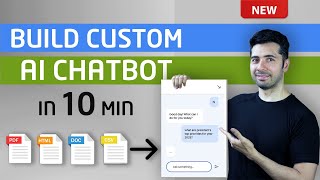
Retrieval-Augmented Generation (RAG) is an AI architecture that connects Large Language Models (LLMs) to secure, external databases to retrieve accurate, context-specific information before generating a response. For marketing teams, RAG allows the creation of internal knowledge bases that draft content aligned with brand guidelines.
Generic LLMs often struggle with hallucinations and lack access to company-specific facts. Connecting these models to your internal assets ensures that the generated text is accurate and on-brand.
This technology turns scattered documents into a centralized, queryable intelligence hub. It allows marketing teams to automate creative drafting without sacrificing quality.
The approach has gone mainstream fast. By 2026, 70% of companies using generative AI augment base models with retrieval systems and vector databases instead of relying on off-the-shelf LLMs, and the enterprise RAG market is projected to grow from $1.94 billion in 2025 to $9.86 billion by 2030.
Why Generic LLMs Fail in Enterprise Marketing
Standard generative AI models are trained on public internet data. While they are creative, they do not know your product specifications, your target personas, or your historic brand voice.
If you ask a generic model to write an ad, it will default to generic internet patterns. This often results in cliches and factual errors that require heavy editing.
Furthermore, pasting sensitive company data into public AI models poses a security risk. Your proprietary information could be used to train future public models.
A secure internal knowledge base solves these issues. It acts as a private brainstorming partner that understands your business rules.
Preparing Marketing Assets for RAG
The performance of a RAG system depends on the quality of the data it accesses. Before uploading documents to a vector database, you must audit and clean your assets.
Remove outdated brand books, legacy product sheets, and failed campaign reports. Upload only your current style guides, high-performing ad copy, and verified customer case studies.
Structure your documents logically. Use metadata tags, such as campaign date and target channel, to help the AI retrieve the most relevant context.
This preparation ensures that the AI references only your best work. It prevents the system from generating copy based on outdated strategies.
Automating the Creative Drafting Flow
corporate communications and PR team Reputation and stakeholder-response teams needed first-draft statements that matched approved company positions without waiting hours for manual review cycles. Built a Stakeholder and Issues Management custom GPT trained on Experian's approved positions and internal knowledge base to auto-draft first responses to emerging issues.
Result: Cut first-draft response time from hours to minutes while keeping tone, accuracy, and messaging consistent across every stakeholder-facing team. (Ongoing program).
SourceOnce your knowledge base is ready, you can build custom GPT assistants for specific marketing roles. These assistants use system prompts that define their task and boundaries.
For example, build a social media assistant trained on your top-performing LinkedIn posts. When you feed it a new blog link, it will automatically draft a post matching your established style.
You can also design workflows that check draft copy against your brand guidelines. The assistant can review its own work and flag any banned words or tone deviations.
This automated review layer saves editing time. It helps maintain voice consistency across large creative campaigns.
Always review AI-generated copy for factual accuracy before publishing. While RAG reduces errors, it does not completely eliminate the possibility of AI hallucinations.
Data Governance and Access Control
semiconductor engineering division Employees pasted confidential source code and meeting notes into public ChatGPT to speed up debugging and note-taking, with no retrieval or access controls on what left the company. After discovering the leak, Samsung banned employee use of ChatGPT and other public generative AI tools company-wide and began building internal, access-controlled AI tools instead.
Result: Company-wide ban enacted within days of discovery, becoming the reference incident that pushed LG and SK Hynix to restrict public generative AI the same month. (April-May 2023).
SourceA shared knowledge base is only as safe as its access rules. Not every employee querying the assistant should be able to retrieve unreleased pricing strategy, confidential contracts, or unannounced product roadmaps just because those documents live in the same vector database as public blog drafts.
Set up role-based access control (RBAC) at the retrieval layer, not just the application layer, so the AI itself only searches documents a given user is cleared to see. This matters more than it sounds: 73% of enterprises cite data security as their primary barrier to broader AI adoption, and unrestricted retrieval is a common reason why (Witness AI, 2025).
The threat isn't only accidental exposure, it's active manipulation. A 2025 USENIX Security study found that injecting just five poisoned documents into a knowledge base of millions of files achieved a 90% attack success rate at corrupting a RAG system's answers to a targeted question. Anyone who can upload a file to a shared drive, a rogue vendor deck, an old competitor teardown, can potentially poison what the assistant tells your team.
If your marketing knowledge base pulls from a shared company drive rather than a curated, permissioned folder, audit who can upload files to that source. Retrieval security starts at the point of ingestion, not the point of the AI's response.
Regulation is catching up too. The EU AI Act's obligations for high-risk AI systems, including a requirement to automatically log every input and retrieved document, became enforceable on August 2, 2026. Most internal marketing copilots won't be classified as high-risk under the Act, but building in that same logging discipline now, tracking which documents were retrieved for which query, costs little today and a lot to retrofit later.
Case Study: B2B Enterprise Software Firm (2024)
In mid 2024, a global B2B software firm implemented a secure RAG-based GPT knowledge base using the Dust platform. They integrated their company Slack history, brand guidelines, and product documentation.
The marketing and sales teams used the assistant to retrieve technical specs and draft client emails. The system cited its sources, allowing teams to verify facts instantly.
This implementation led to a 40% reduction in query-resolution times. It eliminated the need for employees to search through multiple folders for marketing assets.
The teams could draft customized, technically accurate pitches in minutes. This speed boost improved sales response rates.
Case Study: Retailer's Ad Copy Optimizer (2024)
In late 2024, a major e-commerce retailer built a custom RAG system for their creative team. They connected their historic Meta Ads Manager performance data and brand voice guidelines to the database.
The system analyzed which hooks and formats had historically generated the highest click-through rates. It used these patterns to draft new ad variations for product launches.
This system reduced the time required to draft ad creatives by 60%. Additionally, the AI-assisted ads saw an 18% increase in conversion rates.
The campaign succeeded because the copy was grounded in historical performance data. The AI did not have to guess what would work; it matched successful patterns.
Summary Checklist for Marketing RAG
- Unify current brand guidelines and product sheets in a secure folder.
- Clean out outdated assets to prevent the AI from referencing them.
- Apply metadata tags to organize assets by channel and audience.
- Design custom assistants with clear roles and formatting rules.
- Maintain a human-in-the-loop review process for all generated copy.