Multimodal AI for Marketers
In 2026, the most productive marketing teams are not just using AI to write copy faster. They are feeding AI a product photo, a campaign brief, a competitor video, and a customer voicemail at the same time, and getting back a fully aligned creative package in minutes.
Quick Summary
- Multimodal AI understands and generates text, images, audio, and video together in a single workflow, not in separate tools.
- The global multimodal AI market hit USD 2.51 billion in 2025 and is on track for USD 42 billion by 2034, a 36.9% CAGR (Precedence Research).
- Gartner projects that 40% of generative AI solutions will be multimodal by 2027, up from under 10% in 2024.
- Google Lens now processes 20 billion visual searches per month, with 20% being shopping queries. That is 4 billion image-based shopping searches monthly where keyword-only brands are invisible.
- 91% of marketers use AI in some form, but only 41% can prove ROI. Multimodal workflows are where that gap closes because they replace five separate tools with one coherent system.
What It Actually Is
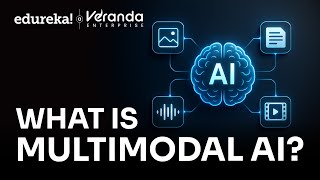
Plain English definition: Multimodal AI is an AI system that processes multiple types of data, called modalities, at the same time. Those modalities are typically text, images, audio, and video. Instead of sending your product photo to one tool and your campaign brief to another, you give everything to one model and it reasons across all of them together.
The analogy that makes it click: Think of a senior creative director reviewing a new campaign. They read the brief, study the product shots, watch the rough video cut, and listen to the voiceover recording, all at once, and give you feedback that accounts for all four at the same time. A traditional AI tool is a junior who can only read documents. A multimodal AI is that creative director.
The leading multimodal models available to marketing teams in 2026 are GPT-5 (strong on text-image-audio reasoning), Gemini (natively multimodal, best for video and YouTube transcript analysis, deep Google Workspace integration), and Claude (strongest for following complex multi-step instructions across formats without drifting). On the video generation side, Veo 3.1 leads on prompt adherence, native audio, and 4K output, while Sora 2 leads on physical realism, and generative video now cuts production time by up to 70% for content teams.
Why It Matters (with data)
The market is moving fast. The global multimodal AI market was valued at USD 2.51 billion in 2025 and is projected to reach USD 42.38 billion by 2034 at a CAGR of 36.92%, according to Precedence Research. Generative multimodal AI already commands a 51.8% market share within the broader multimodal AI category, meaning more than half of all multimodal AI usage today is generative, producing new content rather than just analyzing existing content.
Visual search has already arrived. Google Lens processes 20 billion visual searches per month, with 20% being shopping-related (Google). Brands that only optimize for typed keywords are now invisible to 4 billion monthly shopping intents. Visual search optimization, including structured image data, high-resolution product photography, and descriptive alt text, is now a baseline requirement for product discovery.
Agentic multimodal AI is the next wave. By 2028, 60% of brands will use agentic AI for one-to-one customer interactions, according to a 2025 industry forecast. By 2026, 40% of enterprise applications will include task-specific AI agents, up from under 5% in 2025. These agents will need to handle customer photos, audio queries, and video content, not just chat messages.
The tool fragmentation problem is costing time. Most marketing teams run five to eight disconnected tools: one for copy, one for image editing, one for video, one for analytics, one for social scheduling. Each tool sees only its slice of the campaign. Multimodal AI collapses this into a single reasoning layer that sees the whole picture.
Google Lens: 4 Billion Shopping Searches Per Month, No Keywords Required
Google Lens handles roughly 20 billion visual searches monthly heading into 2026, up from 12 billion in 2023. One in five is a shopping query: a user points their camera at a product and the intent is "where do I buy this?" IKEA's app lets shoppers point at any piece of furniture they see in the real world and instantly surface matching products in the IKEA catalog, combining image recognition, inventory data, and personalized recommendations in one interaction. Brands that have not optimized product images for visual search are missing a traffic channel that does not require a single typed keyword to reach purchase intent.
How It Works: The Playbook
Coca-Cola's 'Create Real Magic' generative AI platform, March 2023 Thousands of user-submitted AI remixes needed brand-safe guardrails without a human reviewing every submission individually The platform enforced pre-approved brand colors, compositions, and asset combinations across every generated piece before the best submissions ran on digital billboards in Times Square and Piccadilly Circus
Result: Thousands of AI-generated brand variations produced in weeks at roughly one-tenth typical production cost, in the same quarter net revenue rose 5% (March-April 2023).
SourceA multimodal marketing workflow runs through five stages. Follow this sequence and you get consistent outputs. Skip any stage and you get the errors listed in the Common Mistakes section below.
Stage 1, Input Collection. Feed the model everything that defines the campaign: the written brief, product photos, past ad performance data, brand voice guidelines, a competitor's recent video ad. The more relevant context you provide, the more coherent the output.
Stage 2, Cross-Modal Analysis. The model does not process each input in isolation. It finds relationships across modalities. If your brief says "premium and minimal" but your product photos have busy backgrounds, it flags the contradiction before production starts. This is where multimodal AI pays for itself in saved revision cycles.
Stage 3, Multi-Format Generation. One prompt run produces outputs across multiple formats simultaneously. A single session might yield three caption options, two image style concepts, a 30-second video script, a subject line for the email announcement, and a Pinterest pin description, all aligned to one creative direction.
Stage 4, Human Review. Non-negotiable. Multimodal models hallucinate with confidence. A generated product image may show the wrong button count on a shirt. A caption may reference a feature your product does not have. A video script may contradict a legal disclaimer. A human must verify every factual claim before anything publishes.
Stage 5, Channel-Specific Optimization. Multimodal generation produces aligned content, not platform-ready content. Instagram compresses images differently than Pinterest. LinkedIn captions have different optimal lengths than Twitter. Run every output through your existing channel checklists after generation.
Start with analysis, not generation. The fastest ROI from multimodal AI is auditing existing content, not creating new content. Upload your last 30 social posts including the images and ask the model to identify which visual-copy combinations drove the highest engagement rates. Then use those patterns to brief your next campaign. Analysis is lower risk, builds team confidence, and surfaces insights you likely missed when reviewing formats separately.
Practical Prompt Patterns
Use these prompt structures to get reliable multimodal outputs:
- Cross-format brief: "Here is our product photo [attach], here is our campaign brief [paste], here is a high-performing past ad [attach]. Generate three caption options, one image style brief, and a 15-second video script. Flag any inconsistencies between the brief and the visual."
- Competitor analysis: "Here are screenshots of three competitor ads [attach]. Identify the visual patterns, color palettes, copy formulas, and CTA structures they share. Then identify gaps our brand could own."
- Brand consistency audit: "Here are 20 of our recent social posts [attach]. Score each on a brand consistency rubric covering tone, color, logo usage, and CTA style. Flag the three most inconsistent posts and explain why."
- Visual search optimization: "Here is our product image [attach]. Describe what a customer would see if they searched for this via Google Lens. What alt text, structured data fields, and image improvements would make it more discoverable?"
Real Company Examples
Coca-Cola: "Create Real Magic" Platform (2023-2024)
Coca-Cola launched an AI platform using GPT-4 and DALL-E that invited artists to create original brand artwork using Coca-Cola's iconic visual assets. The system used multimodal guardrails to ensure every output, regardless of artistic style, used only pre-approved brand colors, compositions, and asset combinations. The best submissions ran on digital billboards in New York and London. The campaign gave Coca-Cola thousands of creative variations produced at near-zero marginal cost while maintaining brand compliance through the AI layer, not through a human review bottleneck.
For their 2024 holiday campaign, Coca-Cola's agencies used tools including Leonardo, Luma, Runway, and Kling to generate environments, scenes, and motion, recreating classic holiday imagery including snowy landscapes, trucks, and polar bears entirely through AI-assisted production.
Sephora: Virtual Artist and Smart Skin Scan (2024-2025)
Sephora's Virtual Artist AR try-on tool inside the Sephora app Customers wanted personalized product recommendations without waiting on a human beauty advisor Virtual Artist combines the live camera face image, structured skin-tone data, and past purchase and browsing history in one recommendation pass
Result: 11% increase in conversion rate and a 30% reduction in product returns (Ongoing since the tool's 2024 relaunch).
SourceSephora's multimodal AI system combines facial recognition, deep learning trained on over 70,000 skin images, and purchase history data to deliver real-time product recommendations. The Virtual Artist tool lets customers try on makeup virtually using their phone camera. The AI simultaneously processes the visual input (face image), structured data (skin tone, undertone classification), and behavioral data (past purchases, browsing) to generate personalized recommendations and tutorials.
The AI-powered chatbot component increased conversion rates by 11% and reduced customer support response times by 40%. The multimodal system works because it reasons across image, behavioral, and text data at the same time rather than in isolated steps.
Nike: Athlete Imagined Revolution (AIR) and Nike Fit
Nike's AIR program used generative AI to co-create athlete-specific shoe designs, processing input from athlete performance data, visual design archives, and natural language descriptions of performance needs. The Nike Fit app uses computer vision and augmented reality to measure foot dimensions via smartphone camera, with accuracy that reduced returns by an estimated 3-7%. Nike's broader AI investment drove digital sales from 10% of revenue in 2019 to 26% in 2023, a period during which multimodal AI tools were central to the personalization infrastructure.
Common Mistakes
Mistake 1: Publishing the first output without human review. Multimodal models are wrong with the same confidence they are right. A generated product image may have the wrong number of product features visible. A video script may contradict a legal disclaimer on your website. A caption may reference a color option that was discontinued. Always treat AI output as a first draft, not a final deliverable.
Mistake 2: Using one model for everything. GPT-5, Gemini, and Claude each have different strengths. Gemini leads on video understanding and connects directly to Google Analytics 4 via Analytics Advisor (launched December 2025). Claude is stronger for complex multi-step instructions without drifting. GPT-5 performs well for mixed text-image-audio tasks in interactive workflows. For video generation, Veo 3.1 is the strongest all-rounder and Sora 2 leads on realism. Match the model to the task rather than defaulting to one tool.
Mistake 3: Skipping channel-specific optimization. A multimodal AI can generate an image and caption together, but that does not mean the image file size suits Instagram, or that the caption length is optimized for LinkedIn's feed algorithm. Multimodal generation is creative alignment, not platform publishing. Always run outputs through your channel-specific specs and checklists.
Mistake 4: Starting with generation instead of analysis. Most marketing teams jump to creating new content with multimodal AI before using it to analyze what they already have. Competitor ad analysis, content library audits, and campaign performance pattern identification are lower-risk entry points that build team capability and produce insights without the risks of publishing AI-generated content.
Mistake 5: Treating multimodal AI as a one-person tool. The biggest gains from multimodal AI come at the workflow level, not the individual prompt level. A single marketer using GPT-4o to generate one image-caption pair is a marginal efficiency gain. A team that has standardized its multimodal input templates, review checklists, and channel optimization steps is a different order of magnitude improvement. Build the workflow before you scale the usage.
The hallucination risk is higher in multimodal outputs than in text-only outputs. When a model generates text alone, a human reader can usually spot a factual error on reading. When a model generates an image alongside a caption, the visual seems to confirm the text, reducing the reviewer's critical scrutiny. A product image showing the wrong variant next to a caption naming that variant looks internally consistent. It is wrong, but it reads as right. Build explicit fact-check steps into your review process that verify claims against source-of-truth documents, not against the AI's other outputs.
Key Takeaways
- Multimodal AI is the first AI category that matches how campaigns actually work: text, image, audio, and video reasoned together, not in separate siloed tools.
- The market is at USD 2.51 billion in 2025 and growing at 36.9% annually. This is not an experimental technology. It is entering standard marketing stacks now.
- Start with analysis of existing content before generating new content. The ROI is faster and the risk is lower.
- Match the model to the task: Gemini for video and Google integrations, Claude for complex multi-step workflows, GPT-5 for mixed-modality creative tasks, Veo 3.1 or Sora 2 for video generation.
- Human review is not optional. Multimodal hallucinations are harder to catch than text hallucinations because the visual and textual outputs appear to confirm each other.
- Build team workflows around multimodal AI, not individual prompts. The competitive advantage comes from systematizing the input templates, review steps, and channel optimization steps, not from individual productivity gains.