RAG for Marketers
In 2026, the gap between generic AI content and brand-accurate AI content has become a competitive moat. RAG (Retrieval-Augmented Generation) is the technology that separates teams who get consistent, accurate AI output from teams who spend hours fixing hallucinated product specs and off-brand copy.
Quick Summary
- RAG connects an AI model to your private documents before it writes anything, so every output is grounded in your approved content.
- Without RAG, AI tools have no access to your brand guidelines, current pricing, product specs, or compliance rules.
- RAG reduces AI hallucination rates by 70-90% compared to standard large language models, according to enterprise deployment data.
- The global RAG market was valued at roughly $1.94 billion in 2025 (MarketsandMarkets, 2025), and a separate analysis puts the 2026 figure at $3.33 billion on the way to $81.51 billion by 2035 at a 42.7% CAGR (Next Move Strategy Consulting, 2026).
- You do not need an engineering team to start: no-code RAG tools are mature and widely available in 2026.
What It Actually Is
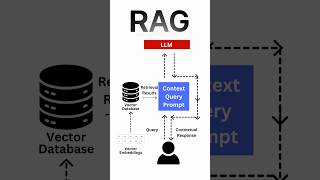
RAG is a technique that gives an AI model access to a private knowledge base before it generates a response. Instead of drawing purely from its training data, the AI first searches your documents, retrieves the most relevant passages, and then uses those passages as its source material when writing.
The analogy: A standard AI copywriter has read the entire internet but has never set foot in your office. A RAG-powered AI copywriter has that same broad knowledge base AND has your brand guidelines, your latest product sheet, your approved claims list, and your compliance rules open on their desk before they type a single word. Every sentence they write is checked against your documents first.
What is a vector database? RAG relies on a vector database to store your documents. Instead of indexing by keyword, a vector database converts text into mathematical representations called embeddings that capture meaning. When you search it, the system finds passages that are semantically relevant to your query, not just ones that share the same words. Popular options include Pinecone, Weaviate, Chroma, and Qdrant. Most no-code RAG tools handle this layer automatically.
Why It Matters (with Data)
Uber's internal engineering on-call support copilot, Genie, deployed across Slack Genie's early RAG-based answers to security and privacy policy questions were often incomplete or subtly wrong, the exact confident-but-mistaken failure mode this lesson warns about Uber's team rebuilt the retrieval layer into an enhanced agentic RAG architecture, adding a query-optimizer agent and a source-identifier agent, plus better document processing (structured table extraction, metadata tagging) before the model generated an answer
Result: A 27% relative increase in answers rated acceptable and a 60% relative reduction in incorrect advice, compared to the prior standard RAG setup (Reported in Uber's engineering blog).
SourceGeneric AI content has a consistency problem at scale. If five people on your team prompt the same AI to describe your product, you get five different versions of your brand voice, five different feature descriptions, and at least one factual error. Multiply that across dozens of campaigns and hundreds of assets and you have a brand trust problem.
The business case for RAG is backed by real numbers from enterprise deployments through 2026:
- 70-90% reduction in hallucinations when RAG is implemented versus standard LLMs, based on enterprise deployment benchmarks compiled by Vectara.
- 42% of organizations reported significant gains in productivity, efficiency, and cost from generative AI implementations in a 2024 Deloitte survey, with RAG identified as the dominant architecture.
- 30-60% of enterprise AI use cases now utilize RAG as the primary grounding mechanism, according to Vectara's 2025 Enterprise RAG analysis.
- 51% of enterprise AI implementations have adopted RAG, making it the most widely deployed AI grounding technique in large organizations.
- 70% of companies using generative AI now augment base models with retrieval systems and vector databases rather than relying on off-the-shelf LLMs alone, per 2026 enterprise adoption data.
- 25-40% productivity gains and 60-80% cost reductions are the reported ranges from leading organizations that have fully deployed RAG systems at scale.
The business case is especially strong in three situations:
- Regulated industries (finance, healthcare, legal) where every AI output must be traceable to a policy or compliance document.
- Product-heavy content (e-commerce, SaaS) where feature accuracy matters and product specs change frequently.
- Multi-brand or multi-market teams where different regions need localized but consistent messaging drawn from the same source of truth.
How It Works: The Four-Step Playbook
RAG runs in four sequential steps. Understanding each step tells you what documents to prepare and where failures typically happen.
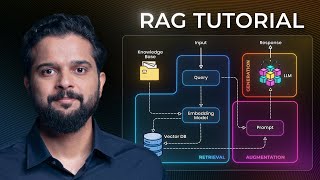
Step 1: Ingest You upload your documents into a vector database. The system converts every chunk of text into embeddings (numerical vectors that represent meaning). Documents can include brand guidelines, product specs, FAQs, compliance policies, past campaign briefs, and approved messaging frameworks.
Step 2: Query A user or automated workflow submits a prompt to the system. Example: "Write a subject line for our enterprise summer sale targeting CFOs."
Step 3: Retrieve The system searches the vector database for the passages most semantically relevant to that query. It might pull: your enterprise tone guidance, your summer offer details, and your subject line best practices from past high-performing campaigns.
Step 4: Generate The AI model receives both the original query AND the retrieved text chunks as context. It generates its response using those retrieved passages as grounding. The output cites your documents, not the open internet.
Document Types to Prioritize
- Brand voice and tone guide, the single most impactful document. Feed this first.
- Current product or service descriptions with accurate pricing and feature names.
- Approved claims and messaging, especially anything reviewed by legal or compliance.
- Top-performing past content (emails, ads, landing pages) as style and structure references.
- Customer personas and segmentation definitions so the AI tailors tone by audience.
- Regulatory or compliance rules relevant to your industry or market.
What NOT to Include
- Outdated documents without clear version labels. The AI treats old claims as current facts.
- Unreviewed drafts or internal speculation documents.
- Raw customer data without proper anonymization. Privacy regulations apply here.
- Inconsistent documents where different files contradict each other on the same fact.
Real Company Examples
E-commerce Personalization: 2024 Retail RAG Deployment
A major retail brand deployed RAG to power their product recommendation emails. The system was connected to live product catalog data, customer purchase history summaries, and approved promotional copy frameworks. Email subject lines and body copy were generated using retrieved product details and customer segment profiles rather than generic prompts. The result: a 23% increase in email click-through rates over the control group receiving standard AI-generated emails. The critical difference was product accuracy: every featured item was in stock, correctly priced, and described using the exact brand-approved language from the catalog. Source: reported in the 2024 e-commerce AI personalization analysis by market researchers tracking RAG retail deployments.
SaaS Content Team: Consistency at Scale
A B2B SaaS company with a 12-person content team was producing 40+ pieces of content per month using multiple AI tools. Each writer was prompting differently, producing inconsistent feature descriptions and brand voice. After implementing a RAG system connected to their product documentation, brand style guide, and approved competitor comparison talking points, the team reported a 35% reduction in editorial revision time. More importantly, zero compliance violations were flagged in the following quarter, compared to four in the previous quarter with generic AI tools. The product marketing manager noted that the AI could no longer invent features that did not exist because the only features it could reference were the ones in the connected product database.
The Broader Enterprise Picture
DoorDash's Dasher support automation system Dashers need accurate, compliant answers about delivery issues in the middle of an active order, where a wrong or non-compliant answer creates real operational and legal risk, not just an annoyed reader DoorDash paired a RAG pipeline, grounded in support knowledge-base articles and resolved historical cases, with an LLM Guardrail for real-time response validation and an LLM Judge for ongoing quality monitoring
Result: A 90% reduction in hallucinated responses and a 99% reduction in compliance issues compared to the prior flow-based automation, while serving thousands of Dashers daily (Documented in DoorDash's engineering blog on LLM-based Dasher support automation).
SourceAccording to a 2024 analysis by Glean, enterprise teams using RAG for marketing and sales content are seeing three specific workflow improvements:
- Sales reps surface real-time product specs and case studies to tailor outreach, shortening sales cycles.
- Marketing teams auto-generate campaign briefs and onboarding guides grounded in the latest approved materials.
- In retail and e-commerce, RAG-powered personalization generated the largest market revenue share among all RAG application segments in 2024.
A 2026 hybrid-retrieval benchmark found combining keyword and semantic search, rather than semantic search alone, boosts retrieval precision by 30% and cuts irrelevant results by 40%. For a marketing knowledge base mixing exact product names with conceptual brand language, that hybrid approach is often the difference between a retrieval audit that passes and one that doesn't.
Common Mistakes
Mistake 1: The 'more is better' document dump Many teams upload every file they can find into their RAG system on day one. The AI then retrieves the wrong chunks: an outdated pricing sheet over the current one, a deprecated product description over the live one. Start with 5-10 carefully curated, clearly labeled documents. Verify what the system retrieves before adding more.
Mistake 2: No document versioning or review cadence RAG systems serve stale documents with the same confidence as current ones. If you update your pricing in the CRM but not in your RAG knowledge base, the AI will confidently quote the old price to customers. Date-stamp every document and set a mandatory quarterly review to remove or replace outdated content.
Mistake 3: Skipping retrieval audits RAG systems need regular testing. Take 10-15 real queries, check exactly what chunks the system retrieves, and verify the output matches your current facts. This is called a retrieval audit. Do it monthly. Without it, you will not know when a document update silently breaks a retrieval pattern.
Mistake 4: Treating RAG as a set-and-forget system Product specs change, pricing changes, campaigns end, and compliance rules update. RAG is only as accurate as its most recent document refresh. Assign a knowledge base owner: one person responsible for keeping the document set current. Most teams discover this role only after their first public-facing accuracy failure.
Mistake 5: Ignoring chunk size and document structure If your documents are unstructured walls of text, the retrieval step will pull large, imprecise chunks that dilute the AI's context. Use clear headers, short paragraphs, and structured formats (tables, bullet lists) in your source documents. Well-structured documents produce more precise retrievals and more accurate outputs.
Confident misinformation is worse than obvious ignorance. A generic AI that says "I don't know your product" is annoying but manageable. A RAG system fed outdated documents will produce content that sounds authoritative, cites your brand correctly, and is still factually wrong. Stale knowledge bases are the leading cause of RAG failures in marketing teams. Build document hygiene into your workflow before you build anything else.
Key Takeaways
- RAG connects AI to your private documents so every output starts from your approved content, not the public internet.
- The hallucination reduction is substantial: 70-90% fewer fabricated facts compared to standard AI prompting alone.
- Document quality beats document quantity every time: 10 accurate, current files outperform 100 mixed-quality ones.
- The knowledge base needs an owner and a review cadence, or it becomes a source of confident misinformation at scale.
- No-code RAG tools are mature in 2026: you do not need engineers to get started, but you do need editorial discipline to maintain accuracy.
- The ROI case is clear: 25-40% productivity gains and significant hallucination reduction are consistent findings across enterprise deployments.