The Core Tension
Every global brand faces the same paradox: consistency drives recognition and cost efficiency, but local relevance drives connection and conversion. A Toyota customer in Tokyo should recognize the same brand promise as one in Toronto. Yet if that promise ignores local taste, price point, or cultural context, it fails to convert.
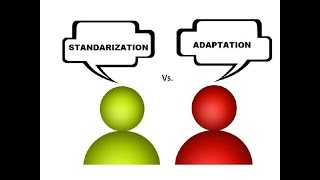
This lesson explores where your brand sits on the standardisation spectrum, and why that choice matters more than either extreme.
The Standardisation Spectrum
Think of brand strategy as a spectrum, not a binary choice:
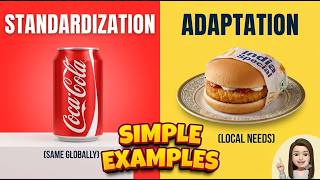
Pure Global, Same positioning, identical execution, one campaign worldwide. Coca-Cola's "Open Happiness" runs globally with the same visual language. Luxury houses (LVMH, Hermès) maintain identical pricing and messaging across every market.
Glocal, Global positioning + locally adapted execution. This is where most sophisticated brands live. McDonald's has a unified brand architecture, but menu items adapt (McSpicy in India, McArabia in the Middle East). The brand promise stays constant; the expression changes.
Pure Local, Each market owns its brand. Regional conglomerates or decentralized companies fall here. This maximizes local relevance but fragments recognition and multiplies costs.
Most companies discover they're naturally glocal, they just don't always admit it.
Real Examples Across the Spectrum
Coca-Cola (Leaning Global) sits closer to pure global than most realize. The brand identity system (red, script, tone of optimism) is locked. Campaigns are centrally created and adapted at the edges, media mix differs, local celebrities feature differently, cultural events get custom messaging, but the core brand equation remains.
McDonald's (Textbook Glocal) separates locked and free with surgical precision. The golden arches, smile-based design language, and service promise (fast, consistent, affordable) are global. Menu, pricing communication ("value"), and store design adapt freely. India sees vegetarian positioning; Brazil emphasizes local sourcing.
Airbnb (Glocal, With Growing Localism) maintains global brand positioning (belonging anywhere) but has increasingly delegated visual identity and campaign authority to regional teams. The shift occurred because Airbnb's core message, community and human connection, actually requires local context to feel authentic.
When to Standardise
Standardisation makes sense in three scenarios:
1. Desire is universal. Luxury aspirations transcend borders. Desire for technological advancement is global. Premium positioning in these categories faces no local friction, a Rolex is desirable in Singapore and Stockholm for the same reasons.
2. Strong global competitor pressure. When a dominant global competitor defines the category, matching their consistency is survival. Airbnb's global expansion required global brand coherence partly because Booking.com was already global.
3. Limited localisation budget. Smaller brands with few resources must standardise. A 20-person startup selling software can't afford separate campaigns per region. Consistency is cheaper.
When to Adapt
Adaptation is mandatory in three scenarios:
1. Food and beverage. Taste preferences are cultural bedrock. Coca-Cola adapts sweetness by region. Pizza Hut in India offers paneer pizza. A global identical flavor fails not because the brand is wrong, but because the product doesn't fit the mouth.
2. Financial services. Banks, insurance, and payment systems trade on local trust. Regulatory requirements differ. Social norms around debt, investment, and family finances are deeply local. A global messaging campaign for mortgages ignores the fact that homeownership context varies sharply (property law, tax incentives, generational patterns).
3. Network effects are local. Messaging apps, ride-sharing, and food delivery all depend on local density. WhatsApp's global position works because messaging is borderless, but it still localizes onboarding (e.g., WhatsApp Pay differs by country). Uber's core promise (reliable, affordable rides) is global; the actual offering (vehicle types, pricing, driver policies) is hyperlocal.
The CAGE Framework
When deciding how far to adapt, use the CAGE framework (developed at Harvard Business School):
Cultural distance: Do norms, values, and preferences differ sharply? High cultural distance (e.g., US to China on privacy expectations, or Sweden to Saudi Arabia on gender roles in advertising) demands adaptation. Low cultural distance (e.g., Canada to US) tolerates more standardisation.
Administrative distance: Do regulations, tax regimes, and political systems differ? Financial services face high administrative distance; app development low. Regulatory gaps create adaptation requirements even if culture doesn't demand it.
Geographic distance: Shipping costs, time zones, and supply-chain friction are literal. A brand position claiming "global delivery in 48 hours" must adapt to regions where logistics chains differ.
Economic distance: Income, purchasing power, and price sensitivity vary. Luxury brands may ignore this; mass-market brands ignore it at their peril. A brand positioned at $500 USD must adapt in markets where median monthly income is $200.
Add these four distances. High total = adapt more. Low total = standardise more.
Building a Glocal Playbook
If you're going glocal, and you likely are, separate locked elements from free ones:
What's locked globally:
- Brand purpose (why you exist, not just what you sell)
- Visual identity system (logo, color palette, typography hierarchy)
- Tone of voice architecture (formal? playful? educational?)
- Core brand promise (the emotional or functional contract)
What's free locally:
- Campaign themes and creative execution
- Influencer and spokesperson selection
- Media mix and channel emphasis
- Pricing communication ("premium" vs "value")
- Product feature prioritization
- Customer service tone adaptations
The locked elements should fit on a single page. The free elements should have guardrails (brand guidelines) but genuine discretion.
Managing Consistency Across 20+ Markets
Scale is the enemy of consistency. With 20 regional teams, drift happens naturally. Three practices prevent it:
1. Quarterly brand snapshots. Require regional teams to submit one campaign sample per quarter. Review for brand integrity. This catches drift early and shows teams what coherence looks like.
2. Shared brand asset library. Offer templates and pre-approved creative modules that teams can use and adapt. This reduces friction and anchors standards.
3. Clear escalation. Define which decisions need global approval. Don't require it for media mix or influencer picks; do require it for visual identity changes or core messaging shifts. Trust the teams; oversee the guardrails.
Avoid "brand police", teams resent gatekeeping. Instead, build incentives for consistency: tie regional performance reviews to brand health metrics (perception studies, recognition scores), not just sales.
Putting It Together
Your brand's position on the standardisation spectrum isn't permanent. Coca-Cola standardised heavily for decades, then invested in localism (Coca-Cola Zero, regional flavors). McDonald's is systematizing localism more rigorously as digital channels demand agility.
Start by mapping your category against CAGE. Identify which elements drive demand globally and which locally. Lock the elements that must be consistent; free everything else. Review quarterly. Adjust as the market shifts.
The goal isn't global or local, it's coherent. A customer who encounters your brand in two markets should feel they're meeting the same company, even if the conversation changes.