Why First-Party Data Is Now the Targeting Currency
Third-party cookies are gone on Chrome, iOS App Tracking Transparency (ATT) blocks Meta's pixel on iPhones, and CPMs keep rising as ad platforms lose signal. The advertisers who are winning in 2025–2026 aren't spending more, they're feeding the algorithms better data.
First-party data is information your customers gave you directly: email addresses, phone numbers, purchase history, and on-site behavior captured with consent. Platforms like Google and Meta can match this against their own identity graphs to target, exclude, and model audiences far more precisely than cookie-based methods ever could.
Google's internal data shows advertisers using Customer Match see 20–30% lower CPAs versus interest-only targeting. The gap widens every quarter as third-party signal continues to erode.
The 3 Activation Channels You Need
There are three core mechanisms for activating first-party data in paid advertising. Each solves a different problem.
1. Google Customer Match, Upload hashed customer lists (emails, phones, addresses) to Google Ads. Google matches them to signed-in users and enables targeting across Search, YouTube, Gmail, and Display. This is the foundation for re-engagement campaigns and for seeding Performance Max audiences.
2. Meta Conversions API (CAPI), Send conversion events directly from your server to Meta, bypassing the browser entirely. This recovers iOS-blocked signals and fills the attribution gaps left by Safari's Intelligent Tracking Prevention.
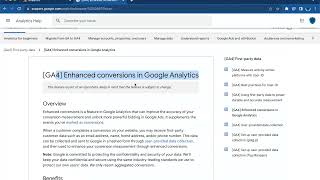
3. Google Enhanced Conversions, Capture hashed first-party data at the moment of conversion (checkout, lead form) and send it alongside the standard conversion tag. Google uses it to improve conversion modelling when cookies can't confirm the match.
These three work together, not in isolation. Think of them as a layered signal stack.
Data Requirements and Hashing
All three platforms require data to be hashed with SHA-256 before transmission. Raw PII is never sent. The hashing process converts an email like user@example.com into a fixed-length string, irreversible, but matchable against the platform's own hashed records.
What you need in your CRM or data warehouse:
- Email address (primary match key, normalize to lowercase, trim whitespace before hashing)
- Phone number (E.164 format:
+14155552671) - First name, last name, and postal code (optional but improve match rates significantly)
For Customer Match, Google now requires uploads via the Data Manager API (mandatory since April 2026). The old CSV upload method is deprecated. Build your pipeline to POST hashed lists via the REST/gRPC endpoint on a recurring schedule, weekly at minimum, daily if your list changes frequently.
Customer Match: Three High-Value Use Cases
Google Ads, U.S. back-to-school retargeting campaign Wanted to re-engage shoppers who hadn't converted since the previous back-to-school season, instead of paying for cold-audience search traffic Uploaded a segment of lapsed customers as a Customer Match audience layered onto Search campaigns
Result: 287% higher ROI than standard Search ads, a 153% lift in conversion rate, a 237% lift in CTR, and a 40% drop in CPC (Back-to-school shopping season).
SourceCustomer Match is underused as a targeting layer, not just a list-upload feature. Three use cases with immediate ROI impact:
Re-engage lapsed customers. Upload a segment of customers who purchased 90–365 days ago and haven't returned. Target them on YouTube with a loyalty offer or on Search to recapture branded queries. These users convert at 2–3x the rate of cold audiences because the trust is already built.
Suppress current subscribers from acquisition campaigns. If you're running a lead-gen campaign, uploading your existing subscriber list as an exclusion stops you from paying to acquire someone you already have. This alone can drop wasted spend by 10–15%.
Seed lookalike (Similar Audiences) models. Upload your highest-LTV customer segment and use it as the seed for Google's Similar Segments or Meta's Lookalikes. The algorithm finds users who match behavioral and demographic patterns, far more precise than interest targeting built on guesswork.
Meta CAPI: Pixel + Server, Not Either/Or
Meta Ads Manager, server-side Conversions API rollout Was losing purchase signal to iOS App Tracking Transparency and browser-side tracking loss on their beachwear ecommerce store Integrated Meta's Conversions API to send purchase events from their server directly to Meta, in parallel with the existing browser Pixel
Result: 43% increase in purchase conversion rate within two weeks, a $1.1 million increase in sales, and 10,700 incremental purchases (Two weeks post-implementation).
SourceA common mistake: teams either keep only the browser Pixel or switch entirely to CAPI-only. Both are wrong. The recommended architecture is browser Pixel + CAPI running in parallel.
Here's why: the Pixel captures rich browser-side signals (page scroll depth, time on site, mouse behavior) that the server can't see. CAPI captures events that the browser misses on iOS. Running both gives Meta the fullest possible signal picture.
The critical implementation detail is deduplication. When the same purchase event fires from both the browser Pixel and your server, Meta receives it twice. To prevent double-counting, every event must carry an identical event_id parameter in both the Pixel and the CAPI payload. Meta uses this key to deduplicate on their end.
Without matching event_id values, Meta counts duplicate events as separate conversions. Your CPA will look artificially low and your bid strategy will over-spend to hit a target that doesn't exist in reality.
If you're on Shopify or WooCommerce, the Meta Conversions API Gateway handles deduplication automatically, it mirrors Pixel events server-side with the same event IDs. Custom implementations need to generate and pass the event_id explicitly in both codepaths.
Enhanced Conversions: Setup and Expected Lift
Enhanced Conversions for Google Ads works by capturing hashed customer data at the point of conversion and passing it alongside the standard Google tag. When Google can't match a conversion through cookies (because the user cleared them or converted across devices), the hashed data gives Google a second matching attempt.
Two setup paths:
Via Google Tag Manager: Add a new conversion linker tag and configure the Enhanced Conversions fields (email, name, address) to pull from your data layer on the thank-you or confirmation page. GTM handles the hashing automatically.
Via Google Ads Conversion API: POST hashed conversion events directly from your server. This is the more reliable path for high-volume e-commerce where the thank-you page may load inconsistently.
Workshop Digital's case studies across 4 of 5 clients showed a positive lift in tracked conversion volume after enabling Enhanced Conversions, with the highest-performing account recovering +33% more conversions. The average across accounts clusters around 6–10% recovery. That lift feeds directly into Smart Bidding, more conversions with the same spend means lower effective CPA.
The First-Party Data Loop
Activation only works if collection is clean and continuous. The loop has four stages:
- Consent, Gate collection behind explicit opt-in. GDPR and CCPA compliance is non-negotiable; platforms will reject data uploaded without proper consent signals.
- Collection, Capture email, phone, and behavioral data through forms, checkout flows, and loyalty programs. Every touchpoint is a collection opportunity.
- Unification, Normalize and deduplicate records in a CRM or CDP (Customer Data Platform). A single customer who signed up with two emails should be one record with two match keys.
- Activation, Push unified, hashed segments to Google Data Manager and Meta CAPI on a scheduled cadence. Close the loop by importing platform conversion data back into your CRM to measure downstream LTV.
With 71% of brands now growing their first-party datasets (nearly double the rate from two years prior), the gap between data-rich and data-poor advertisers is widening fast. Build the infrastructure now, retrofitting it later is 3x the work.
The advertisers who treat first-party data as a product, with dedicated pipelines, consent workflows, and activation schedules, will compound their advantage every quarter. The ones still relying on interest targeting will keep paying more for worse results.