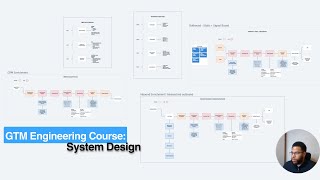
What GTM Engineering Actually Is
GTM engineering is the technical discipline of automating and scaling go-to-market motions using code, data pipelines, and AI. It sits at the intersection of RevOps, growth engineering, and product marketing, building the systems that let revenue teams scale output without scaling headcount linearly.
Clay coined the term in 2023. GTM engineer job postings grew 205% year-over-year in 2025 and kept climbing, from roughly 1,400 open roles in mid-2025 to more than 3,000 by January 2026, while median total compensation held around $176K with top-tier roles clearing $300K. That salary premium reflects a rare combination: technical build skills plus commercial intuition about what actually moves pipeline.
The role is not sales ops with a fancier title. A GTM engineer builds infrastructure, enrichment waterfalls, signal-triggered workflows, AI scoring models, that the rest of the revenue org runs on.
The GTM Engineering Stack
Every serious GTM stack in 2026 has five layers.
Prospecting and contact data, Apollo.io is the default starting point: 275M+ contacts, technographic filters, built-in sequencing. It feeds Clay with raw lead lists that then get enriched further.
Enrichment and orchestration, Clay is the central nervous system. It pulls from 10+ data providers simultaneously (Apollo, LinkedIn, Clearbit, Hunter, Crunchbase, PeopleDataLabs) in a waterfall, paying only for successful matches. Coverage jumps from the typical 30% single-provider hit rate to 80%+.
Workflow automation, n8n (self-hosted, open-source) or Make.com connects your tools: Clay → CRM → email sequencer → Slack alerts. These handle the routing logic that turns a signal into an action without manual intervention.
Signals and intent, Bombora and G2 surface accounts actively researching your category. PhantomBuster scrapes job postings, LinkedIn hiring signals, and tech stack installs. These are the triggers that make outbound feel uncannily timely.
Outbound execution, Instantly and Smartlead manage email sending infrastructure at scale: inbox rotation, deliverability monitoring, reply detection. They receive drafted emails from Clay and handle the mechanics of getting them delivered.
Clay Deep-Dive: Waterfall Enrichment
The most powerful thing Clay does is waterfall enrichment. Instead of relying on one data provider and accepting 30-40% coverage, you chain providers: try Apollo first → if no match, try Hunter → if no match, try PeopleDataLabs → and so on. You pay only on hit, so coverage climbs without proportionally climbing cost.
Clay's waterfall pushed one B2B SaaS team's email coverage from 31% to 79% on a 50,000-contact list, at roughly the same per-contact cost as using a single premium provider.
Beyond enrichment, Clay's AI columns are where it gets powerful for PMMs. You write a prompt like: "Given this company's tech stack, headcount growth, and recent funding, write a two-sentence outreach opener that references their likely pain with [problem category]." Clay runs that prompt against every row, producing personalized first lines at scale before a human rep ever touches the sequence.
CRM sync is the final piece. Clay writes enriched, scored leads directly back to Salesforce or HubSpot, no manual export-import cycle, no stale data sitting in a spreadsheet.
Signal-Based Outbound: The Core Workflow
Oyster's GTM team, automating account-based outbound in Clay Manual list-building meant reps kept prioritizing the same easy-to-find accounts and ignoring less obvious but genuinely in-market ones Built automated Clay workflows that pull in accounts showing live intent signals and route them into personalized outbound sequences
Result: 4x increase in accounts reached through intent-based outbound, generating $34K in new pipeline from previously untapped accounts (within the first campaign cycle after rollout).
SourceManual outbound treats every lead the same. Signal-based outbound acts at the exact moment a prospect becomes most likely to buy.
Here is the canonical workflow: a Bombora intent spike triggers for one of your target accounts → Clay pulls the account into an enrichment flow → AI columns score the account and draft a personalized email → the email lands in a rep's draft queue for a 30-second review → rep approves, Instantly sends.
Highest-value signals in 2026: job changes at VP+ level in your ICP, Series B/C funding announcements, tech stack installs (detected via BuiltWith), and reverse-IP visits to your pricing page. Time from signal to outreach under 2 hours consistently outperforms next-day sending by 3-4x in reply rate.
Other signal examples worth building:
- Competitor G2 review spikes → prospects actively evaluating alternatives
- LinkedIn hiring for roles your product replaces → company is spending on the problem you solve
- Conference attendance scrapes → warm context for outreach ("saw you're speaking at SaaStr")
Each signal becomes a Clay table that automatically fills, scores, drafts, and routes. Once built, it runs 24/7 without ops headcount.
Account Scoring Automation
Sendoso's outbound team, layering Clay-automated enrichment and personalization onto its SDR motion Reps were spending most of their time on manual list-building and personalization instead of selling Automated the enrichment-to-personalization pipeline in Clay so scored, ready-to-send sequences reached reps' queues without manual research
Result: 20% higher positive reply rates, 10x outbound productivity, and over $1M in new pipeline generated (after the Clay-automated workflow replaced manual prospecting).
SourceManual lead scoring is a quarterly spreadsheet exercise that's stale before it's finished. Automated scoring is a live signal that updates as accounts behave.
The architecture: pull Bombora intent data + G2 review activity into Clay → join with firmographic data (ARR band, headcount, industry) → join with web activity from your CDP → run an AI column that weights and scores each account → push scores back to Salesforce → route high-intent accounts to AE, mid-intent to SDR sequences, low-intent to nurture.
Score decay matters. An account that spiked intent three weeks ago and went cold is not the same as a fresh spike. Build a score-decay field that reduces the score by 20% per week of inactivity, otherwise your AEs chase ghosts.
The routing logic is often where teams see the biggest win. A score threshold of 70+ goes directly into an AE's Salesforce queue with a Slack notification. A score of 40-69 triggers an automated SDR sequence. Below 40 gets added to a low-touch nurture campaign. No human makes that routing decision, the system does.
Why PMMs Should Care
Product marketing has always owned the 'what to say' layer: positioning, messaging, ICP definition. GTM engineering adds the 'how to deploy at scale' layer, and the two are inseparable now.
A PMM who can articulate the ICP and also build the Clay workflow to find and reach that ICP at signal moments is worth dramatically more than one who hands a positioning doc to sales and hopes. Data from 2025 shows individual contributors with AI automation skills saw a 23% earnings increase in one year as companies competed for people who could close the loop between strategy and execution.
The PMM-to-GTM-engineer bridge is not about becoming a full-stack developer. It is about understanding enough of the stack to design the system, brief the engineer, and QA the output, or, increasingly, build the no-code/low-code version yourself in Clay and n8n.
Hire a GTM Engineer or Build the Skill In-House?
Hire when: your outbound volume exceeds what one SDR can manage manually, you have signal sources (Bombora, G2, website intent) that you are not activating, or you are rebuilding your ICP definition and need fresh enriched lists fast.
Build in-house when: your team has RevOps or growth ops capacity, your sequences are relatively stable, or you want institutional knowledge of the stack rather than a black-box vendor relationship.
Hybrid path many teams take: hire a Clay agency or freelancer for the initial build (6-8 weeks), run the system for a quarter, then hire a full-time GTM engineer once you can articulate the exact workflows they will own and the volume justifies the headcount.
The GTM engineer role exists because the gap between commercial strategy and technical execution became too expensive to leave unfilled. PMMs who understand both sides of that gap, positioning and pipeline infrastructure, will define what senior product marketing looks like in the next decade.