Maslow Hierarchy for Marketers
Every purchase is a vote for a need being met. A bottle of water meets a very different need than a $1,200 yoga retreat, and the words, images, and channels that sell one will flop selling the other. Maslow's hierarchy gives marketers a cheap, durable map of which need a product actually serves, and which need the ad copy should speak to.
The Origin (Real Research)
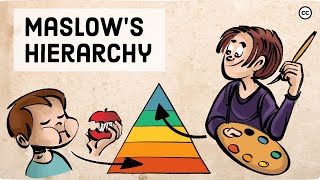
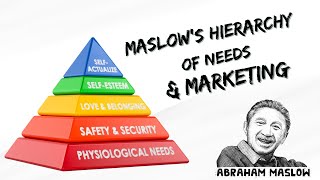
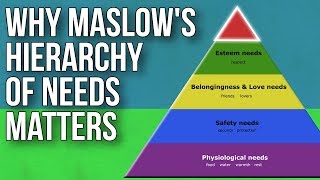
Abraham Maslow first published the hierarchy in his 1943 paper "A Theory of Human Motivation" in Psychological Review. He proposed that human motivation follows a roughly tiered structure: physiological needs (food, water, sleep), then safety, then love and belonging, then esteem, then self-actualization at the top. Maslow argued that lower needs generally dominate behavior until they are reasonably satisfied, a hungry person rarely shops for status symbols.
The 1943 paper was theoretical, not an experimental study with a sample size, and modern researchers like Tay and Diener (2011, n=60,865 across 123 countries) have shown the levels are pursued more in parallel than in strict sequence. Still, as a marketing lens, the hierarchy remains one of the most-used frameworks in consumer behavior textbooks.
How It Actually Works
Think of the hierarchy as a stack of distinct emotional jobs your product could be hired to do. The same category, say, a meal kit, can be sold at any level, and the level you choose determines everything downstream.
A meal kit sold on "ready in 15 minutes, no thinking required" is a physiological pitch. Sold on "organic, no seed oils, doctor-approved" it becomes a safety pitch. "Cook together on Sunday nights" is belonging. "Restaurant-quality plating" is esteem. "Learn to cook like a chef" is self-actualization. Same box, five completely different ads.
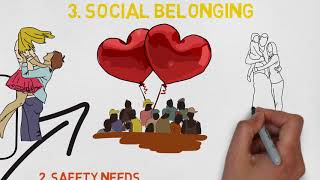
The Harley Owners Group (HOG), a manufacturer-sponsored motorcycle club Harley wasn't just selling a motorcycle, a mid-tier product with plenty of cheaper competitors, it needed a reason for owners to stay loyal and pay a premium for the badge on the tank. Harley-Davidson built HOG into the largest manufacturer-sponsored motorcycle community in the world, over one million members across 25 countries, selling belonging (the club, the rides, the identity) on top of the product itself.
Result: HOG members ride twice as often and spend 30% more than non-member Harley owners on clothing and sponsored events, and the community is widely credited with helping turn around Harley's sales after its 1980s near-collapse. (Ongoing since HOG's 1983 founding, membership still over 1 million as of 2024).
SourceWhy Marketers Care (2024/2025 examples)
Brands that win usually pick one level and own it.
- Dove, Esteem. The "Real Beauty" platform, now past its 20th anniversary in 2024, sells self-worth, not soap. Unilever has publicly credited it with more than doubling Dove's sales since launch.
- Patagonia, Self-Actualization. The 2022 transfer of ownership to a climate-focused trust cemented its position as a brand for people whose identity is "I am someone who fights for the planet." Revenue grew to roughly $1.5B+ while competitors cut prices.
- Ring / ADT, Safety. Amazon's Ring doorbell ads in 2024–2025 lean almost entirely on package theft, intruders, and "peace of mind", pure safety-tier copy.
- Airbnb, Belonging. The "Belong Anywhere" brand platform reframed travel from transactions to community.
- DoorDash, Liquid Death, Physiological. Hunger and thirst sold with humor; no aspiration required.
A single $4,500 YouTube launch video, 'Our Blades Are F***ing Great' Razors are a boring, purely physiological purchase, cheap, sharp, replace when dull, so Dollar Shave Club sold the physiological need itself (a decent blade, without the markup) instead of manufacturing any aspiration around it. Founder Michael Dubin wrote and starred in a deadpan, funny video making one physiological-tier promise: good blades for a few dollars a month, no gimmicks, shipped to your door.
Result: The video drove 12,000 orders in the first 48 hours and crashed the company's servers; Dollar Shave Club was acquired by Unilever for $1 billion in 2016. (Launched March 2012, acquired 2016).
SourceDove's "Real Beauty Sketches" (2013, revisited in 2024) became the most-watched ad in YouTube history at the time with 163M+ views. Unilever has said the broader Real Beauty campaign drove Dove from roughly $2.5B to over $4B in annual sales, an esteem-tier pitch translating directly into shelf velocity.
How to Apply It Ethically
- Diagnose first, then write. Before any campaign, ask: which Maslow tier is the customer actually in when they buy? A first-time homebuyer is in safety mode; do not run an esteem ad.
- Match channel to tier. Physiological and safety pitches work in performance channels (Google, Meta retargeting). Esteem and self-actualization need brand channels, long-form video, PR, founder content.
- Pick one tier per asset. A landing page that tries to be safe AND aspirational AND community-driven says nothing. Force a choice.
- Re-test by segment. New customers often buy on lower tiers (does it work? is it safe?). Returning customers can be sold the higher tiers (status, identity).
Where It Backfires / Ethical Limits
The hierarchy becomes a dark pattern when marketers manufacture lower-tier fear to sell higher-tier products. Insurance ads that catastrophize, supplement brands that invent health threats, and "fear of missing out" tactics in finance apps all weaponize the safety tier. Regulators have noticed: the FTC's 2024 actions against weight-loss and "wellness" advertisers cited exactly this pattern, fabricated safety anxieties pushed to drive esteem-tier purchases. A useful rule of thumb: if you would not say the claim out loud to the customer's face, do not put it in the funnel.
The other failure mode is mismatch. Luxury brands occasionally try to add "value" messaging in downturns and confuse their core buyer, while utility brands that suddenly chase self-actualization (think Pepsi's 2017 Kendall Jenner ad) become memes.
Key Takeaways
- Maslow's 1943 hierarchy is a diagnostic map: name the tier your product serves before you name the offer.
- The same product can be sold at five different tiers, choose one and commit; mixed-tier copy is weak copy.
- Lower tiers (physiological, safety) convert in performance channels; higher tiers (esteem, self-actualization) compound in brand channels over years.
- Manufacturing lower-tier fear to sell higher-tier products is the line between persuasion and manipulation, and increasingly, between legal and regulated.