Substack Notes and Newsletter-Social
By late 2025, Substack had crossed 50 million active subscriptions and paid out over $600 million to creators, a pace that has continued into 2026. The platform's short-form feed, Notes, is now the primary way readers discover new writers inside the app, and unlike every other social platform, every engagement is engineered to hand you an email address you actually own.
Quick Summary
- Substack Notes is a Twitter-style feed where engagement converts to newsletter subscribers, not platform follows.
- The algorithm optimizes for paid subscription potential, not session time or ad views.
- In a three-month window in 2025, 32 million new subscriptions were sourced entirely from within the app.
- Notes posters who publish daily grow up to 70% of their subscribers from Notes alone.
- The Recommendations feature is the single highest-ROI growth button on the platform and most creators ignore it.
What It Actually Is
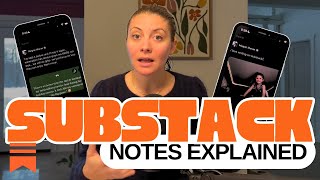
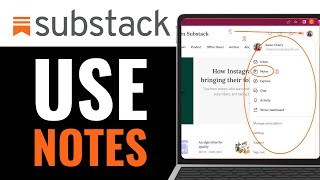
Substack Notes is the short-form social feed embedded inside the Substack app and website. Think of it as Twitter or Threads, except every "retweet" (called a restack) includes a one-click subscribe button to the original writer's newsletter. The conversion unit is an email address, not a follower count.
The analogy that makes it click: on Instagram, a share sends someone deeper into Instagram. On Substack, a restack sends someone out of the feed and into your subscriber list. Every piece of engagement is a funnel entry, not a dopamine loop.
Substack email open rates average over 45%, versus roughly 20% for the email industry overall. The subscribers you earn through Notes are more engaged than almost any list you can buy or scrape from another platform.
Why It Matters (with data)
Substack Notes Starting Notes in March 2025 with no existing audience, testing whether a strict daily posting cadence alone, with no paid promotion, could produce compounding subscriber growth Posted Notes daily following the platform's proven formats and tracked subscriber growth monthly against the March 2025 baseline
Result: Grew the publication by 1,200 new subscribers in under a year of Notes activity, averaging 150 new subscribers per month, entirely from a zero-budget channel (March 2025 to early 2026).
SourceSubstack's growth trajectory makes it impossible to ignore as a marketing channel:
- 50 million active subscriptions as of 2025, up from 35 million in September of the same year (The World Data).
- 5 million paid subscriptions by March 2025, a 2.5x increase from 2 million in 2023 (Backlinko).
- $600 million+ paid out to creators in 2025, with gross writer revenue at $450 million and growing (key-g.com).
- 50+ publications earning over $1 million per year as of June 2025 (Sacra).
- 32 million new subscriptions sourced from within the app over just three months in 2025, with Notes as the primary driver.
- 139% year-over-year increase in monthly active app usage, earning Substack Similarweb's "Digital Winner" award for 2024.
- ~70% of subscriber growth attributed to active Notes users in Substack's own internal data.
Individual creator results are equally concrete. One creator documented gaining 884 new free subscribers from a single Note. Another reported 10 or more new subscribers per day consistently for a year using a daily Notes posting habit. At that rate, a year of Notes activity produces 3,650 or more owned email addresses from a zero-budget distribution channel.
The structural reason this works differently from X or LinkedIn: Substack rebuilt its recommendation system in 2025 from static two-tower models to sequential learning architectures. The algorithm asks one question at the point of serving a Note: "Will this reader eventually pay for this writer's work?" It does not care how long you scroll.
How It Works / The Playbook
The core signals the algorithm rewards
- Restacks from accounts with overlapping audiences, when a writer in your niche restacks you, Substack interprets it as an audience match and pushes your content to their readers.
- Replies from established accounts, a reply from someone with 10,000 subscribers carries far more weight than 50 likes from random accounts.
- Subscriber-conversion rate per impression, Notes that drive subscribe clicks get more distribution than Notes that just collect likes.
The daily operational playbook
Substack Notes Tested whether a Note with zero self-promotion, purely recommending other writers with no pitch or link, would outperform standard content Notes for subscriber growth Posted a single generosity Note recommending and publicly checking on other creators' Substacks
Result: The Note generated 1,400 likes, 1,000 comments, 230 restacks, and 514 new subscribers, the single highest-converting piece of content of the entire year (2025, reported January 2026).
SourceStep 1, Post 1 to 3 Notes per day for 90 days straight. Frequency is the entry ticket. Creators who post weekly stall. Daily posters compound because each Note trains the algorithm on what your audience looks like.
Step 2, Use one of four proven formats:
- Contrarian take: "Everyone says X. Here is exactly why X is wrong in 2025."
- Vulnerable confession: "I earned zero from my newsletter for 14 months. Here is the specific mistake."
- Generosity Note: publicly recommend 5 to 10 writers in your niche by @-handle with a one-line reason for each.
- Behind-the-scenes process: screenshot your analytics, your draft, your reading list, your morning routine.
Step 3, Restack 5 to 10 Notes from larger accounts every day with a quote-comment. This sends a signal that your audiences overlap. When they restack your restack, that amplification is worth more than 10 of your own original posts. In late 2025, Substack began treating restacks as fresh content, giving them a second distribution window one to two days after the original post.
Step 4, Convert winning Notes into newsletters within 7 days. Any Note that crosses 100 likes is a confirmed interest signal. Turn it into a full issue while the audience is warm and traffic is still building.
Step 5, Activate Recommendations immediately. Go to Settings, find Recommendations, and add 8 to 12 Substacks in your niche. Most will reciprocate. This is the platform's built-in cross-promotion loop and it requires zero ongoing effort after setup.
Step 6, Pin a "subscribe" welcome Note to your profile. This is the one place where an external link is acceptable. Every new profile visitor sees it before anything else.
What the algorithm deprioritizes
- External links in Notes (suppress reach significantly)
- Posting only on newsletter publish days
- Notes longer than 300 words without a clear hook in the first two lines
- Asking for likes or follows directly
Real Company Examples
Lenny's Newsletter: B2B at Scale
Lenny Rachitsky's newsletter crossed 1 million subscribers in 2024 and remains the most-cited B2B case study on Substack. His Notes strategy is deliberately narrow: he excerpts one chart or one quote from each newsletter issue and restacks practitioners who comment on his work. Notes and Recommendations together drive the majority of his net-new free subscribers, with paid conversion happening downstream via the welcome sequence. His paid tier generates estimated annual revenue above $3 million.
Lenny's approach proves that Notes does not require original content every day. Excerpting your best newsletter insights into standalone Notes doubles the surface area of each issue without adding writing time. One newsletter issue becomes six to eight Notes posted across 7 to 10 days.
The Cubicle Escape Creator: Daily Notes, $100K+ Revenue
A creator documented on their public Substack in 2025 and 2026 that daily Notes posting drove consistent growth of 10 or more new subscribers per day for over a year. Their documented outcome: $100K in revenue and 15,000 subscribers built primarily through Notes. The strategy was specific, post daily, restack writers in the personal finance and career niche, and send a "generosity Note" recommending other writers once per week. That weekly generosity Note consistently produced the highest restack rates of any content type, driving subscriber spikes of 200 to 400 new emails in 24 to 48 hours after a large writer restacked it.
The "generosity Note" format works because it triggers a social norm: writers who are recommended publicly feel compelled to restack the recommendation to their audience, which is often 10 to 50 times larger than yours. One well-targeted generosity Note can reach 50,000 new readers at zero cost.
Newsletter Arbitrage: Notes as a Paid Lead Generation Channel
Multiple B2B newsletter operators have documented using Notes as the top-of-funnel for paid tiers. The playbook: post a teaser Note (the problem statement or the surprising stat), direct the full answer to paid subscribers only, and link to the subscribe page in the first comment rather than the Note body. Creators in the SaaS and marketing verticals have reported paid conversion rates of 2 to 4% from Note readers who arrive via restack traffic, compared to under 0.5% from cold ad traffic to the same offer.
Common Mistakes
Treating Notes like Twitter. Threading, ratio-baiting, and engagement-farming hooks underperform because the algorithm does not reward dwell time. It rewards restacks from accounts whose audiences overlap with yours.
Putting external links inside Notes. External links suppress reach significantly. The one acceptable link placement is in the first comment below your own Note, or in your pinned welcome Note on your profile.
Posting only when you publish a newsletter. The Substack creators who stalled after the algorithm update in late 2024 were almost all weekly-or-less posters. Daily Note posters absorbed the change without a traffic drop.
Skipping Recommendations. Creators who ignore Recommendations leave 30 to 50% of organic growth uncaptured, based on multiple 2025 case studies. It takes 10 minutes to set up and works passively from that point forward.
Optimizing for follower count instead of subscribers. Followers on Substack are nearly worthless as a business asset. Only email subscribers compound into revenue. A Notes strategy that drives 200 followers but 5 subscribers is a failure. A strategy that drives 50 followers and 40 subscribers is a success.
Giving up before day 30. The algorithm needs time to learn your audience shape. Creators who quit after 2 to 3 weeks almost universally report no results. Those who publish daily past day 45 almost universally report compounding growth.
Key Takeaways
- Substack is the only major social platform whose algorithm is explicitly engineered to convert engagement into owned email subscribers.
- The platform paid out $600 million to creators in 2025 and now hosts 50+ publications earning over $1 million per year.
- 32 million new subscriptions in one quarter came from within the app, with Notes as the primary source.
- Daily posting for 90 days is the entry cost. Restacking in your niche is the growth lever. Recommendations are the compounding loop.
- Measure subscribers per Note, not likes. A 50-like Note that drives 30 subscribers beats a 500-like Note that drives 5.
- External links in Notes kill reach. Save them for comments and your welcome Note.