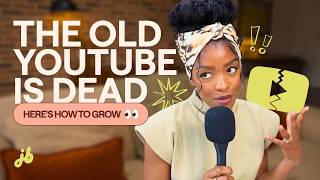
YouTube Playbook
In 2025, brands spent $3.45 billion on YouTube influencer campaigns alone, and YouTube distributed over $20 billion to creators through its Partner Program, more than any other platform on earth. If you are allocating content budget in 2026, YouTube is not optional: it is the only major social platform where what you publish today can still drive leads, subscribers, and revenue three years from now.
Quick Summary
- YouTube is a search-plus-recommendation engine, not a feed. Videos have permanent URLs that keep getting re-served for months and years.
- In 2025, YouTube overtook Instagram as the top platform for influencer marketing spend in the US, delivering an average ROI of $5.78 per dollar spent.
- The algorithm shifted to "satisfaction-weighted discovery" in 2025, and that model still governs ranking heading into 2026, rewarding genuine viewer satisfaction over raw click-through rate.
- Channels using 60%+ evergreen content strategies see 2.3x better subscriber retention over 12 months compared to trend-chasing channels.
- Views per video jumped 76% from 2024 to 2025 (389 to 687 average), driven by AI recommendations, Smart TV passive viewing, and Shorts-led discovery.
What It Actually Is
YouTube is a search engine that happens to host video. Every video you publish gets a permanent URL, indexed metadata (title, description, tags, transcript), and placement on three discovery surfaces: Search, Home feed, and Suggested. Unlike TikTok or Instagram, where a post dies in 48 hours as the feed moves on, a YouTube video can keep earning views from all three surfaces simultaneously, for years.
Think of it this way: Instagram posts are perishable groceries. YouTube videos are real estate. Both require upfront investment, but only one appreciates and generates income while you sleep.
Why It Matters (with data)
The platform numbers justify the investment. YouTube distributed over $20 billion annually to creators through its Partner Program as of 2026, making it the largest creator monetization fund in digital video (Metricool YouTube Statistics 2026). Brands spent approximately $3.45 billion on YouTube influencer campaigns in 2025, with campaigns delivering an average ROI of $5.78 for every dollar spent, outperforming both paid search and display advertising.
The algorithm shift makes this even more compelling. In early 2025, YouTube's Director of Growth and Discovery confirmed that the recommendation model now weights watch time by "satisfaction signals" including post-watch surveys, return views, and session continuation, not just raw minutes (Marketing Agent Blog, Nov 2025). This rewards genuinely useful content over clickbait. A video that honestly delivers what it promises will keep getting recommended; one that misleads viewers into clicking but disappoints them gets suppressed.
The compounding data is striking. Channels with 60%+ evergreen content strategies see 2.3x better subscriber retention over 12 months versus trend-focused channels. Views per video jumped 76% from 2024 to 2025, driven partly by AI-powered recommendations surfacing older relevant content to new viewers (vidIQ YouTube Algorithm Guide 2026). Comments grew nearly 4x faster than likes in 2025, signaling that audiences are now engaging in deeper conversation, which the algorithm reads as satisfaction.
US creator ad spend hit $37 billion in 2025, growing 26% year-over-year, nearly 4x faster than the overall media industry. YouTube captures the largest share of that investment. Ignoring this platform is not a neutral choice; it is ceding ground to competitors who are building compounding content assets while you are not.
How It Works / The Playbook
Treat YouTube like SEO with a thumbnail. The system has two phases: the test window (first 24-48 hours) and the long tail (months to years). Your job is to survive the test window with strong signals, then let the algorithm do the distribution work.
Phase 1: Topic Selection (Before You Record)
YouTube channel for a B2B SaaS product (share files as public links) The team wanted traffic that kept compounding without a recurring content budget, so they picked keywords with real, timeless search volume instead of trend-chasing topics. They selected evergreen 'how to' queries where Google showed video carousels, then optimized titles and thumbnails for search click-through rather than for watch-time alone, across 19 videos.
Result: 310,000+ organic views and an estimated $507,501 lifetime value from those videos, with 47,000 monthly views still arriving two years after publication and $0 spent on paid promotion (single content sprint, results measured through May 2026).
Source- Lead with search demand. Use vidIQ, TubeBuddy, or Google Trends to find queries with consistent monthly volume and weak existing video results. Formats that compound hardest: "how to," "best X for Y," "X vs Y," "review," and "tutorial."
- Score the evergreen potential. Ask: will someone search this query in two years? A video on "best email marketing tools 2025" expires. A video on "how to write a subject line that gets opened" does not.
- Map the competition gap. If the top results are low-production, poorly edited, or 5+ years old, that is a gap. If the top results are from channels with 500k+ subscribers and polished production, find a sub-topic angle instead.
Phase 2: Production (What to Build)
- Engineer the first 30 seconds. Audience retention in the first 15-20 seconds is the single strongest predictor of algorithm reach. Open with the payoff or the stakes, not a logo sting, not a "welcome back," not a channel intro.
- Structure for retention milestones. Add a re-engagement hook every 3-5 minutes. Preview what is coming, tease the next section, or drop a surprising stat. The algorithm tracks when viewers drop off and uses that to judge the video quality.
- Build for satisfaction, not shock. The algorithm detects when a viewer clicks a video with a certain expectation and then leaves disappointed, even if they watched for several minutes. Thumbnails and titles must be honest representations of the actual content.
Phase 3: Packaging (Title, Thumbnail, Description)
YouTube, existing published video, no changes to the video itself A video was underperforming despite good content, so instead of guessing at a better thumbnail once, the creator ran it through a systematic A/B testing process. Swapped the video's thumbnail as part of an ongoing A/B testing system, keeping the video content completely unchanged.
Result: views on that single video jumped from roughly 300,000 to 1.1 million, about a 267% increase, from the thumbnail change alone (single thumbnail test).
Source- Treat thumbnail like a paid ad creative. Test two thumbnail variants using YouTube's native A/B thumbnail tool after publishing. Top creators routinely double views by swapping thumbnails on existing videos, with no changes to the video itself.
- Frontload keywords in your title. YouTube's search index prioritizes the first 60 characters of a title. Put the core query first, then add curiosity or specificity after.
- Write descriptions like landing pages. The first two lines appear in search results. Use them to restate the query and promise the outcome. Add timestamps, links, and full keyword-rich descriptions below.
Phase 4: Distribution Mix
- Use a 60/40 evergreen-to-experimental ratio. Sixty percent of your output should be search-driven evergreen tutorials and explainers that compound. Forty percent can be trend-responsive, personality-driven, or experimental format tests. The experimental videos teach you what hooks and formats resonate, then you apply those learnings to your evergreen core.
- Use Shorts as a discovery funnel, not a destination. Shorts can surface your channel to new audiences at zero production cost. But Shorts do not compound the same way long-form does. Use them to drive subscriptions, then convert subscribers into long-form viewers.
- Revisit at 90 days. Pull up the analytics on every video at 90 days post-publish. Check retention graphs for drop-off points, test a new thumbnail, update the title if a better keyword emerges, and add timestamps if missing. New creators publish and forget; top channels treat old videos as living assets.
The single highest-leverage action most creators overlook: thumbnail testing on existing videos. YouTube's built-in A/B test tool lets you run two thumbnail variants simultaneously. One creator studied by vidIQ in 2025 increased views on a 2-year-old video by 180% purely by replacing the thumbnail, the video itself was untouched.
Real Company Examples
Ahrefs: B2B SaaS Channel Built on Evergreen SEO Content
Ahrefs, the SEO tool company, built a YouTube channel of over 500,000 subscribers almost entirely on search-driven tutorial content. Their videos on topics like "how to do keyword research" and "what is a backlink" rank on both YouTube Search and Google Search simultaneously, creating a double-compounding traffic effect. Videos published in 2019 and 2020 still generate thousands of views per month in 2025. The channel functions as a top-of-funnel acquisition engine: viewers who find a tutorial via search become trial users at a significantly higher conversion rate than cold paid traffic. Their playbook is strict, every video targets a keyword with documented search demand, and production quality prioritizes clarity over cinematic polish.
MrBeast (Jimmy Donaldson): Packaging Optimization at Scale
MrBeast's operation offers the most studied example of thumbnail and title testing in the industry. His team runs multiple thumbnail variants on every video within the first 24 hours, sometimes testing 20+ concepts before settling on a final version. In a 2024 interview, MrBeast revealed that on several videos, the thumbnail swap alone produced a 3-4x difference in total views, same video, same content, entirely different reach. His channel also demonstrates the algorithm's session-contribution weighting: his videos are engineered to keep viewers on YouTube (not just on his video), which the 2025 algorithm rewards by pushing his content to broader Home feed audiences. As of 2025, his channel drives over 4 billion monthly views, the largest individual YouTube presence on the platform.
HubSpot: Long-Form Evergreen Generating B2B Leads for Years
HubSpot's YouTube channel publishes tutorials on topics like "how to build a landing page" and "email marketing for beginners" that have generated consistent inbound leads since their original publish dates. Their 2021 video on "how to use Google Analytics" still ranked in YouTube's top results for that query in 2025, driving demo requests from viewers who found it organically. HubSpot's internal data shows that YouTube-sourced leads close at a higher rate than leads from most other inbound channels, likely because video content builds trust and pre-qualifies intent before the first sales conversation.
Common Mistakes
- Treating Shorts as a substitute for long-form. Shorts drive discovery and subscribers, but they do not build the evergreen library that compounds. Channels going all-in on Shorts find that their subscriber count rises but watch hours and ad revenue stay flat, because Shorts do not monetize at the same rate and do not accumulate long-tail search traffic.
- Chasing CTR with misleading thumbnails. The satisfaction-signal model detects when high CTR is followed by fast abandonment. That pattern actively suppresses a video from Suggested, the opposite of what a clickbait thumbnail was meant to achieve.
- Skipping keyword research entirely. Publishing passion-project videos with no search demand and no recommendation hook means the algorithm has no signal for who to show the video to. Without search traffic as a seed, the test window fails and the video never finds an audience.
- Inconsistent packaging identity. Random thumbnail styles week to week prevent the algorithm from building a viewer profile for your channel. Viewers who see a consistent visual style learn to recognize and click your content on Home feed; inconsistency erases that advantage.
- Never revisiting published videos. The 90-day thumbnail test and title refresh is one of the highest-ROI activities in YouTube growth. Most creators publish once and move on. Revisiting old videos with better packaging or updated titles is compounding leverage on work already done.
- Ignoring session contribution. The 2026 algorithm weights whether your video keeps viewers on YouTube after they finish watching, not just whether they watched your video. Ending with a strong next-video CTA or a playlist link directly improves your distribution score.
Key Takeaways
- YouTube is the only major social platform where content functions as a long-term asset: publish once, earn traffic and revenue for years.
- The algorithm still rewards satisfaction, not clicks, heading into 2026. Honest packaging that delivers on its promise beats clickbait every time.
- Views per video grew 76% from 2024 to 2025, the algorithm is actively surfacing more content to more viewers, including older videos.
- A 60/40 evergreen-to-experimental ratio builds a compounding library while keeping the channel learning and adapting.
- The highest-leverage habit: revisit videos at 90 days, test new thumbnails, and refresh titles. The video does not change; the reach can double.
- Shorts are a discovery funnel, not a content strategy. They build subscribers who need long-form content to become loyal viewers and buyers.