The Modern Marketing Data Stack
Activating customer data across multiple channels requires a flexible, unified infrastructure. If you rely on manual CSV exports and disconnected marketing tools, your personalization efforts will stall, and your data will drift.
Quick Summary
- The Modern Marketing Data Stack decouples data collection, storage, transformation, and activation.
- Google BigQuery serves as the central data warehouse, acting as the single source of truth for customer data.
- Customer Data Platforms (CDPs) like Segment collect real-time events and route them to your warehouse.
- Reverse ETL (Extract, Transform, Load) is the process of copying data from a warehouse into marketing tools like ad networks.
- A composable architecture keeps data in your control and avoids the limitations of traditional, packaged CDPs.
The Composable CDP Architecture
XP Inc., Brazil's largest independent investment platform, rebuilt its customer-acquisition data stack around Hightouch reverse ETL syncing predictive models out of its warehouse Ad platforms were bidding on raw lead volume instead of predicted account-funding likelihood, wasting spend on low-quality traffic XP's data science team scored leads for funding likelihood inside the warehouse, then used Hightouch to sync those scores directly into ad-platform bidding signals, no manual export
Result: 62.5% improvement in lead qualification and $66M in incremental revenue, including $38M from performance media optimization (Not stated in source).
SourceTraditional Customer Data Platforms, or CDPs, are packaged systems. They collect customer data and store it in their own proprietary databases.
This structure creates another data silo. Your marketing team sees different customer profiles than your business intelligence team.
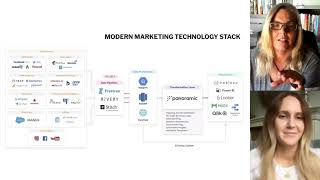
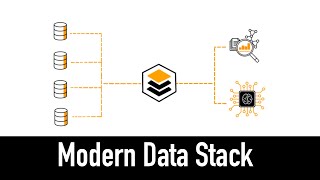
The modern solution is a composable CDP. This architecture splits the CDP into three distinct layers.
First, a collection tool like Segment gathers event data from your website and mobile applications. Second, a cloud warehouse like Google BigQuery stores and cleans all customer profiles.
Third, a reverse ETL tool like Hightouch reads the warehouse data and syncs it to your marketing applications. This keeps your data warehouse at the center of your operations.
Let us map out this architecture visually.
This setup ensures that every marketing tool works with the exact same customer records. Let us look at the activation process.
Activating Data with Reverse ETL
IntelyCare, a nurse-staffing platform, built a warehouse stack pairing Snowflake and Hightouch to activate its customer data Manually building and re-uploading applicant audiences for retargeting was expensive and slow to react to changing supply and demand IntelyCare synced warehouse-scored applicant and facility segments directly into its lifecycle and ad-targeting tools via Hightouch, replacing manual list-building
Result: 300% year-over-year growth during COVID-era demand while saving over $1 million in marketing spend (Documented during 2020-2022 COVID-era scaling).
SourceCollecting data in a warehouse is only useful if you can use it. Reverse ETL solves the activation problem.
Instead of writing custom scripts for every marketing API, you write a single SQL query in your warehouse. The reverse ETL tool read that query and writes the results to your destination tools.
For example, you can query BigQuery for users who have spent over 1,000 dollars but have not purchased in 30 days. Hightouch then syncs this list directly to your Meta Ads account.
When setting up reverse ETL syncs, always enable consent filters. Ensure you exclude any users who have opted out of marketing cookies or data sharing.
This automation runs on a schedule or triggers in real-time. It eliminates the need for manual CSV exports and keeps your ad targeting fresh.
It also improves ad network match rates. Pushing first-party data like hashed emails to ad platforms helps algorithms identify and target your users more accurately.
Case Study 1: Gorgias (2024 Stack Modernization)
In 2024, Gorgias migrated from a packaged CDP to a composable data stack. They used BigQuery as their central repository and Hightouch for data activation.
They synced customer usage metrics from BigQuery back into Meta Ads and Google Ads. This allowed their marketing team to suppress active users and target lookalikes of high-value customers.
This integration resulted in a 60% increase in customer acquisition and doubled their ad match rates. They also reduced their engineering workload because marketers could build custom audiences without writing code.
Their success showed that centralizing data in the warehouse is the key to scaling campaigns. Control yields performance.
Case Study 2: Nando's (2024 Loyalty Personalization)
During 2024, restaurant chain Nando's rebuilt its customer loyalty engine. They implemented Segment for event tracking and synced the data to their cloud warehouse.
Using a reverse ETL pipeline, they personalized their email and mobile app offers based on purchase history. They targeted customers with specific menu recommendations based on their past visits.
This stack reduced their data integration timeline by 80%. It also allowed them to launch personalized loyalty campaigns in hours rather than weeks.
By utilizing a composable stack, they scaled customer lifetime value across millions of members. Agility drives retention.
Common Mistakes
- Storing customer data in isolated tool databases. If tools do not share a warehouse, profiles will quickly become inconsistent.
- Relying on manual CSV uploads. Manual uploads are insecure, prone to human error, and represent out-of-date data.
- Syncing sensitive PII without encryption. Hashing emails and phone numbers is required before sending data to ad networks.
- Ignoring user opt-outs. Failing to sync user consent preferences across tools can lead to heavy regulatory fines.
- Writing ad-hoc integrations. Building custom API connections for every new marketing tool increases maintenance costs.
- Neglecting warehouse costs. Running complex, unoptimized queries every hour in BigQuery can lead to high cloud bills.
Key Takeaways
- Use a central data warehouse like BigQuery as your single source of truth for all customer records.
- Deploy a composable CDP architecture to keep control of your data and reduce vendor lock-in.
- Use reverse ETL to automate the sync of customer audiences from your warehouse to your ad managers.
- Always implement consent management filters in your data flows to comply with privacy regulations.
- Enrich your ad platform audiences with first-party data to improve match rates and lookalike performance.
- Clean and model your data in the warehouse before activating it in your front-facing marketing tools.