Attribution Models
Every attribution model is wrong. Some are useful. This lesson is for analysts, growth leads, and CMOs who have to defend a channel mix to a CFO and need to know exactly what each model exaggerates, hides, and silently kills in the budget.
What It Actually Is
An attribution model is a rule for splitting credit for a conversion across the touchpoints that preceded it. If a user sees a TikTok ad, clicks a Google search ad three days later, opens a retention email a week after that, then buys, the model decides who gets paid in the dashboard. Change the model and the same revenue moves between channels without a single dollar of real performance changing.
Why It Matters (with data)
Paid search program, brand-keyword bidding eBay's marketing team wanted to know whether the sales its last-click reports attributed to brand-keyword paid search ads were actually incremental, or whether those ads were just intercepting shoppers who typed the brand name and would have clicked the organic listing anyway. They ran a large-scale field experiment, pausing brand-keyword paid search on Yahoo and MSN for several months while keeping Google as a control, then measured what happened to traffic and sales.
Result: Almost all of the paused paid-search traffic and its attributed sales were immediately recaptured by organic search, showing near-zero true incremental value from brand-keyword ads that last-click had been crediting in full (Multi-month field experiment).
SourceModern buying journeys are long and noisy. Analysis cited across attribution vendors shows a typical retail consumer touches a brand roughly 56 times before purchase, so any single-touch model ignores about 55 of them (Cometly).
The tracking layer underneath is also leaking. Privacy features, ITP, ad blockers, and consent banners commonly hide 30 to 40 percent of touchpoints, which means even a sophisticated model is reasoning from a Swiss-cheese dataset (MarketingMary).
Google made this concrete in 2023 by deleting all rules-based models in GA4 except last-click, then in 2025 leaned harder into Data-Driven Attribution (DDA) as the default and shipped a beta conversion attribution analysis report on January 16, 2026 (MarTech, PPC Land).
How It Works: The Five Models and What Each Lies About
Google Ads campaigns, run with agency partner TeamX Mercedes-Benz Germany's campaigns were running on last-click attribution paired with Smart Bidding, which the team suspected was underfunding channels that assisted conversions earlier in the path. They switched a set of campaigns from last-click to Google's data-driven attribution model, paired with Smart Bidding's Maximize Conversions strategy, and ran the change as a controlled experiment against the last-click setup.
Result: 37% increase in conversions after six weeks, at the same spend (6-week experiment).
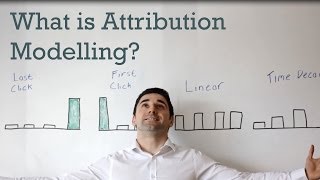
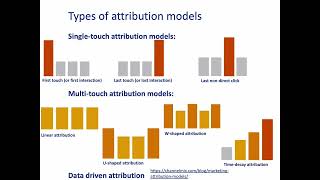
Source- First-touch. 100 percent credit to the first known interaction. Lies about: retention, retargeting, brand campaigns, and any channel that closes deals. Useful for: pure top-of-funnel demand questions, never for budget allocation.
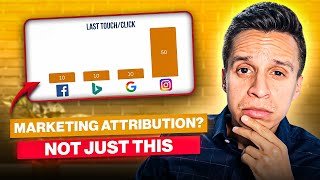
- Last-touch (last-click). 100 percent to the final touch. Lies about: every channel that created demand. It systematically overpays branded search and retargeting, because those are almost always the last click. Still the GA4 default for non-DDA properties.
- Linear. Equal credit to every touch. Lies about: importance. A throwaway display impression gets the same weight as a 20-minute webinar. Honest only when touches really are interchangeable, which is almost never.
- Time-decay. Exponentially more credit to touches closer to conversion. Lies about: long sales cycles. In a 90-day B2B deal, the demo-request form gets crushed by the closing-week retargeting ad. Good for short cycles, dangerous for considered purchases.
- Data-driven (DDA). Uses a Shapley-value or counterfactual model to estimate marginal contribution per channel. Lies about: confidence. DDA needs volume (GA4 historically required around 600 conversions and 400 non-converting paths in 30 days per property), and it is a black box that quietly redistributes credit when Google updates the algorithm.
The playbook:
- Pick the model that matches the decision. Channel kill-or-scale calls need multi-touch or DDA. Creative testing inside one channel only needs last-click.
- Run two models in parallel and look at the delta. If linear and last-click disagree by more than 25 percent on a channel, that channel is either a discovery engine or a closer, and you treat it differently.
- Pair attribution with incrementality. Geo holdouts, ghost bids, and PSA tests tell you what would have happened anyway. Attribution alone cannot.
Airbnb publicly shut down most of its brand search and paid budget in 2020 and again pressure-tested it in 2022. Last-click attribution had been crediting paid channels with conversions that were happening anyway. After the cut, direct and organic absorbed the demand and Airbnb reported it kept marketing spend roughly 50 percent below 2019 levels while traffic stayed strong, with brand-led traffic above 90 percent of total. The number on the dashboard was a lie the entire time. Source: Airbnb Q4 2022 shareholder letter.
Common Mistakes
- Treating DDA as ground truth. It is a model trained on your leaky tracking data, not a measurement of reality.
- Comparing channel ROAS across models without recalculating CAC payback. Switching from last-click to time-decay can move a channel from profitable to unprofitable on paper overnight.
- Ignoring view-through and offline touches. If you do not feed CRM closed-won data back into the model, B2B attribution is fiction.
- Letting the agency pick the model. Agencies optimize for the model that makes their channel look best.
Key Takeaways
- Every model is wrong; pick the one whose lies you can live with for the decision in front of you.
- Run at least two models side by side and treat the disagreement as the real signal.
- Pair attribution with incrementality testing, otherwise you are grading homework with the same pen the student used.