Distinctive Brand Assets
The average consumer encounters over 5,000 brand messages per day and consciously registers almost none of them. The brands that get chosen are not the ones with the best story. They are the ones that get recognized instantly, automatically, and repeatedly.
Quick Summary
- A distinctive brand asset (DBA) is any sensory cue, color, shape, sound, or character, that triggers a specific brand in memory without the brand name appearing.
- The concept comes from Byron Sharp and the Ehrenberg-Bass Institute, whose research showed mental availability beats perceived differentiation.
- Assets are measured on two axes: Fame (how many buyers link it to your brand) and Uniqueness (how exclusively they link it to you).
- Shape-based assets such as logos and packaging silhouettes consistently outperform color in both Fame and Uniqueness across every studied category.
- Only 15% of brand assets in use today are truly distinctive, according to a 2024 study by Ipsos and Jones Knowles Ritchie, meaning most marketing spend is building associations for the category rather than the brand.
What It Actually Is
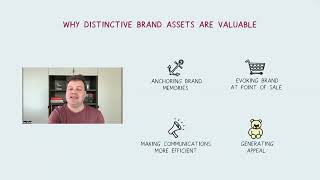
A distinctive brand asset is any non-verbal signal that has been trained, through consistent repetition, to fire a specific brand name in a buyer's mind. The key word is "trained." No asset starts distinctive. Assets become distinctive because a brand commits to repeating them across every touchpoint, every year, for years.
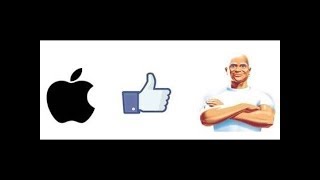
Think of it this way: a brand asset is a memory shortcut, the mental equivalent of a speed dial. Every time the buyer encounters the cue, the dial fires without conscious effort. The Intel bong, the McDonald's golden arches, the Tiffany blue box. None of these elements explain what the product does. All of them make recognition effortless and instant.
This is distinct from differentiation, the idea that your brand must stand for something meaningfully different from competitors. Differentiation requires buyers to think. Recognition requires no thought at all. At the moment of purchase, especially on a crowded shelf or a fast-scrolling feed, the brand that demands less cognitive effort usually wins.
Why It Matters (with data)
Research published in the International Journal of Advertising (2026) analyzed 1,162 distinctive assets across 21 product categories, four countries, and nine years. The findings are precise:
- Shape-based assets such as logos and packaging silhouettes average 40% Fame and 71% Uniqueness, making them the strongest asset class.
- Color assets average just 12% Fame and 39% Uniqueness, the weakest of all asset types.
- Campaigns embedding strong distinctive assets deliver 62% higher ROI than the category average, with a floor uplift of at least 34% where DBAs are consistently present (Marketing Week, 2024).
The consumer behavior data reinforces this. According to a 2025 branding study by Capital One Shopping Research:
- 50% of shoppers base purchase decisions on brand recognition alone, ahead of price.
- 59% of global shoppers prefer new products from familiar brands over products from unfamiliar ones.
- Consistent color palettes alone improve brand recognition by up to 80% (Capital One Shopping Research, 2025).
- It takes 5-7 impressions for a brand cue to form a durable memory, and first impressions register in one-tenth of a second.
The competitive gap is equally striking. A 2024 study by Ipsos and Jones Knowles Ritchie found that fewer than 1 in 5 brand assets (15%) are truly distinctive. The remaining 85% are either generic to the category or linked to multiple competing brands. This means most brand investment is, in practice, subsidizing category awareness rather than building specific brand recognition.
KitKat has maintained its 'Have a Break' tagline and the snap-of-bar visual as core distinctive assets for over 30 years. In 2024, Chuck Studios cited KitKat as one of the year's strongest performers precisely because it resisted pressure to modernize its core cues. The asset had accumulated decades of Fame and Uniqueness. Changing it would have discarded equity that cannot be rebuilt quickly or cheaply. KitKat's approach illustrates the central discipline of DBA management: protect what is working, especially when it feels dated, because 'dated' often means 'deeply encoded.'
How It Works: The Playbook
Building a portfolio of genuine distinctive assets follows four stages.
Stage 1: Audit
List every sensory element your brand uses: primary color, secondary colors, wordmark style, logo shape, typeface, mascot or character, tagline, sonic logo, packaging silhouette, photography style. Most brands discover they are using far more elements than they realized, many of them inconsistently.
Stage 2: Test Fame and Uniqueness
Present each asset to a representative sample of category buyers without the brand name. Ask them to identify the brand. Fame is the percentage who link the asset to the correct brand. Uniqueness measures whether they link it to your brand only, or also to competitors.
The Ehrenberg-Bass Institute's benchmarks for genuine competitive advantage:
- Fame above 70% in the category
- Uniqueness above 60% in the category
Assets that fall below these thresholds are still being built, not yet earned. Assets that exceed both thresholds are competitive moats that should be protected at all costs.
Stage 3: Classify and Prioritize
Sort your asset portfolio into three buckets:
- Protect: High Fame, High Uniqueness. Never change without a full impact audit.
- Build: Low Fame but High Uniqueness. Repeat more frequently and consistently.
- Drop or Replace: Low Uniqueness. These assets may actually be training buyers to think of the whole category or, worse, a competitor.
Stage 4: Deploy with Ruthless Consistency
Duolingo's social and brand marketing team, deploying its owl mascot Duo across every touchpoint: app, TikTok, Super Bowl ads, and viral meme content Duolingo needed a distinctive asset that could carry brand recognition across dozens of markets and channels without relying on paid media spend Rather than varying the mascot by campaign, Duolingo kept Duo the same recognizable green owl everywhere and repeated his presence relentlessly across every channel, including unconventional ones like TikTok skits and a 2024 Super Bowl spot
Result: Duolingo grew to over 16 million TikTok followers and monthly active users climbed from around 40 million in 2021 to over 100 million by Q2 2024, with 43% year-over-year revenue growth reported in Q3 2023 (2021-2024).
SourceEvery campaign, packaging refresh, digital ad, store display, and social post should feature the same assets in the same way. The temptation to "freshen" executions by swapping colors, updating the mascot, or experimenting with a new sonic identity is where most brand equity is quietly destroyed. Consistency across time is the mechanism by which Fame accumulates.
Stage 5: Protect Legally
T-Mobile's legal team, enforcing its 2007-registered trademark on the color magenta (Pantone 676C) in the telecommunications category Magenta had become one of T-Mobile's highest-Fame distinctive assets, and competitors adopting similar pink and magenta shades in telecom marketing threatened to erode its Uniqueness T-Mobile sued Aio Wireless, an AT&T subsidiary, for using a confusingly similar magenta in its stores, ads, and marketing
Result: a federal court in Texas ruled in T-Mobile's favor and ordered Aio Wireless to stop using magenta and similar colors across all of its marketing, stores, websites, and social media (lawsuit filed 2013, ruling issued 2014).
SourceRegister trademarks for every asset worth protecting. This includes shapes, colors in specific categories (Tiffany has trademark protection for its blue in the jewelry category), sounds, and characters. Without legal protection, a competitor can legally erode the Uniqueness of your most valuable assets.
Real Company Examples
Coca-Cola: The Power of System Thinking (2015-2025)
In 2015, Coca-Cola launched its "One Brand" strategy, consolidating Classic, Zero Sugar, Life, and Light under a single visual system. Every can, bottle, and cup, regardless of flavor variant, carried the same red, the same contour bottle silhouette, and the same Spencerian script wordmark. The rationale was straightforward: four separate visual systems were splitting Fame across four identities. A unified system would compound the strength of each asset.
By 2024, Coca-Cola's brand value reached USD 106.45 billion and an estimated 94% of people globally could identify the logo on sight. The contour bottle alone is trademark-protected in 132 countries. The company did not achieve this by introducing new messaging. It achieved it by repeating the same visual cues relentlessly for over a century.
Cheetos took a different approach to DBA building in 2024. Rather than defending an existing cue, it reframed a negative as a distinctive asset. The orange residue left on fingers after eating Cheetos had long been a known product characteristic but was treated as a side effect to explain away. The 'Hand Genius' campaign in 2024 made that residue a hero asset. Research from the campaign showed it triggered immediate brand recognition without showing the bag, the logo, or the mascot Chester Cheetah. By naming the cue and building campaigns around it, Cheetos created a new asset from a behavior that already had high Fame, because every Cheetos buyer had experienced it for years.
Kellogg's: Reviving a Dormant Asset (2024)
In 2024, Kellogg's reintroduced Cornelius the Cockerel, the brand mascot that had faded from prominence. The move was deliberate: internal research showed the character still carried residual Fame among buyers who remembered it from childhood. Reactivating the mascot was more cost-efficient than building a new asset from zero. Within a single campaign cycle, Cornelius was back on-pack and in broadcast, reconnecting the brand to morning routines and breakfast category entry points.
The lesson: dormant assets with legacy Fame can be reactivated at a fraction of the cost of building something new. Before retiring any asset, measure its residual Fame. If it is still above 20-30%, revival is almost always the better investment.
Common Mistakes
1. Refreshing a strong asset because it feels dated. GAP's 2010 logo redesign lasted six days before being reversed under massive consumer backlash. The original logo had built decades of Fame. The redesign discarded that equity for aesthetic novelty. If an asset scores above 40% Fame and 60% Uniqueness, the default answer is to keep it exactly as it is.
2. Fragmenting assets across regions or product lines. Using different colors, fonts, or characters in different markets in the name of "local relevance" splits the mental association and weakens global asset strength. Every variant is a separate memory that buyers must maintain. Most do not bother.
3. Investing in color as a primary DBA without building into shape. Color averages just 12% Fame across studied categories. It is the weakest asset class. Brands that rely on color as their primary distinctive cue are operating on a fragile foundation. Shape and logo silhouette should anchor the portfolio, with color reinforcing rather than leading.
4. Abandoning assets under creative pressure. Creative teams frequently tire of running the same assets across campaigns. The buyer does not share this fatigue. The buyer needs multiple exposures before an association forms. Changing the creative system to relieve internal boredom resets the accumulation clock on an asset that may have taken years to build.
5. Failing to trademark what you own. An asset with high Fame and Uniqueness that lacks legal protection is a free resource for competitors. Tropicana's repeated packaging failures partly trace to inconsistent trademark enforcement around its distinctive visual language. Protect every asset that has crossed the Fame and Uniqueness thresholds. The cost of filing is trivial relative to the cost of losing a distinctive cue to a competitor.
Key Takeaways
- Distinctive assets are memory shortcuts, not messages. They get the brand chosen before a word of copy is read.
- Only 15% of brand assets in active use are truly distinctive. Most brands are investing in category recognition, not brand recognition.
- Shape beats color. Logos and packaging silhouettes consistently deliver 40% Fame and 71% Uniqueness versus 12% Fame and 39% Uniqueness for color.
- Campaigns with strong distinctive assets deliver 62% higher ROI than the category average.
- Fame accumulates through repetition across time. Consistency is the strategy. Variation is the risk.
- Audit before you edit. Any asset above 40% Fame and 60% Uniqueness should be treated as a protected competitive moat, not a creative constraint.