The 4 Ps (and the extra 3)
Every business decision about bringing something to market comes down to a handful of questions. What are you selling? What does it cost? Where can people get it? How will they find out about it?
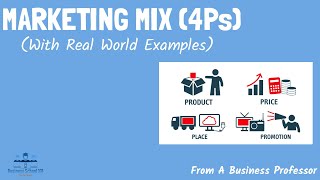
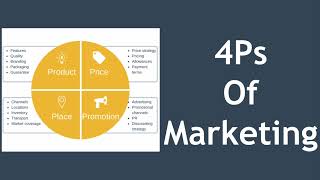
These four questions map directly to the four Ps of marketing: Product, Price, Place, and Promotion. Together they form the "marketing mix", a framework for thinking through all the moving parts of getting something into the right hands.
Quick Summary
- The 4 Ps (Product, Price, Place, Promotion) are the foundation of any go-to-market strategy.
- The 7 Ps add People, Process, and Physical Evidence, essential for service businesses.
- All seven Ps connect to each other; changing one always affects the rest.
- Most marketing problems are misdiagnosed as "not enough promotion" when the real issue is Price or Place.
- Use the 7 Ps as a diagnostic tool: find the broken P before spending money on the others.
Where the Framework Came From
The 4 Ps were introduced by marketing professor E. Jerome McCarthy in 1960 in his textbook Basic Marketing. Philip Kotler then popularized the framework globally through his own textbooks in the 1970s and 1980s.
In 1981, researchers Bernard Booms and Mary Bitner argued that service businesses (hotels, banks, software companies, healthcare) needed more than four Ps. They added three: People, Process, and Physical Evidence, creating the 7 Ps model that is now the standard for service marketing.
The 7 Ps are not a replacement for the 4 Ps. They are an extension. Product, Price, Place, and Promotion still apply to every business. The extra three Ps matter most when part of what you are selling is the experience of getting it.
The 4 Original Ps, Explained Simply
1. Product, What You Are Actually Selling
A product is anything that satisfies a want or need. It could be a physical object (a pair of running shoes), a digital service (a streaming subscription), or even an experience (a hotel stay). When you define your product in the marketing mix, you need to go beyond "what it is" and describe:
- Features: what it does (waterproof, 4K resolution, 24/7 support)
- Benefits: what that means for the user ("you will not miss a meeting even if your phone dies")
- Positioning: how it compares to alternatives in the customer's mind
Nike is a useful example here. Nike does not just sell shoes. It sells athletic identity. The same rubber-and-foam product becomes a different product depending on the athlete, the sport, and the story around it.
Nike uses athlete collaborations and limited-edition drops to make each product feel distinct, even when the manufacturing differences are minimal.
2. Price, The Signal, Not Just the Number
Flipkart's 2023 Big Billion Days festive sale With quick-commerce apps and Amazon undercutting on speed, Flipkart needed a pricing event that signaled deep value without permanently discounting its everyday catalog. An 8-day event combining tax-driven price cuts, bank-card discounts, no-cost EMI plans, and a new 'Trust Shield' buyer-protection layer, all timed to the festive shopping season.
Result: Roughly Rs 50,000 crore (about $6 billion) in gross sales over 8 days, a 16% jump over the prior year, with 1.4 billion customer visits and the event alone estimated at around 10% of India's total e-commerce volume for that window. (8 days).
SourcePrice is not just what the customer pays. It is a signal of how valuable you believe your product is. Charge too little and customers assume low quality. Charge too much without matching brand equity and they go elsewhere.
There are four main pricing strategies:
| Strategy | Logic | Best For |
|---|---|---|
| Cost-plus | Add a margin to production cost | Commodity products |
| Value-based | Charge what the outcome is worth to the customer | B2B software, consulting |
| Competitive | Price relative to what rivals charge | Mature, crowded markets |
| Penetration | Start low to gain share, raise prices later | New entrants, marketplaces |
Apple uses price skimming (starting high, then releasing cheaper variants). The iPhone launched at $499 with a 2-year AT&T contract in 2007. That premium price was not just a revenue decision, it was a signal that this was not a cheap phone.
The price anchored the product's positioning in the customer's mind before a single ad ran. Apple generated $122.5 billion in iPhone revenue in fiscal year 2024, accounting for roughly 52% of total Apple revenue, which shows how central the pricing strategy is to the whole business model.
3. Place, Where and How Customers Access It
Airbnb's 2022 Summer Release, the Categories redesign Search-only discovery only worked when travelers already knew a destination by name, which kept demand concentrated in the same handful of cities. Replaced destination-search-first browsing with 56 tag-driven categories (Treehouses, Domes, Amazing Views, and more) covering over 4 million unique homes, letting guests discover a place without typing a location.
Result: Wishlisting of listings in the newly surfaced categories jumped sharply, treehouses up 51%, boats up 160%, domes up 355%, spreading demand toward inventory travelers never used to search for by name. (Ongoing since the 2022 Summer Release).
SourcePlace (also called distribution) is about getting your product in front of the customer at the right moment, in the right channel. This is the most overlooked P.
Distribution options include:
- Direct-to-consumer (DTC): selling through your own website or store (Warby Parker, Glossier)
- Retail: selling through third-party stores (Coca-Cola in every convenience store globally)
- Marketplaces: selling through Amazon, Etsy, or app stores
- Wholesale: selling to distributors who sell to retailers
Dollar Shave Club disrupted the razor market not by making a better razor, but by changing the Place strategy. Instead of fighting for shelf space at Walmart against Gillette, they sold directly to customers via a subscription model online.
By 2016, Dollar Shave Club had 3.2 million members and was acquired by Unilever for $1 billion, largely on the strength of a distribution innovation, not a product one.
4. Promotion, Everything That Drives Awareness and Action
Promotion covers all the ways you communicate with potential and existing customers:
- Advertising (paid media: search ads, social ads, TV, billboards)
- Content marketing (blog posts, videos, podcasts)
- PR (press coverage, thought leadership)
- Social media (organic and paid)
- Email marketing
- Sales promotions (discounts, coupons, limited-time offers)
- Partnerships and sponsorships
Promotion cannot fix a broken product, wrong price, or missing distribution. This is the most common mistake in marketing. A company underperforms, so they increase the ad budget. But if the product is not solving a real problem, the price is wrong for the target customer, or the product is not in the channel where that customer actually shops, more promotion just accelerates the feedback loop that something else is broken. Audit the other Ps before increasing spend.
The Extra 3 Ps for Service Businesses
In 1981, Booms and Bitner observed that the 4 Ps worked well for physical products but left gaps for services. When you cannot touch, see, or try a product before you buy it, you need other signals to judge quality.
The three extra Ps provide those signals.
5. People, Everyone Who Touches the Customer
People means every human who interacts with a customer before, during, or after a purchase. This includes salespeople, customer support agents, delivery drivers, and even the faces associated with your brand.
A poor support interaction can undo months of brand advertising. Conversely, exceptional service becomes a competitive advantage that is very hard to copy. Zappos built its entire brand around People: the company was famous for support calls where agents would spend hours helping customers, even referring them to competitors if Zappos was out of stock.
That People strategy contributed to Zappos being acquired by Amazon in 2009 for $1.2 billion.
6. Process, How the Service Is Actually Delivered
Process is the system and flow that delivers the service to the customer. A smooth, predictable process builds trust. A chaotic one destroys it.
Think of the difference between booking a hotel on a well-designed website (clear dates, instant confirmation, mobile check-in, keyless room entry) versus calling a hotel directly and being put on hold three times. Same product (a hotel room), very different Process experience.
In digital marketing, Process shows up as:
- Onboarding flows (how a new user gets set up with your SaaS product)
- Checkout experiences (how many steps to complete a purchase)
- Returns processes (how hard it is to get a refund)
- Customer support workflows (response time, resolution quality)
7. Physical Evidence, Tangible Proof of an Intangible Promise
When a customer cannot evaluate a service before buying it, they look for physical cues that signal quality. This is Physical Evidence.
Physical Evidence includes:
- Packaging and unboxing experience
- Office or store design and cleanliness
- Website design and load speed
- Uniforms and badges
- Certificates, reviews, testimonials, and social proof
Apple's retail stores are a masterclass in Physical Evidence. The open-plan design, the natural materials, the non-commissioned staff, the Genius Bar setup, all of it communicates "premium" before a customer even looks at a price tag.
Those stores generate approximately $5,500 in revenue per square foot annually, making them among the highest-performing retail locations in the world.
Netflix is a clean example of all 7 Ps working together. Product: thousands of titles plus original content (Stranger Things, Wednesday, Squid Game). Price: tiered plans from $6.99/month (with ads) to $22.99/month (4K) in 2024, using price segmentation to capture different customer groups. Place: available on every device with a screen, no physical distribution needed. Promotion: heavy investment in PR around original content launches, plus personalised in-app recommendations. People: content teams, customer support, and recommendation algorithm engineers. Process: a recommendation engine that serves the right title to the right subscriber within seconds, reducing churn by keeping people engaged. Physical Evidence: the red "N" logo, the quality of original show production, and the seamless UI across devices. Netflix reached 301.6 million paid subscribers globally in Q4 2024, with a 16% year-over-year increase, driven by the password-sharing crackdown combined with the lower-price ad-supported tier, a pricing and process change, not just a promotion one.
How All 7 Ps Connect
The 7 Ps are not independent checkboxes. They form a system. Change one and the others shift.
Here is how a change in one P ripples through the rest:
- You raise the Price (P2). Customers now expect higher quality. The Product (P1) and Physical Evidence (P7) must match that expectation or the brand loses credibility.
- You change the Place (P3) from retail to DTC. Now you own the customer relationship, so Process (P6) and People (P5) become your responsibility, not the retailer's.
- You invest in People (P5) and reduce support response time from 24 hours to 2 hours. This becomes a Promotion (P4) advantage: you can now claim "fastest support in the category."
Using the 7 Ps as a Diagnostic Tool
The most practical use of the 7 Ps is diagnosis. When sales are underperforming, run through each P before assuming the answer is "more ads."
Start the audit with Place. In digital marketing, distribution problems are the most common and least discussed cause of underperformance. A great product at a fair price, well-promoted, but listed in an app store category nobody browses, or sold through a retail partner who de-prioritizes it on shelf, will still fail. Map your customer's actual purchase journey before touching anything else.
Common Mistakes to Avoid
Mistake 1: Promoting your way out of a product problem. If the product does not solve a real problem better than alternatives, no amount of advertising will sustain it. Promotion can accelerate discovery, but customers will stop converting once they realise the product does not deliver.
Mistake 2: Setting price based on costs, not value. Cost-plus pricing feels logical but ignores what the customer is actually willing to pay. A B2B software tool that saves a company $500,000 per year in labour can charge far more than its development cost would suggest. Price should reflect value delivered, not cost incurred.
Mistake 3: Ignoring the extra 3 Ps for digital businesses. Many founders think People, Process, and Physical Evidence only matter for traditional service businesses like hotels or banks. They matter just as much for SaaS, e-commerce, and apps. The quality of your onboarding flow (Process), your support team's response quality (People), and the design and feel of your product UI (Physical Evidence) all directly affect churn and NPS (Net Promoter Score, a measure of how likely customers are to recommend you).
Mistake 4: Treating the 7 Ps as a one-time exercise. The marketing mix is not something you set at launch and forget. Markets change. Competitors change their pricing. New distribution channels emerge. New hires change the People P. Review your mix at least annually, and whenever performance drops unexpectedly.
The One-Line Takeaway
Find the broken P first, because throwing promotion at a product, price, or place problem just burns your budget faster.
Related Concepts
- What Is Marketing?, The 7 Ps only make sense once you understand what marketing is trying to accomplish. Start here if you have not already.
- STP: Segmentation, Targeting, Positioning, STP defines who you are marketing to; the 7 Ps define how you reach them. The two frameworks are always used together.
- Positioning, The Product and Price Ps are heavily shaped by positioning. How you position your brand determines what price signals are credible and what features actually matter.