Branding vs. Identity vs. Logo
Most teams say "brand" when they mean "logo." Most agencies sell "brand identity" when they mean a style guide. These three terms, brand, identity, and logo, get used interchangeably in almost every marketing conversation, and that confusion costs real money and real clarity. So let us pull them apart.
Quick Summary
- A logo is just a mark, a single visual file that means nothing on its own
- Brand identity is the full visual and verbal system: colors, fonts, tone, and more
- A brand lives in your audience's mind, not in any file you control
- You cannot build a brand directly, you create the conditions for one to form
- Consistent branding can boost revenue by up to 23%, according to Lucidpress (2019)
Why this matters right now: Strong brands are worth more than ever. The 100 most valuable brands worldwide were worth a combined $8.3 trillion in 2023 (Kantar BrandZ). Yet most teams still confuse logo work with brand work, and waste budget as a result.
The Three Layers: Defined Clearly
Logo
A logo is a mark. It is a symbol, a wordmark, or a combination of both. Think of the Nike swoosh, the Apple silhouette, or the Slack hashtag. A logo is a single designed artifact that lives in a file. On its own, it means nothing. Context, built over years of experience, advertising, and product quality, is what gives a logo meaning. The swoosh did not start famous. Nike made it famous.
TransferWise's company-wide rename The company needed a logo and name that anchored a much bigger identity, no longer just international transfers, but a full multi-currency account, so the mark had to represent the whole system, not just the original product. TransferWise renamed itself Wise, replacing its old wordmark and colour system with a new logo and identity built around a borderless-money positioning.
Result: Wise scaled from roughly 10 million customers at the time of the rename to 12.8 million active customers by fiscal year 2024, with cross-border transaction value reaching £118.5 billion that year (2021 - 2024).
SourceBrand Identity
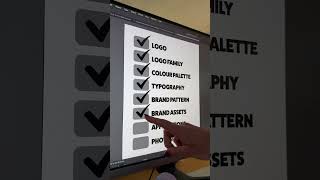
Brand identity is the full visual and verbal system a company uses to communicate consistently. This includes the logo, yes, but also the color palette, typography, illustration style, photography treatment, tone of voice, and naming conventions. Identity is the design layer: the rules for how things look and sound.
Research backs up why this matters. Color alone increases brand recognition by 80% (University of Loyola study). Consistent brand presentation across all channels boosts revenue by 23-33% (Lucidpress, 2019).
An identity document tells your designer what font to use on a billboard. It does not tell your CEO what the company stands for. That is the brand's job.
Sea Limited's rebrand of its digital financial services arm Sea renamed SeaMoney to Monee so the whole financial-services brand identity, name, tone, visual language, matched the same simple, approachable voice as its sibling Shopee, instead of sounding like a back-office subsidiary. A full identity rename and visual refresh of the digital financial services unit across all its Southeast Asian markets.
Result: In the periods following the rebrand, Monee's revenue and adjusted EBITDA both grew more than 50% year-over-year, while its loan book grew 75% to $5.8 billion with non-performing loans holding steady at 1.1% (2025, ongoing).
SourceBrand
Brand is the thing that actually matters, and it lives entirely in other people's heads. A brand is the sum of every experience, impression, association, and emotion that a person connects to your company. You cannot create a brand directly, you can only create the conditions for one to form.
Seth Godin defined it clearly: "A brand is the set of expectations, memories, stories, and relationships that, taken together, account for a consumer's decision to choose one product or service over another."
When someone hears "Airbnb" and feels a flicker of trust or belonging before you have said anything else, that is the brand working.
How the Three Layers Connect
The hierarchy flows one direction: brand strategy defines what you want people to feel and believe. Brand identity translates that strategy into consistent visual and verbal language. The logo serves as a shorthand anchor for all of it.
This is why companies that rebrand without changing the underlying product, culture, or service almost never succeed. The new logo meets the same old experience. The brand, the thing in the customer's head, does not change just because the mark changed.
Real Company Examples
Airbnb (2014): Strategy Before Symbol
Airbnb's "Belo" rebrand in 2014 is one of the most analyzed in modern marketing. The internet spent 48 hours mocking the logo shape. But the real story was underneath: Airbnb had rewritten its brand strategy first.
They shifted their core idea from "rent someone's couch" to "belong anywhere", a fundamental change in positioning (the mental territory a brand owns in a customer's mind). The identity followed: warmer colors, a more human illustration style, a new tone of voice built around community.
Between 2014 and 2019, Airbnb grew from 11 million to over 500 million total cumulative guest arrivals. The logo did not do that. The brand, the redefined promise of belonging, did. The identity expressed it. The logo anchored it.
Burger King (2021): When Identity Drives Perception
Burger King's 2021 visual rebrand, reverting to a retro-inspired logo and dropping artificial colors from their food, is a masterclass in aligning identity with brand promise. The visual system changed to reinforce a "real food" message. Within the first year, brand preference scores rose measurably across key markets in Europe and the US. The rebrand won multiple Cannes Lions awards in 2021 for effectiveness, not just aesthetics.
This works because the identity change was downstream of a strategy change. Burger King first decided they wanted to own "real, no-nonsense food." Then they built the visual system to match.
Why This Distinction Changes How You Work
Understanding the difference between brand, identity, and logo changes how you prioritize work and spend budget.
- When briefing a designer, you need to know whether you're asking them to create a visual artifact (logo or identity) or to define what the company stands for (brand strategy). These are different jobs requiring different skills.
- When diagnosing a marketing problem, customers who do not convert or do not remember you rarely have a "logo problem." They more often have a brand clarity problem: they do not know what you stand for or why you are different.
- When building a new product line, you need to decide whether to extend the existing brand, create a sub-brand, or launch something entirely new. That is a brand-level decision, not an identity-level one.
- When measuring effectiveness, brand health metrics (awareness, association, trust, preference) live at the brand level. Tracking logo recognition is not the same as tracking brand equity (the accumulated value stored in a brand name).
The most expensive branding mistake: Treating a rebrand as a logo refresh. Companies going through strategic change, new positioning, new audience, post-acquisition, reputation repair, often scope the project as "update the logo and colors." This skips the hard work of defining what the brand now stands for. The result: a shiny new visual system on top of an unchanged strategic foundation. The market notices the mismatch almost immediately.
The Brand Building Process
Common Mistakes to Avoid
Confusing brand consistency with brand rigidity. Brand identity guidelines exist to create coherence, not to prevent adaptation. Many teams enforce style guides so strictly that every piece of communication looks identical but feels dead. A brand has a consistent point of view, not a consistent template. Mailchimp's identity system is famously flexible: the tone and personality stay constant while the visual expression shifts across contexts. That is exactly right.
The blank page test. Describe your brand's personality, values, and promise without using your logo, colors, or product features. If your team cannot do this in three sentences or less, or if five people on the team give five different answers, you have a brand strategy problem, not a brand identity problem. Fix the strategy first, then commission the identity work.
Key Stats to Remember
| What | Number | Source |
|---|---|---|
| Revenue boost from consistent branding | 23-33% | Lucidpress, 2019 |
| Consumers who need to trust a brand before buying | 81% | Edelman, 2019 |
| Brand recognition increase from signature color | 80% | University of Loyola |
| Time consumers take to judge visual brand appeal | 50 milliseconds | MIT research |
| Top 100 brands' combined value | $8.3 trillion | Kantar BrandZ, 2023 |
| Consumers preferring familiar brands | 59% | Zendesk CX Trends |
The One-Line Takeaway
Your logo is what people see, your identity is the system around it, and your brand is what people feel, and only the third one actually drives decisions.
Related Concepts
- Positioning, Before you can build a brand, you need to define the territory you want to own in your customer's mind. Positioning is the strategic input that brand identity translates into visuals and voice.
- Brand vs. Performance Marketing, Understanding the brand/identity/logo distinction clarifies why brand investment works differently than performance spend and why both are necessary.
- Customer Journey, Brand equity accumulates across every touchpoint in the customer journey. Mapping that journey reveals where your identity system either reinforces or undermines the brand promise.