Default Bias: How Pre-Selected Options Drive Decisions
People tend to accept whatever option is pre-selected for them. This is default bias, the well-documented tendency to stick with the status quo rather than make an active choice. For marketers, defaults are one of the highest-leverage levers available.
What the Research Shows
A landmark NBER 2024 study on automatic 401(k) enrollment found that switching from opt-in to opt-out raised employee participation from 37% to 86%, a 49-point lift with no change in benefits or incentives.
The company-level numbers are even more striking:
- HP: participation climbed from under 50% to 98% after automatic enrollment
- McDonald's: reached 95% participation, up from a much lower baseline
Nothing changed about the plan itself. The only variable was which option required action. When saving became the default, almost everyone saved.
Why Defaults Work
Default bias operates through three overlapping mechanisms:
- Status quo preference, changing the default requires effort; inaction feels safe
- Implied endorsement, people assume whoever set the default had a reason, so the pre-selected option feels trustworthy
- Cognitive load reduction, under uncertainty, accepting the default is the easiest decision
These forces combine to make defaults disproportionately sticky. Even users who notice a pre-ticked checkbox often leave it alone.
The Default Decision Flow
Marketing Applications
Email and Notification Opt-ins
Pre-ticking the newsletter checkbox or pre-enabling push notifications significantly raises opt-in rates. This is widely used in e-commerce checkout flows.
One important note: GDPR and CASL explicitly prohibit pre-ticked consent boxes for marketing emails in covered jurisdictions. The default must be unchecked where consent laws apply.
Pricing and Plan Selection
SaaS products routinely highlight a mid-tier plan as "recommended" or pre-select it in the plan picker. Users who see the $49/month plan already selected are more likely to purchase it than users who land on the $29/month plan. The default creates an anchor.
Product Configuration
When users build or configure a product, a laptop, a meal kit box, an insurance policy, defaults for add-ons and upgrades determine what ends up in the cart. Thoughtful defaults can increase average order value without aggressive upselling.
Subscription Renewal
Auto-renewal is the default in most subscription models. Cancellation requires deliberate action. This is default bias applied directly to retention.
HP and McDonald's: From 50% to 98%
When HP and McDonald's switched their 401(k) plans to automatic enrollment, participation did not nudge up a few points, it nearly doubled or more. HP went from under 50% to 98%. McDonald's reached 95%. These are not soft improvements; they are structural shifts driven entirely by which option required action. The employees, the plan terms, and the company match all stayed the same. Only the default changed.
Common mistake: Setting self-serving defaults that erode trust
Defaults work because users assume they reflect a reasonable recommendation. When a default is obviously designed to extract money or data rather than serve the user, burying an opt-out for third-party data sharing, pre-selecting the most expensive plan with no rationale, users who notice feel manipulated. The short-term conversion lift is real; so is the long-term damage to trust and brand perception. Set defaults that you could defend publicly.
Test your defaults. Run an A/B experiment comparing your current default against the next-most-logical option. Default effects are highly context-dependent: the "right" default for a B2B SaaS plan picker may be wrong for a consumer checkout flow.
How to Apply This in Your Work
- Audit every choice point in your funnel, identify which options are currently defaulted and whether they align with user intent and your business goal
- Set defaults to the most common desired outcome, if 70% of users who complete onboarding choose weekly emails, make weekly the default
- Reduce friction for the path you want, the default should require zero extra clicks; the alternative should require one
- Document your defaults as a team decision, avoids drift where individual developers quietly change defaults without anyone noticing
- Pair defaults with transparency, label the default clearly ("Recommended" or "Most popular") so users who want to customise can see what they are changing
Related Concepts
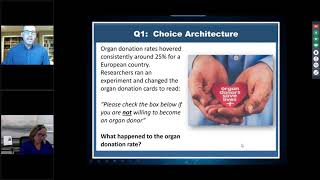
Default bias is one application of status quo bias, which itself sits within the broader category of choice architecture, the design of environments in which people make decisions. Richard Thaler and Cass Sunstein's work on "nudge theory" formalised how defaults can be used to guide behaviour without restricting options.
Other cognitive biases that interact with defaults:
- Anchoring: the default sets a reference point that influences evaluation of alternatives
- Loss aversion: changing the default feels like giving something up
- Decision fatigue: later in a session, users are more likely to accept defaults