The Peak-End Rule
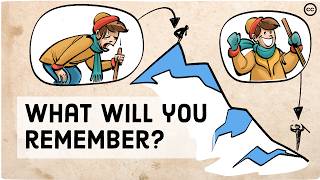
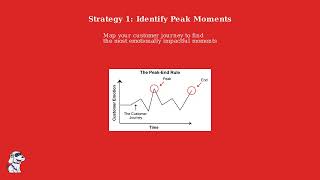
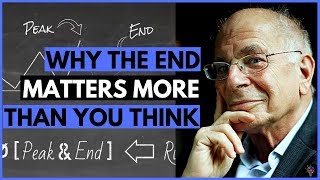
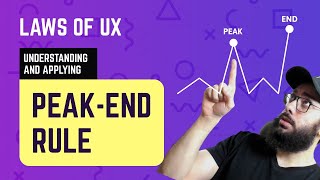
Your customer does not remember their experience. They remember a heavily edited highlight reel, specifically, the most emotionally intense moment and the final moment. Get those two beats right and a mediocre middle barely registers. Get them wrong and a great middle is wasted.
The Origin (Real Research)
The peak-end rule comes from Daniel Kahneman, Barbara Fredrickson, Charles Schreiber, and Donald Redelmeier's 1993 paper When More Pain Is Preferred to Less: Adding a Better End. In the cold-pressor experiment, participants held a hand in painfully cold 14 degree C water for 60 seconds (trial A), then in a second trial held it for 60 seconds at 14 degrees plus an extra 30 seconds while the water was gently warmed to 15 degrees (trial B). Trial B was objectively worse, same peak pain, more total pain. Yet when asked which trial they would repeat, a majority chose trial B.
Kahneman and Redelmeier replicated the finding in a clinical setting in their 1996 colonoscopy study (N = 154 patients). Patients who got a deliberately gentler last minute rated the procedure as less unpleasant, and were measurably more likely to return for follow-up screening, even though they endured a longer procedure overall. The retrospective memory of an experience is roughly the average of its emotional peak and its end, not its duration. Kahneman later called this "duration neglect" in Thinking, Fast and Slow (2011).
How It Actually Works
There are two selves at work: the experiencing self that lives through every moment, and the remembering self that decides whether you will come back. Marketing speaks almost exclusively to the remembering self.
A 90-minute flight with one terrible 5-minute delay at deplaning will be remembered as a bad flight. A 14-hour flight with a warm goodbye and a small unexpected gift at the gate will be remembered fondly. Duration barely figures in.
Why Marketers Care (2024 / 2025 examples)
Duolingo's habit-loop and streak-safety system, including end-of-lesson celebration moments Duolingo's growth team treated what a learner remembers about a lesson, not just how long it took, as the lever for whether they'd return the next day. Former Duolingo VP of Growth Jorge Mazal described a multi-year retention program, including streak-freeze safety nets and end-of-session celebration investment, that raised committed user retention (CURR) by 21% and cut daily churn among the app's best users by more than 40%.
Result: 40%+ reduction in daily churn among top-cohort users (Multi-year program, detailed in a 2024 interview).
Source- IKEA's bistro and Swedish Food Market. The cinnamon-bun-and-meatball stop near the exit is not an afterthought, it is the deliberate "end" of a physically exhausting maze. Multiple CX teardowns in 2024 (CMSWire, Yotpo) credit the bistro with rescuing the remembered experience from the maze in the middle.
- Trader Joe's checkout. The cashier chats, hand-stamps the kid's sticker, throws in a flower. It is the last 90 seconds, and it is engineered. Internal NPS at Trader Joe's consistently outranks larger grocers despite smaller selection and no loyalty program.
- Duolingo's streak celebration. The end of every lesson is a confetti-burst peak, XP, gem count, streak fire. The middle (drill-and-kill grammar) is forgettable on purpose. Duolingo reported a 350M user base in 2024 with engagement metrics that embarrass traditional ed-tech.
- Apple Store checkout. No cash register, no queue, no "have a nice day." A blue-shirt walks you to the door with your bag, says your name, and hands you the box. That is the engineered end.
Disney's FastPass+ (now Genie+) is a peak-end machine. Magic Kingdom guests wait an average of 45 minutes per ride, the middle is literally a queue. But the fireworks-and-castle-projection finale at park close is the peak, and the cast-member "see ya real soon" wave at the turnstile is the end. Disney's 2024 Parks segment posted $9.3B in operating income on a model that should, by ride-throughput math, generate complaints. It does not, because the remembering self goes home humming.
How to Apply It Ethically
Netflix's self-serve account cancellation flow A subscription's cancellation screen is the literal last moment of the relationship, exactly the beat the peak-end rule says gets remembered and decides whether someone ever comes back. Subscription-billing platform Recurly's benchmarking data found that 50% of Netflix subscribers who canceled in 2023 returned within six months, well above the 34% six-month win-back average across streaming services, a gap Recurly ties to Netflix's low-friction, guilt-free cancel flow versus peers that stack retention offers and re-entry hurdles.
Result: 50% six-month subscriber win-back rate vs. a 34% industry average (2023 cancellation cohort, reported 2025).
Source- Map your journey and mark the actual peak. Survey customers on the single most emotional moment. If your "peak" is unintentional, a confusing form, a long checkout, fix it before adding new highs.
- Engineer the end on purpose. The last email in your onboarding sequence, the order-confirmation page, the cancellation flow, these are remembered disproportionately. Spend design budget there, not on the splashy homepage hero.
- Front-load pain, back-load delight. If you must collect 12 form fields, collect 10 first and end with two easy ones. Kahneman's data says the order matters more than the count.
- End every support ticket with a human line. Not "Is there anything else?", a specific, named, warm sign-off. It is the cheapest CSAT lever in your stack.
Where It Backfires / Ethical Limits
The dark version is the "dark pattern goodbye": a cancellation flow that hides the unsubscribe button behind a guilt-ridden video of a sad puppy. You are weaponizing the end against the customer's actual interest. The FTC's 2024 "click-to-cancel" rule was a direct response to this pattern.
Peak-end also fails when the middle contains a deal-breaker, a security breach, a billing error, a rude rep. No amount of confetti at the end will paper over a broken trust event. Use peak-end to amplify a good experience, never to disguise a bad one.
Key Takeaways
- Memory of an experience is roughly the average of its emotional peak and its end. Duration is largely ignored (Kahneman & Redelmeier, 1996).
- Audit your customer journey for both, most brands accidentally engineer the peak and ignore the end entirely.
- The cheapest experience upgrade in marketing is usually the last 60 seconds of any interaction.