Why Psychology Matters in Marketing
Every year, marketers chase the next new thing: a new platform, a new ad format, a new algorithm. But here is what never changes: the human brain. The shortcuts, fears, and desires wired into us 200,000 years ago still drive every click, scroll, and purchase today. If you understand how people actually make decisions, you can write better ads, design better pages, and build campaigns that work across every channel, now and in the future.
Quick Summary
- Emotions drive roughly 95% of buying decisions. Logic is used after the fact to justify what we already felt.
- The brain has two decision modes: a fast, automatic emotional system (System 1) and a slow, deliberate logical system (System 2). Marketing targets System 1.
- A handful of psychological principles (scarcity, social proof, loss aversion, reciprocity) explain the vast majority of what makes marketing convert.
- Real brands (Booking.com, Duolingo, Amazon, McDonald's) have built billion-dollar growth engines by applying these principles systematically.
- Psychological tactics are powerful tools. Using them dishonestly is both unethical and increasingly illegal under EU and UK consumer law.
Why the Brain Is Not a Rational Calculator
Most people think they make decisions by weighing up the facts. Research says otherwise.
Harvard Business School professor Gerald Zaltman found that 95% of purchasing decisions happen in the subconscious mind. His research, published in his book How Customers Think (2003) and widely cited in marketing academia, showed that emotions are not just involved in decisions, they are the primary driver. Logic comes in afterward to justify the choice.
Psychologist Daniel Kahneman (Nobel Prize in Economics, 2002) mapped this into a simple model in his book Thinking, Fast and Slow (2011):
- System 1 is fast, automatic, emotional, and always on. It makes snap judgments in under 300 milliseconds.
- System 2 is slow, deliberate, and effortful. It kicks in for hard problems, but it is lazy. It mostly rubber-stamps what System 1 already decided.
When you see an ad and instantly feel "I want that", that is System 1. When you then spend 10 minutes reading reviews to justify the purchase, that is System 2 doing cleanup work.
Marketing's job is to win System 1 before System 2 even wakes up.
The 300-millisecond rule is not a figure of speech. Eye-tracking and EEG studies show that visitors form a first impression of a webpage in roughly 50 milliseconds (0.05 seconds) and decide whether to stay or leave within the first 300 milliseconds. If your headline, hero image, or offer does not trigger a positive emotional signal in that window, the rest of your page goes unread.
The Decision-Making Process: How It Actually Works
Understanding the path from "seeing something" to "buying something" makes every marketing decision clearer.
Most marketing fails at the very first step, the emotional signal. A technically perfect product page with clear specs and a fair price still loses if it triggers no emotion in the first second. The psychological principles covered in this lesson are essentially tools to produce that first positive emotional signal reliably.
The Core Psychological Principles (with Real Examples)
These are the six principles that show up most consistently in high-performing marketing. Each one is backed by decades of research and real-world case studies.
1. Social Proof
People look to other people to decide what is correct. If 10,000 customers have left five-star reviews, a new visitor assumes the product is good without reading a single review. The crowd has validated it already.
Why it works: In environments with uncertain outcomes (is this restaurant good? will this course teach me anything?), following the crowd is a fast, low-effort shortcut that is usually right.
Real example: Amazon displays star ratings, review counts, and "Amazon's Choice" badges prominently on every product. Research cited in Harvard Business Review found that products with more than 50 reviews convert at nearly 270% higher rates than products with zero reviews. Amazon's entire review architecture is a social proof machine built into the product page.
2. Loss Aversion
People feel the pain of a loss about twice as intensely as the pleasure of an equivalent gain. Losing $50 hurts more than finding $50 feels good. Kahneman and Amos Tversky established this in their landmark 1979 paper Prospect Theory, which has been cited over 80,000 times.
Why it works: Our brains are wired to avoid threats first, pursue rewards second. In marketing, framing something as "what you will lose by not acting" is more motivating than framing it as "what you will gain."
Real example: Booking.com uses loss aversion everywhere. Messages like "Only 2 rooms left at this price" and "You are missing out, this property was just booked" are not random copy. They are loss aversion triggers. Booking.com's former director of product has stated publicly that a single well-placed scarcity or loss-aversion message can lift conversion by 2 to 3 percent. On a business processing tens of billions in bookings annually, that represents hundreds of millions in additional revenue per principle applied.
3. Scarcity and Urgency
When something is rare or time-limited, we want it more. This is partly loss aversion (fear of missing out) and partly a cognitive shortcut: "if it is hard to get, it must be worth having."
Why it works: Scarcity triggers a hormonal response, a small release of cortisol (the stress hormone) that pushes the brain toward action rather than deliberation.
Real example: McDonald's launched limited-time menu items using FOMO (fear of missing out) as a core mechanic in 2024. The strategy: announce limited availability, seed social media with urgency, and pull items before demand fully cools. The result was social media flooded with posts and user-generated content, driving far more organic reach than a permanent menu item would have generated. The scarcity was the marketing.
4. Reciprocity
When someone gives you something of value for free, you feel a subtle obligation to give something back. This is not manipulation, it is a deeply wired social norm that makes human cooperation work.
Why it works: Humans have evolved as social animals. Reciprocity keeps communities stable. When a brand gives you a genuinely useful free resource, your brain registers a small social debt.
Real example: HubSpot gives away free CRM software, free marketing tools, free blog posts, free courses, and free certifications. The entirety of HubSpot Academy, hundreds of hours of professional marketing education, is free. HubSpot grew from $0 to over $2.6 billion in annual revenue (2024 annual report) largely on the back of this reciprocity engine. Free value first, paid upgrade later.
5. Authority
People defer to experts and trusted sources. A doctor's recommendation, a celebrity endorsement, or a badge from a recognized institution all short-circuit careful evaluation and trigger acceptance.
Why it works: In a complex world with too much information to process, deferring to recognized authorities is an efficient shortcut that is usually correct.
Real example: Dunkin' partnered with TikTok creator Charli D'Amelio in 2020. She was not an authority on coffee, but she had undisputed authority with a specific audience (Gen Z TikTok users). The result: a 57% spike in app downloads and a 20% jump in cold brew sales on launch day. The coffee did not change. Only the authority figure vouching for it changed.
6. Liking and Familiarity
We buy from brands and people we like and recognize. Repeated exposure to a brand (even without conscious attention) builds preference. This is the mere exposure effect: familiarity breeds trust, not contempt.
Why it works: The brain rates familiar things as safer. "I have seen this before" translates to "this is probably OK." It is an ancient survival heuristic applied to packaging and logos.
Coca-Cola's 2011 "Share a Coke" campaign replaced its iconic logo with 150 popular first names on bottles. The campaign personalized a familiar object, something you had seen thousands of times, making it feel freshly personal and worth sharing. The result: a 2% increase in U.S. sales, reversing a decade-long decline in the category. The formula (familiarity + personalization) was pure applied psychology.
A Simple Framework: The Psychology-First Checklist
Before writing any ad, email, or landing page, run through this checklist. Ask: which psychological levers are present in this piece?
You do not need all six on every page. Picking one or two and executing them with honesty is far more effective than stacking all six and looking desperate.
Real-World Application: How to Actually Use This
Step 1: Start with the emotion, not the feature
Instead of: "Our project management tool has 50 integrations." Write: "Stop losing hours to tools that do not talk to each other." (loss aversion + pain)
Step 2: Add one proof element
One real testimonial from a real customer with a real result beats ten generic five-star icons. Specificity is the signal of authenticity.
Instead of: "Customers love us!" Write: "Priya, a freelance designer in Bangalore, cut her client onboarding time from 3 hours to 20 minutes."
Step 3: Make any scarcity real
Fake countdown timers that reset when you refresh are not just ineffective, they are increasingly illegal. The UK Competition and Markets Authority (CMA) fined multiple online retailers in 2024 for using fake urgency claims. Only deploy scarcity if it is genuinely true.
Step 4: Give before you ask
Offer your best insight for free. Write the blog post that actually solves the problem. Create the free tool that people bookmark. Reciprocity takes time to build but compounds powerfully.
Psychological principles are not a shortcut to manipulate people into buying things they do not need. The EU Digital Services Act and UK consumer protection rules now explicitly classify deceptive urgency messaging, fake scarcity claims, and manipulative dark patterns as illegal. Beyond legality: customers who feel tricked do not come back, and they tell their networks. The principles work best and last longest when they are applied honestly.
Why This Is the Most Durable Marketing Skill
SEO tactics from 2015 are obsolete. Facebook Ads strategies from 2019 are unrecognizable. But the psychology driving why Dunkin's D'Amelio partnership worked in 2020 is exactly the same psychology that made people trust the town blacksmith because the mayor used him.
The channels change. The wiring does not.
A marketer who understands loss aversion, social proof, and reciprocity at a deep level will adapt to every new platform because they understand what they are actually doing: sending signals to an ancient brain inside a modern body. The tools change. The target stays the same.
The ROI on learning psychology is higher than the ROI on learning any single platform.
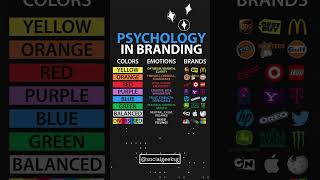
90% of quick product decisions are influenced by color alone (research cited by Kissmetrics). 92% of online consumers read at least one review before purchasing. These numbers do not require a new tool or a new budget, they require understanding the principles and applying them intentionally.
The One-Line Takeaway
Master the brain first; every platform becomes easier because you know what you are actually selling to.