Cialdini 6 Principles of Influence
Almost every persuasive ad, landing page, and checkout flow you have ever seen is running one of six plays. Robert Cialdini named them in 1984, and forty years later they are still the operating system of conversion marketing. If you only learn one framework from behavioral science, learn this one.
The Origin (Real Research)
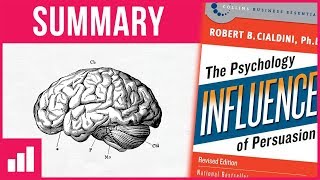
Robert B. Cialdini, then a social psychology professor at Arizona State University, published Influence: The Psychology of Persuasion in 1984. The book was the synthesis of roughly three years of undercover field work, Cialdini took jobs as a car salesman, fundraiser, and telemarketing trainee, combined with his laboratory experiments on compliance.
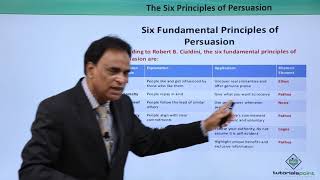
He distilled what he saw into six "weapons of influence": reciprocity, commitment and consistency, social proof, authority, liking, and scarcity. (He added a seventh, unity, in the 2016 edition Pre-Suasion, but the canonical six remain the core.) The book sold modestly for its first five years, then became one of the most cited works in marketing, with more than 7 million copies sold to date.
How It Actually Works
Each principle is a mental shortcut, a "click-whirr" response, in Cialdini's phrase, that the brain uses to make fast decisions without burning calories on deliberation.
A clean example: in a classic study Cialdini cites, waiters who left a single mint with the check increased tips by about 3%. Two mints raised tips by 14%. A mint plus a personal "for you nice people, an extra mint" lifted tips by 23%. Same cost, different reciprocity signal.
Why Marketers Care (2024/2025 examples)
Onboarding flow and the daily streak feature, Duolingo app Asking learners to pick a daily goal before signup, then visibly tracking their streak, turns a soft habit into a promise the user made to themselves, and breaking a streak feels like breaking that promise Onboarding commits new users to a daily goal pre-signup; the app then displays a running streak counter and offers a 'Streak Freeze' to protect it
Result: Users with a 7-day streak are 2.4x more likely to return the next day than users without one; the Streak Freeze feature cut churn by 21% among users at risk of breaking a streak (Full-year 2024 data).
SourceOura Ring product and marketing pages citing third-party sleep-tracking validation research Naming the actual hospital, study design, and comparison devices, instead of a vague 'clinically proven' claim, gives the authority signal something a skeptical buyer can independently check Cited a 2024 study led by researchers at Brigham and Women's Hospital that compared the Oura Ring against gold-standard polysomnography and rival wearables (Fitbit Sense, Apple Watch) on four-stage sleep classification accuracy
Result: The study found Oura the most accurate consumer sleep tracker of the three devices tested against medical-grade polysomnography (2024 validation study).
SourceThe six principles map almost one-to-one onto patterns you can spot on any modern site:
- Reciprocity, HubSpot gives away free templates, calculators, and the State of Marketing report before ever asking for a demo. Downloaders convert to MQLs at multiples of cold-traffic rates.
- Commitment & Consistency, Duolingo's onboarding asks you to pick a daily goal before you sign up. Once you have committed publicly to "10 minutes a day," abandoning the streak feels like breaking a promise to yourself.
- Social Proof, Amazon shows star ratings, review counts, and "frequently bought together" on every PDP. A Northwestern Spiegel Research Center study found that displaying reviews can lift purchase likelihood by up to 270% on higher-priced products.
- Authority, Toothpaste ads still feature actors in lab coats. In 2024, brands like Oura and Whoop lean on cited peer-reviewed studies and named sleep scientists on their landing pages.
- Liking, Influencer marketing is the liking principle industrialized. We buy from creators because they feel like friends. Glossier built a $1.8B brand almost entirely on this.
- Scarcity, Booking.com is the textbook case: "Only 1 room left!", "Booked 4 times in the last 24 hours", "23 people are looking right now". Every label is a scarcity or social-proof cue, and the company A/B tests thousands of variants a year.
Booking.com runs more than 1,000 concurrent A/B tests at any given time, many of them targeting Cialdini-style cues. Internal case studies and a 2023 Harvard Business School profile reported that scarcity messages like "Only 2 left at this price" lifted booking conversions by double-digit percentages on properties where they were shown, at the cost of zero incremental ad spend.
How to Apply It Ethically
- Lead with reciprocity that is genuinely useful. Give a real template, calculator, or audit before asking for the email. The gift has to feel like one.
- Use commitment in small, honest steps. Ask for a low-friction yes (a checklist, a quiz answer, a quick preference) and let the user see their own progress. Don't trap them.
- Show authentic social proof. Real reviews with reviewer names, dated timestamps, and verified-purchase badges beat fake "live activity" widgets every time, and they survive consumer-protection scrutiny.
- Cite real authority. Name your experts, link the studies, show the credentials. Stock-photo doctors are a 2005 move.
- Be likeable by being specific. A founder note that names the actual problem you solve outperforms generic warmth.
- Use scarcity only when it is true. "Only 3 seats left" should mean exactly that.
Where It Backfires / Ethical Limits
The same principles power the dark-pattern playbook the FTC and the EU are actively fining. Fake countdown timers that reset on refresh, "147 people are viewing this" widgets driven by random number generators, and forced-continuity subscriptions all weaponize Cialdini against the user. The FTC's 2023 "Bringing Dark Patterns to Light" report explicitly cites false urgency and false social proof as deceptive practices. Beyond the legal risk, the long-term cost is trust: once a user notices the timer is fake, your authority and liking signals collapse with it.
A simple test: would you be comfortable if the user saw the code behind your scarcity message? If not, fix the message, not the user.
Key Takeaways
- The six principles, reciprocity, commitment, social proof, authority, liking, scarcity, are mental shortcuts, not tricks. They work because brains conserve energy.
- The best modern marketing stacks them. Booking.com, Amazon, and Duolingo each layer three or four principles into a single screen.
- Authentic application compounds; manipulative application invites regulatory action and erodes trust. Use the principles to make true things more visible, not to manufacture false ones.