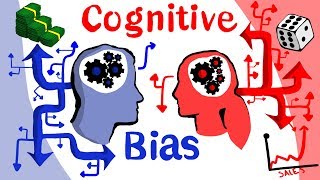
Cognitive Biases Every Marketer Uses
Buyers like to believe they make rational, careful decisions. They don't. Decades of behavioral-economics research show that humans run on mental shortcuts called heuristics. A handful of those shortcuts power almost every modern marketing tactic you've ever seen: from Amazon's "Only 2 left in stock" badge to Booking.com's red "In high demand!" banner. According to a 2024 Deloitte Global Consumer Trends Report, more than 70% of purchase decisions are driven by emotion and gut feeling, not logical reasoning.
Quick Summary
- Your brain has two modes: fast/automatic (System 1) and slow/deliberate (System 2). Marketing targets System 1.
- Four biases, anchoring, loss aversion, social proof, and scarcity, cover roughly 80% of real conversion tactics.
- Fake urgency and invented scarcity have been illegal in the UK since 2024 and are heavily penalized in the US.
- Ethical use of bias builds long-term trust; manipulative use destroys it within a quarter.
- Understanding these biases helps you both build better campaigns AND protect your own buying decisions.
The Origin: Real Research
The modern study of cognitive bias started with two Israeli psychologists, Daniel Kahneman and Amos Tversky. Their 1974 Science paper Judgment under Uncertainty: Heuristics and Biases introduced anchoring, availability, and representativeness heuristics. Their 1979 Econometrica paper Prospect Theory: An Analysis of Decision under Risk demonstrated loss aversion: losing $100 hurts roughly twice as much as gaining $100 feels good. Kahneman later won the 2002 Nobel Prize in Economics for this body of work.
Robert Cialdini, a social psychologist at Arizona State University, then translated this lab research into the real world. His 1984 book Influence: The Psychology of Persuasion codified six (later seven) principles, reciprocity, commitment, social proof, authority, liking, scarcity, and unity, after spending three years undercover in car dealerships, fundraising offices, and telemarketing rooms.
A cognitive bias is not a character flaw. It is a mental shortcut your brain evolved to save energy. System 1 (fast, automatic) handles 95% of decisions. System 2 (slow, analytical) is reserved for genuinely hard problems. Marketers design for System 1 because that is where decisions actually happen.
How It Actually Works
Kahneman's framing in Thinking, Fast and Slow (2011) is the clearest mental model. The brain runs two systems. System 1 is fast, automatic, and pattern-matching. System 2 is slow, deliberate, and lazy. Marketing rarely persuades System 2. It nudges System 1.
The 7 Biases Marketers Use Most
1. Anchoring Bias
The first number you see becomes your mental reference point (the "anchor"). Every number after it gets judged against that anchor, not against reality.
How marketers use it: Show a high price first, then reveal the real (lower) price. The lower price feels like a deal even if it was always the intended price.
Apple's classic example: At the 2010 iPad launch, Steve Jobs projected "$999" on screen for several minutes before revealing the real price of $499. The audience cheered. The iPad was not cheap, but $499 felt like a bargain against the $999 anchor. Apple used the exact same playbook in 2024 with the Vision Pro at $3,499, making every future headset rumored at $1,500-$2,000 feel affordable by comparison.
2. Loss Aversion
Prime Day 2024, every deal page on Amazon.com and the Amazon app Loss-framed cues (crossed-out list price, countdown timer, low-stock badge) make skipping a deal feel like losing money rather than simply not buying Stacked a struck-through list price, a countdown timer, and stock-scarcity badges across the entire Prime Day catalog
Result: $14.2 billion in US online sales over the two-day event, an 11% year-over-year increase (July 16-17, 2024).
SourcePeople feel the pain of a loss about twice as strongly as the pleasure of an equivalent gain. This is Kahneman and Tversky's core finding from Prospect Theory (1979).
How marketers use it: Frame choices around what users will lose if they don't act, not what they'll gain if they do. "Don't miss out" outperforms "Get access to" in most A/B tests.
Amazon Prime Day 2024: Amazon generated a record $14.2 billion in US sales (Adobe Analytics, 2024) during Prime Day. Every deal page combined three loss triggers: a crossed-out "list price" (anchor), a countdown timer (deadline), and "Only 3 left in stock" (scarcity). Each one frames inaction as a loss.
3. Social Proof
When people are uncertain, they copy what others are doing. The more uncertain the situation, the more powerful the pull toward the crowd. Cialdini identified this in 1984; it has been replicated hundreds of times since.
How marketers use it: Real review counts, "X people bought this today," customer logos on B2B landing pages, star ratings, and user-generated content all activate social proof.
4. Scarcity and FOMO (Fear Of Missing Out)
Hotel listing pages on Booking.com, tested against a control group Stacking real-time scarcity cues (limited rooms, high recent-booking counts) alongside social proof gives uncertain buyers a reason to act now instead of comparison-shopping further Added live scarcity messages like 'Only 1 room left at this price!' next to recent-booking counts on hotel listing pages
Result: Measurably increased both click-through rate and conversion on listings carrying the stacked cues, confirmed in a controlled field study (2017 field study).
SourceLimited supply signals high value. This is partly rational (if it's rare, others want it) and partly irrational (the brain overweights availability). FOMO, the anxiety of missing an experience, is scarcity applied to time and experience rather than physical goods.
Spotify Wrapped: By releasing each user's annual listening data only during a few weeks in December, Spotify turned a data dashboard into a social event. Spotify Wrapped 2024 generated over 400 million social media shares globally, according to Spotify's own Newsroom. Users weren't just sharing stats. They were avoiding the loss of a fleeting moment.
5. The Decoy Effect
Adding a third, deliberately unattractive option changes which of the original two options people choose. The "decoy" makes one of the real options look obviously better.
Classic example: Three pricing tiers where the middle tier is clearly the best value. Newspapers, SaaS tools, and streaming services all do this. The middle tier is what the company always wanted you to pick.
The Decoy Effect in action, The Economist's famous experiment: The Economist once offered three subscriptions: web-only for $59, print-only for $125, and print + web for $125. The print-only option (same price as the bundle) was the decoy. When researchers tested without the decoy, 68% chose the cheap web option. With the decoy, 84% chose the $125 bundle. Revenue nearly doubled, same product, one extra option added.
6. The Mere Exposure Effect
People develop a preference for things simply because they have seen them before. Familiarity breeds liking, even without conscious memory of past exposure.
How marketers use it: Retargeting ads (showing your product to someone who visited your site), repeated logo placement in sponsorships, and brand safety (appearing alongside premium content) all exploit mere exposure. Coca-Cola's global billboard presence is not primarily about information, it's about building subconscious familiarity.
7. The Reciprocity Bias
When someone gives you something, you feel an obligation to give something back. This is one of the most universal human social norms across every culture studied.
How marketers use it: Free samples, free trials, free content, free tools. HubSpot built a $1.7 billion business (2023 annual revenue) largely by giving away free marketing tools like Website Grader and free CRM seats, then converting users who felt the relationship was worth paying for.
Real Brand Case Studies
Booking.com: The Cialdini Stack
Booking.com is perhaps the most studied example of cognitive bias applied at scale. A single hotel listing page can simultaneously show: "27 people booked this in the last 24 hours" (social proof), "Only 1 room left at this price!" (scarcity), "You're eligible for a member discount" (reciprocity), and a price with the non-member rate struck through (anchoring). A 2017 University of Twente field study confirmed that stacking these cues measurably increased both click-through rates and conversion on hotel listing pages. Booking.com's growth team runs thousands of A/B tests per year specifically on these psychological triggers.
Mailchimp: Anchoring in Pricing Tiers
Mailchimp displays its most expensive plan prominently at the top of its pricing page before showing the recommended mid-tier plan. This is pure anchoring: by the time your eye lands on the "Essentials" plan, the "Premium" plan price has already set your mental reference. The "Essentials" plan feels affordable by comparison, even though it was always the intended purchase for most customers.
How to Apply This Ethically
The line between persuasion and manipulation is whether the cue is true. Fake countdown timers that reset on page refresh, invented "X people viewing now" counters, and ghost stock warnings are now actively prosecuted. The UK's Digital Markets, Competition and Consumers Act 2024 makes "false urgency" and fake reviews illegal, with fines of up to 10% of global turnover. The US FTC's Rule on Consumer Reviews and Testimonials took effect in October 2024 with comparable penalties. A 2024 CXL teardown found that consumers who detect manipulated urgency report lower trust and lower repeat purchase rates, wiping out short-term conversion lifts within a quarter.
Use anchoring honestly. Show a real, defensible reference price: your previous price, a competitor's price, or the unbundled-product price. Do not invent inflated "was" prices.
Use social proof you can verify. Real review counts, real install numbers, real customer logos. "Trusted by 12,000 teams" must mean exactly that.
Make scarcity true. If only 3 seats remain in a workshop, say so. If supply is unlimited, do not pretend otherwise. "Offer expires Friday" must mean the offer actually expires on Friday.
Give before you ask. Free value (content, tools, samples) that genuinely helps earns reciprocity. Free value that is low-quality or bait-and-switch destroys it.
Test with real users. Run A/B tests on your bias-informed copy. If the "loss-framed" version wins but your refund rate rises, you are attracting regretful buyers, not happy ones.
The One-Line Takeaway
People don't buy products, they buy the feelings your framing creates, so make those feelings earn long-term trust, not just a single click.