Loss Aversion
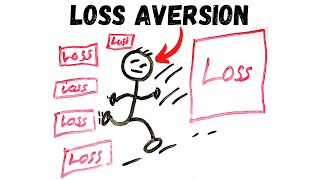
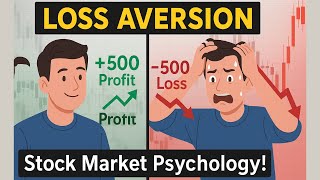
People do not weigh gains and losses on the same scale. Losing $100 feels roughly twice as painful as winning $100 feels good.
That asymmetry quietly powers most of the high-converting copy you see today. If you understand loss aversion, you stop writing "get" headlines and start writing "keep" headlines.
Quick Summary
- Losing something feels about 2x more painful than gaining the same thing feels good (Kahneman and Tversky, 1979).
- The key lever is the "reference point", what people believe they already have. Shift that, and "not buying" suddenly feels like a loss.
- Free trials, expiry warnings, and scarcity badges all exploit this same mechanism.
- Loss framing consistently outperforms gain framing in A/B tests, often by 15-54%.
- Fake scarcity breaks trust permanently once discovered. Use real constraints only.
The Origin (Real Research)
Loss aversion was named by Daniel Kahneman and Amos Tversky in their 1979 paper "Prospect Theory: An Analysis of Decision under Risk", published in Econometrica. Their canonical experiment showed that most people refuse a 50/50 coin-flip for +$100/-$100, and typically demand a potential gain of around $200 before they accept a $100 downside risk. The ratio of loss pain to gain pleasure they measured was approximately 2:1.
That work earned Kahneman the 2002 Nobel Memorial Prize in Economics (Tversky had died in 1996 and was ineligible).
A 2020 cross-cultural replication across 19 countries and 4,098 participants, summarized by Columbia Mailman School of Public Health, reconfirmed the effect at roughly a 2:1 loss-to-gain ratio across cultures. Later research puts the ratio closer to 2.5:1 in some contexts, we are roughly 2.5 times more sensitive to losses than to equivalent gains.
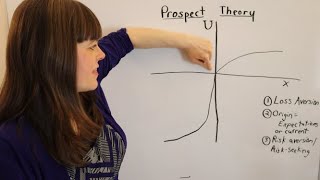
Loss aversion is part of "prospect theory" (the formal name for Kahneman and Tversky's framework). Prospect theory describes how people actually make decisions under uncertainty, as opposed to how economists assumed people made decisions (rationally). The key insight: people evaluate outcomes relative to a reference point, not in absolute terms.
How It Actually Works
Streak Freeze feature and streak-loss push notifications a streak becomes something users feel they already own, so an insurance mechanic against losing it taps loss aversion directly instead of promoting a new gain Duolingo lets users spend in-app gems on a 'Streak Freeze' that protects an existing streak from breaking after a missed day
Result: Streak Freeze usage lifts long-term retention by 10%, and users who reach a 7+ day streak retain at 2.4x the rate of users with no streak (reported on Duolingo's own product blog).
SourceThe brain treats your current state, what you own, what you almost had, what you signed up for, as a reference point. Anything that pulls you below that point registers as a loss. Losses trigger stronger emotional responses than identical gains above the same reference point.
The implication for marketers is concrete: framing the same offer as "avoid losing X" produces stronger action than framing it as "gain X", even when the math is identical.
This works because of a closely related concept called the endowment effect (the tendency to value things more once you own them). Give someone something first, then threaten to take it away, and you create a powerful loss. This is why free trials convert.
Real Case Studies with Numbers
Taxify (now Bolt), 54% conversion improvement
Bolt, the European ride-hailing app, ran a driver recruitment campaign. Their original message framed earnings as a gain: "Earn decent money driving with Taxify." They tested a loss-framed version: "Would you rather sit at home or earn €60 tonight?"
The loss-framed version achieved a 54% higher conversion rate in signup completions. The mechanism was simple: they quantified what the driver would lose by staying home, making inaction feel costly rather than neutral.
Home Energy Study, 150% adoption increase
A widely-cited field experiment (referenced by InsideBE and behavioral economists including Kahneman) tested how homeowners responded to insulation advice. One group was told: "You will save 50 cents per day by insulating your home." Another group was told: "You will lose 50 cents per day by not insulating your home."
Identical math. The loss-framed version increased insulation adoption by 150% compared to the gain-framed version.
Booking.com scarcity messaging
Booking.com uses multiple simultaneous loss cues on hotel listings:
- "Only 1 room left at this price"
- "In high demand, booked 14 times in the last 24 hours"
- Countdown timers on deals
Nielsen Norman Group documents this as one of the clearest applied uses of prospect theory in modern UX. Each signal reframes inaction as losing a deal you nearly had.
Apple, trade-in programs reversing sales decline
Apple's trade-in program, expanded significantly across its global retail operations, frames the value proposition around what customers lose by not trading in their old device. Research published in 2025 noted that Apple's Chinese market strategy, accepting non-Apple trade-ins and adjusting pricing, reversed a sales decline by making the switch feel like reclaiming value rather than spending money. The trade-in framing converts "buying a new phone" into "recovering money from your old one."
The headline swap test
Take any value proposition and write two versions:
- Gain frame: "Save 4 hours a week on reporting"
- Loss frame: "Stop losing 4 hours a week to manual reporting"
Then write a third version that names the reference point:
- "Reclaim the 4 hours a week your team is currently losing to manual reporting"
In most e-commerce and SaaS A/B tests documented by AB Tasty and others, the loss frame outperforms the gain frame. The third version, which names a specific loss the reader is already experiencing, tends to perform best of all.
The Mechanism Behind Free Trials
Free trials are the most systematically engineered use of loss aversion in software. Here is the sequence:
Spotify, Netflix, and Notion all follow this model. Cancelling no longer feels like "not buying", it feels like losing features you already use. The longer the trial, the deeper the endowment effect sets in, and the stronger the conversion impulse at expiry.
SaaS companies have taken this further. Instead of "Upgrade to keep premium," they now send "Your premium features expire in 3 days." The first frames the situation as a gain (upgrade). The second frames it as a loss (expire). Conversion improvements of 15-25% have been reported in e-commerce and SaaS A/B tests comparing these two framings.
How to Apply It Ethically
Prime subscription cancellation flow repeated reminders of benefits and discounts about to be lost turned a routine cancellation into a guilt-trip loss frame, the exact dark pattern this lesson's ethical-limits warning describes The FTC alleged the cancellation process required a four-page, six-click, fifteen-option sequence full of diversions reminding users what they would lose by leaving
Result: Amazon agreed to a $2.5 billion FTC settlement in September 2025 ($1 billion in fines plus $1.5 billion in consumer refunds), among the largest in FTC history (FTC complaint filed 2023, settled September 2025).
SourceThese tactics work because of genuine psychology. You do not need to manufacture anything:
1. Reframe gains as avoided losses in your copy "Stop losing 4 hours a week to reporting" beats "Save 4 hours a week." Same benefit, sharper teeth. The loss frame works because readers already know the problem exists, you are naming their current loss, not inventing one.
2. Give before you ask Drop the credit, feature, or free month into the user's account first, then ask for the conversion to "keep" it. The endowment effect does the closing. This is ethical when the trial is genuinely useful, not artificially crippled.
3. Anchor the reference point on the trial state When a free trial ends, list specifically which features the user will lose, by name. "You will lose: unlimited exports, priority support, and your saved templates" outperforms "You'll be downgraded to the free plan." Vague loss warnings underperform specific loss lists.
4. Quantify the loss in the reader's terms "Lose €60 tonight by staying home" (Bolt's driver copy) outperforms "Earn €60 tonight." The difference is making inaction feel costly. Use the reader's own numbers: time lost, money lost, leads missed.
5. Use real deadlines only A 24-hour timer that resets every time the page reloads is now widely spotted by users. Once spotted, every future claim is permanently discounted. Use deadlines attached to real events: stock levels, cohort enrolment, event dates.
Where loss aversion backfires
Loss aversion crosses into manipulation when the loss is manufactured. Countdown timers that never expire, fake "Only 2 left!" messages when stock is unlimited, or guilt-trip unsubscribe flows ("Are you sure you want to lose all your progress?") are dark patterns. The FTC's 2023-2025 crackdown on dark-pattern subscription flows targets exactly these tactics.
A second failure mode: loss framing on low-stakes decisions reads as parody. "Don't lose your spot on our newsletter" for a free email list signals desperation, not value. Match the intensity of the loss frame to the actual stakes.
The Loss Aversion Copywriting Checklist
Before publishing any headline, CTA, or email subject line, run it through these questions:
- Does this frame the outcome as a gain or a loss? Can you test both?
- Have you named the specific thing the reader will lose by not acting?
- Is the loss you are describing real, or manufactured?
- Is the emotional intensity of the loss frame proportionate to the actual decision stakes?
- Is the deadline, scarcity, or expiry message factually true?
The One-Line Takeaway
People do not fear missing out on gains, they fear losing what they feel they already have, so give it to them first.
Key Takeaways
- Kahneman and Tversky's 1979 prospect theory established losses feel roughly 2-2.5x as intense as equivalent gains. The 2020 cross-cultural study across 19 countries confirms it holds globally.
- The most powerful application is not a scarcity badge. It is shifting the user's reference point so that not buying feels like losing something they already own.
- Real case studies: Bolt achieved 54% higher conversions with loss-framed driver copy. Loss-framed home insulation advice increased adoption by 150% versus gain-framed advice.
- Free trials engineer loss aversion systematically by raising the reference point during the trial, then threatening to pull it down at expiry.
- Fake scarcity and manufactured losses work once, then permanently damage trust. Use real constraints or none at all.