E-E-A-T
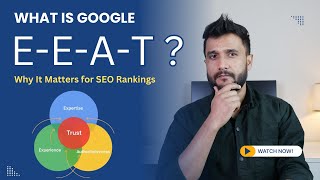
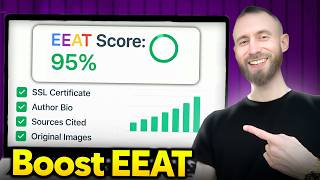
When Google decides which pages deserve to rank, it does not simply count keywords or backlinks. It asks a deeper question: should a real person trust this content? The answer comes from a framework called E-E-A-T, Experience, Expertise, Authoritativeness, and Trustworthiness. These four signals tell Google how credible a page (and the site behind it) actually is.
Quick Summary
- E-E-A-T stands for Experience, Expertise, Authoritativeness, and Trustworthiness, Google's quality checklist for content
- It is not a direct ranking switch, but it shapes how Google's algorithms score your content quality
- Trust is the most important of the four letters, according to Google's own guidelines
- The "Experience" E was added in December 2022, meaning credentials alone are no longer enough, you need firsthand involvement with the topic
- YMYL topics (health, finance, legal, safety) face the strictest EEAT scrutiny because bad advice causes real harm
What Exactly Is E-E-A-T?
Google's Search Quality Rater Guidelines is a document used by thousands of human contractors who evaluate search results. It lays out E-E-A-T in detail. Quality raters do not directly change rankings, but their feedback trains the algorithms that do. So when the guidelines say a medical article written by an anonymous author with no credentials is "low quality," that judgment eventually shapes what ranks for health queries.
The framework started as E-A-T (no first E) and gained the "Experience" dimension in December 2022. That addition was intentional: Google now wants to see that content creators have firsthand, lived experience with the topic, not just academic knowledge.
A December 2025 study by Wellows analyzed 15,847 AI Overview citations across 63 industries and found that 96% of citations came from sources with strong E-E-A-T signals (a 0.81 correlation), with citation-quality verification roughly 27% stricter than in 2024. A separate 2024 SEMrush study found pages with strong E-E-A-T signals had a 30% higher chance of ranking in the top 3 positions compared to pages with weak signals.
Breaking Down Each Letter
Experience: Have You Actually Done This?
Wirecutter's newsroom of 160 journalists hand-tests products before publishing a recommendation, rather than compiling summaries of other sites' reviews. Google's Experience signal rewards first-hand, lived involvement with a topic over secondhand research, and Wirecutter built its entire editorial model around that distinction years before the term 'E-E-A-T' existed. Every review documents specific testing conditions, timeframes, and comparison products the reviewer actually used.
Result: Wirecutter drove more than $1 billion in gross merchandise value in both 2023 and 2024 and reaches 15 million monthly visitors. (measured across 2023 and 2024).
SourceExperience is the newest and most personal letter. It asks whether the author has direct, first-person involvement with the subject. A review of a hiking boot written by someone who wore it for six months carries more weight than a summary compiled from other reviews online.
This distinction matters enormously for content strategy. Credentials alone are no longer enough. You need to demonstrate that you have actually done the thing you are writing about.
Examples of strong Experience signals:
- A product reviewer who includes personal photos or videos of them using the item
- A travel writer who quotes specific prices they paid and queues they waited in
- A financial writer who shares specific decisions they made with their own portfolio (with appropriate disclaimers)
Expertise: Do You Know Your Subject?
Every Investopedia article displays three separate editorial roles: an author, a reviewer, and a fact-checker, not just a single byline. On YMYL finance content, a single unnamed byline cannot demonstrate formal expertise, so Investopedia layers a credentialed reviewer on top of the writer to make the expertise verifiable. Readers (and Google's raters) can see who wrote the explanation, which credentialed expert checked its accuracy, and who verified the facts, three distinct, named accountability layers.
Result: Investopedia reached roughly 80 million monthly visits per Ahrefs while operating almost entirely in the strict YMYL finance category. (as of November 2022).
SourceExpertise is the formal or demonstrated knowledge dimension. For a doctor writing about drug interactions, this means medical credentials. For a software engineer writing a tutorial, it means verifiable professional background or a body of published technical work.
Google's raters are trained to distinguish genuine expertise from the appearance of it. A page with a fake "MD" suffix in the author name but no linkable credentials will not fool the system.
Expertise is NOT just a title in the author box. Adding "Dr." or "MBA" to a byline without linking to verifiable credentials, a LinkedIn profile, a university page, a published paper, provides almost no benefit. Google and its raters look for an off-site paper trail, not just a label.
Authoritativeness: Does the Web Treat You as a Reference?
Authoritativeness is measured at the site level as much as the author level. It asks: does the broader web cite this source as a reference? This is where backlinks (links from other websites pointing to yours), brand mentions, Wikipedia citations, and press coverage come in.
A single expert writing for an unknown domain carries less authority than the same expert writing for a well-linked institution. Building authoritativeness is slow work, it accrues from consistent publishing, earning editorial links, and being cited by peers.
Trustworthiness: The Most Important Letter
Trustworthiness is the umbrella dimension. Google explicitly calls it the most important of the four. It covers:
- Accurate, well-sourced information
- Clear publication dates and correction policies
- Honest business practices: real contact information, accessible privacy policies, transparent pricing
- Absence of deceptive design (dark patterns, hidden fees, misleading headlines)
A page can have all three other letters and still fail on Trust if it buries corrections, hides authorship, or manipulates users.
Why It Matters: YMYL and the Stakes of Getting It Wrong
YMYL stands for "Your Money or Your Life." It is Google's label for topics where bad advice causes real-world harm: health, finance, legal advice, safety instructions. Google applies much stricter EEAT thresholds to YMYL content because the cost of ranking a low-quality result is not just a bad user experience, it can be a dangerous one.
Real-World Examples
Healthline: Rebuilding After the 2018 Medic Update
Google's Medic Update in August 2018 devastated many health and finance websites that lacked clear author credentials. An unnamed cosmetic health website tracked by Digivate lost rankings for over 500 keywords overnight, dropping from 600+ ranked keywords to fewer than 100. After implementing a full EEAT strategy (adding a verified medical team page, earning backlinks from authoritative health sites, and improving site credibility signals), the same site climbed to approximately 6,000 ranked keywords.
Healthline took the same lesson at scale. The site invested heavily in named medical reviewers (MDs, RNs, and relevant specialists), clear publication and review dates, and author bios linking to external credentials. By 2021, Healthline had grown to over 200 million monthly visitors, surpassing WebMD in some traffic estimates, and consistently holds top-3 rankings for high-competition health queries like "symptoms of diabetes."
NerdWallet: A Warning About Algorithm Volatility
NerdWallet is a well-established personal finance site with strong EEAT signals, named authors with financial credentials, clear sourcing, and years of editorial reputation. Yet in 2024, NerdWallet lost an estimated 6 million organic visits in just three months (a 23.6% drop) following Google algorithm changes. The case illustrates an important point: strong EEAT signals help, but Google's algorithm updates can shift what "strong" means. EEAT maintenance is not a one-time audit, it is ongoing.
How to Build E-E-A-T in Practice
Author Entity Building (Highest Leverage)
The single highest-leverage move most sites skip is building a consistent digital footprint for each author: a LinkedIn profile with verifiable work history, a Google Scholar profile if applicable, guest articles on recognised industry publications, and a Wikipedia mention if warranted.
When Google's Knowledge Graph can connect your on-site author bio to a coherent off-site entity (a "knowledge panel"), the trust signal multiplies. This is especially powerful for YMYL topics where one credible author with a strong entity can lift an entire content cluster.
Schema Markup for EEAT
Schema markup (structured data you add to your HTML) is one of the most direct ways to communicate EEAT signals to search engines. Key schema types:
- Author schema: connects your author bio to their credentials and other published work
- Organization schema: signals business legitimacy (address, contact, founding date)
- Article schema: includes publication date, author, and review date
- MedicalWebPage schema: for health content, signals medical review status
Content-Level Tactics
| Signal | What to Do |
|---|---|
| Experience | Include first-person observations, specific dates, personal photos or videos |
| Expertise | Link author bios to LinkedIn, credentials pages, or published work |
| Authoritativeness | Earn editorial links from respected publications in your niche |
| Trustworthiness | Add clear sourcing, a correction policy, visible contact information |
Common Mistakes
Treating E-E-A-T as a one-time audit. Many teams run an EEAT checklist once, add author bios, and move on. But authoritativeness builds over time and trust can erode fast. A single factual error left uncorrected, an outdated statistic, or a broken contact page quietly damages your quality signals. E-E-A-T requires ongoing content maintenance, not a one-off fix.
Other mistakes to avoid:
-
Confusing credentials with experience. A cardiologist's byline on a generic "heart health tips" article does not demonstrate experience. The content itself needs to reflect first-hand perspective, specific patient scenarios, personal observations, or direct product use.
-
Publishing thin YMYL content. A 300-word article about tax deductions with no author credentials and no sources will struggle regardless of how many backlinks you build to it.
-
Ignoring off-site reputation. EEAT is partly a measure of what the broader web thinks of you. If no credible publication has ever mentioned your brand or linked to your content, your authoritativeness score is low by definition.
-
Using AI content without a human experience layer. AI-assisted writing is fine. But AI cannot demonstrate first-hand experience. Every AI-drafted article needs a subject-matter expert to add personal observations, correct errors, and stake their name on the content.
The One-Line Takeaway
Build content that a named expert would stake their professional reputation on, because that is exactly what Google is checking for.
Related Concepts
- Link Building, authoritativeness, one of the four E-E-A-T pillars, is built primarily through earning quality backlinks and brand citations across the web
- Content Clusters, organising content into topic clusters is one of the most effective structural ways to demonstrate topical expertise at scale
- AI Overviews and GEO, as Google surfaces AI-generated answers, E-E-A-T signals increasingly determine which sources get cited inside those overviews