Off-Page SEO & Link Building
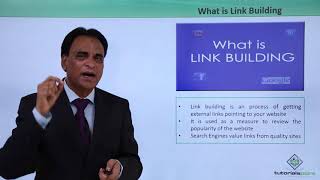
Off-page SEO is everything you do outside your own website to improve how search engines trust and rank it. The single biggest lever is backlinks, links from other websites pointing to yours.
Think of each link as a vote of confidence. Google counts those votes and uses them to decide which pages deserve the top spots in search results. Not all votes are equal. A link from a respected industry publication carries far more authority than one from a random directory. This is why quality beats quantity in link building.
Quick Summary
- The top-ranking page on Google has 3.8x more backlinks than pages ranked 2 through 10 (SEO.ai, 2024)
- 94% of all web content gets zero external links, which means most content is invisible to Google
- The most effective tactic in 2025 is Digital PR, chosen by 48.6% of SEO experts, not guest posting
- It takes an average of 3.1 months to see ranking improvements from new links
- Personalizing your outreach emails lifts response rates from 8.5% to 33%
Why Backlinks Matter So Much
Google was built on the idea that a link is an endorsement. When The New York Times links to your article, it signals to Google: "This source is credible enough for us to send our readers there." The more credible sites that link to you, the more Google trusts you.
The authority math: A site's Domain Rating (DR on Ahrefs) or Domain Authority (DA on Moz) is a score from 0-100 that estimates how much ranking power it can pass through links. A single link from a DR 80 site (think Forbes, Healthline, or a major university) can be worth more than 100 links from DR 10 sites.
Google's Penguin algorithm (launched in 2012, now built into the core algorithm permanently) ended the era of buying cheap links in bulk. Sites caught gaming the system saw their rankings collapse overnight.
Today, manipulative link schemes, buying links, link farms, excessive link exchanges, can earn a manual penalty that removes your pages from search results entirely.
The Link Building Playbook
Modern link building looks more like public relations (PR) than technical work. Your job is to create things worth linking to, then actively promote that content to the right people.
Strategy 1: Linkable Asset Creation
on the Ahrefs blog research portal to prove that publishing primary data on web search behaviour naturally attracts high-authority citations without paid outreach analyzed over 1 billion web pages from its index to measure search traffic and backlink distribution, packaging the findings into an interactive visual study titled '90.63% of Content Gets No Traffic From Google'
Result: earned backlinks from over 5,200 referring domains and 14,000+ total links, including citations from Forbes, HubSpot, and Search Engine Journal (multi-year compounding).
SourceA linkable asset is content so useful that other people naturally cite it. Examples:
- Original research: Surveys, data studies, industry reports. Brian Dean's Backlinko published a study analyzing 11.8 million Google search results. That single article earned over 2,700 backlinks from 1,560 referring domains, including HubSpot, Search Engine Journal, and Forbes, with no paid placement.
- Free tools: Calculators, generators, templates
- Comprehensive guides: The kind of "everything you need to know" resource people bookmark and share
- Unique visualizations: Infographics, interactive charts
A key insight from research: articles longer than 3,000 words attract 3.5x more backlinks than shorter content. Depth signals authority.
Strategy 2: Digital PR
across international lifestyle and business news outlets to build domain authority and rank for high-competition language queries against entrenched dictionary and edtech giants executed data-driven digital PR campaigns around workplace slang, multilingual communication trends, and cultural idioms, pitching exclusive survey statistics to national newsrooms
Result: acquired links from 12,000+ referring domains and scaled organic traffic to over 3 million monthly visits (2020 to 2024).
SourceDigital PR means pitching journalists, bloggers, and newsletter writers with stories or data that are genuinely newsworthy. You are not asking for a favor, you are giving them something useful for their audience.
This is the most effective tactic for 2025, chosen by 48.6% of SEO experts surveyed. It works because editorial links (ones placed by journalists, not SEO people) carry the most authority in Google's eyes.
What journalists want:
- Surprising data from a credible source
- Expert commentary on a trending topic
- A real human story that illustrates a bigger trend
Strategy 3: Broken Link Building
This is one of the lowest-friction tactics available. Here is how it works:
- Find a page on another site that links to a dead URL (a page that no longer exists)
- You have content that covers the same topic as the dead page
- Email the site owner, flag the broken link, and suggest your content as a replacement
You are doing them a favor by fixing a bad user experience on their site. Response rates on this tactic are significantly higher than cold outreach.
Strategy 4: Guest Posting
Writing an article for another site in your industry. You add genuine value to their audience. In return, you typically get one editorial link back to your site.
This still works in 2025, but only when the content is genuinely good and the site is relevant to your topic.
Guest posting red flags that can earn Google penalties: Publishing identical or thin content across dozens of sites. Using keyword-stuffed anchor text (the clickable words in the link) on every single link. Guest posting on sites that exist purely to sell links and have no real readership. Google's March 2024 core update specifically targeted low-quality, scaled content produced for links.
Strategy 5: The HARO / Expert Sourcing Method
HARO stands for "Help A Reporter Out." Journalists post questions looking for expert sources. You answer them with useful quotes. If your quote makes the article, you get a link from a news site.
In 2024 HARO was rebranded to Connectively, and similar platforms include:
- Qwoted
- SourceBottle
- Featured.com
Response takes about 10-20 minutes per query. One placement in a major publication can give you a link worth more than months of outreach.
Real Company Results
Raven360 (SaaS company): Between March and September 2023, just 6 months, Raven360 grew from 400 to 2,220 monthly organic visitors, a 455% increase. Their Domain Rating went from 42 to 48. The traffic value of their organic rankings grew by 548% (from $1,608 to $8,824 per month in equivalent ad spend). Strategy: targeted link building campaign focused on acquiring links from relevant SaaS and training industry sites.
Represent CLO (luxury streetwear brand): Over 35 months (August 2022, June 2025), consistent link building lifted monthly traffic from 70,000 to 419,000 visitors, a 499% increase. Domain Rating climbed from 50 to 65. The site went from ranking on 3,500 keywords to nearly 6,000. This was not a quick win, it shows how link authority compounds over time.
The Outreach Numbers You Need to Know
If you run an outreach campaign, set realistic expectations:
- Average cold email response rate: 8.5%
- Personalized outreach response rate: 33%
- This means: sending 100 personalized emails should yield about 33 replies
- Not all replies turn into links, expect about 5-15 actual links per 100 emails sent
The math means volume and personalization both matter. Quality outreach to 50 targeted sites beats a mass blast to 500 irrelevant ones.
What Makes a Good Link
When evaluating whether a link opportunity is worth pursuing, check these things:
| Factor | What to Look For |
|---|---|
| Domain Rating (DR) | Aim for DR 40+ for meaningful authority |
| Relevance | The site should cover your topic or industry |
| Traffic | The site should have real organic visitors |
| Anchor text | Should be natural, not keyword-stuffed |
| Link placement | Editorial links in the body text beat sidebar links |
Common Mistakes
Anchor text over-optimization: If every site links to your page using the exact phrase "best project management software," Google's algorithm flags it as unnatural. Real editorial links use varied anchor text, sometimes your brand name, sometimes a partial phrase, sometimes just "this article." Uniform anchor text is a pattern Google trained itself to detect and penalize.
Buying links from link farms: These are networks of low-quality sites built specifically to sell links. They are often easy to spot: low traffic, irrelevant content, excessive ads. Google's manual spam team actively hunts these. Getting caught means a manual penalty and a ranking drop that can take months to recover from.
Ignoring internal links: While outbound link building gets all the attention, linking between your own pages passes authority around your site. A high-authority page on your site can boost a weaker page simply by linking to it.
Giving up too soon: Research shows it takes an average of 3.1 months to see ranking movement from new links. Most people quit after 4-6 weeks and assume link building does not work.
The One-Line Takeaway
Build things worth citing, then tell the right people they exist, because a single link from a credible source outranks a hundred from nobodies.
Related Concepts
- E-E-A-T, Links are one of the strongest signals Google uses to evaluate Expertise, Authority, and Trust. Link building and E-E-A-T are two sides of the same authority coin.
- Content Clusters, Cluster architecture creates multiple linkable assets under one topic umbrella, making link building more efficient and spreading authority across related pages.
- Local SEO, Local link building (citations, local press, community sponsorships) follows the same principles but targets geographically relevant sources instead of national publications.