LLM Optimization (LLMO)
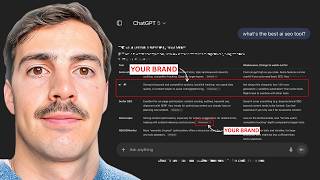
LLM Optimization is the practice of getting your brand, product, and content named inside the answers that ChatGPT, Claude, Perplexity, and Gemini write for users. When someone asks "what's the best email tool for a small SaaS?", the answer is no longer ten blue links. It's a paragraph that names three or four companies.
LLMO is the work of becoming one of those companies.
Quick Summary
- LLMO means getting AI chatbots to mention your brand when users ask relevant questions, it's different from classic SEO.
- AI-referred site visitors convert at roughly 9x the rate of traditional organic visitors, 15.9% versus 1.76%, per Seer Interactive's 2025 analysis.
- 28.3% of pages cited most by ChatGPT have zero Google organic visibility, old SEO rules don't fully apply.
- Adding statistics, quotes, and source citations to your content lifts AI visibility by up to 40% (Princeton/IIT Delhi research, replicated by the 2026 GEO-bench study).
- You must unblock AI crawlers (GPTBot, ClaudeBot, PerplexityBot) in your robots.txt file, or none of this matters, a 2025-2026 Rutgers/Wharton study found publishers who block them anyway still lose real human traffic.
What is LLMO, Exactly?
Classic SEO (Search Engine Optimization) gets your page to rank on Google's list. LLMO gets your brand remembered and quoted by an AI model that has read most of the public internet and is now writing prose answers.
Think of it this way: Google shows a menu. AI models write a recommendation. You want to be in the recommendation.
LLMO sits next to two related disciplines. GEO (Generative Engine Optimization), formalized by Princeton and Georgia Tech researchers at KDD 2024, covers the page-level tactics, what to put in your document. AEO (Answer Engine Optimization) covers question-and-answer formatting. LLMO is the umbrella: brand presence, citation surface area, and machine-readable proof, optimized across every AI model a buyer might use.
LLMO vs GEO vs AEO vs SEO
The four terms get used almost interchangeably online, which is why brand-new marketers freeze up. They answer different questions.
| Discipline | Question it answers | Primary surface |
|---|---|---|
| SEO | Will Google rank this page? | The 10 blue links |
| AEO | Is this formatted as a direct answer? | Featured snippets, People Also Ask, voice |
| GEO | Will an AI model quote this specific page? | The page itself, on-page tactics |
| LLMO | Does the model know and trust my brand at all? | Every AI surface, training data and live retrieval combined |
You need all four working together. GEO without LLMO gets one page cited once. LLMO without GEO means the model likes your brand but can't find anything current to quote.
Why This Matters Right Now
The numbers make a compelling case for acting now rather than later.
- ChatGPT reached roughly 900 million weekly active users by early 2026, and Google AI Overviews now appear on 25-30% of U.S. informational queries, up from about 8% in early 2024.
- AI-referred visitors generated 12.1% of signups on sites Ahrefs tracked in 2025, despite being just 0.5% of total traffic, a 23x higher conversion rate than average organic traffic.
- Brands cited inside an AI answer see roughly 35% higher organic click-through-rate on the adjacent listing for that same query (Seer Interactive, 2025).
- Only 11% of domains earn citations from both ChatGPT and Perplexity, per a 2026 analysis of 680 million citations, each platform is judging sources by a genuinely different rubric.
- 92% of marketers now say they plan to implement GEO or LLMO, but only about 41% are actually executing on it, per 2026 industry benchmarking, the gap between planning and doing is the opportunity.
The cost of doing nothing is asymmetric. Once an AI model "knows" a competitor as the default answer, that pattern repeats across millions of conversations before you even notice.
How AI Models Decide Who to Cite
There are two stages you need to win.
Stage 1, Training-time presence. The model must have seen your brand repeatedly and consistently across the text it was trained on: Wikipedia, Reddit, YouTube transcripts, GitHub, major publications, and your own docs. This is a long-game brand-building task.
Stage 2, Inference-time retrieval. When an AI runs a live search (Perplexity always does; ChatGPT and Gemini do when grounded), your page must be crawlable, extractable, and shaped like an answer.
The Princeton/IIT Delhi GEO study tested 10,000 queries and nine different optimization strategies. Key findings:
- Adding statistics, source citations, and direct quotations lifted visibility in AI-generated answers by up to 40%. Broken down by tactic: quotations alone lifted visibility about 41%, statistics about 32%, and citations about 30% (2026 GEO-bench replication of the original study).
- 44.2% of all LLM citations come from the first 30% of a page. Your intro and first section do most of the work.
- Pages cited by ChatGPT use sequential heading structure (H1 then H2 then H3) nearly 3x more than average pages.
- Nearly 80% of ChatGPT-cited articles include list sections, versus 28.6% of Google's top results.
The third layer is cross-source agreement. AI models triangulate. If your positioning on your homepage matches what Reddit threads, G2 reviews, YouTube tutorials, and Wikipedia all say about you, the model's confidence rises and it names you.
If those sources contradict each other, the model hedges or picks a competitor. This is also why earned media matters so much, a December 2025 Muck Rack analysis found 82% of AI citations trace back to earned or third-party media rather than a brand's own website.
Real Company Examples
Calendly, original research as citation bait (2024)
In 2024, Calendly published their "State of Meetings" report with original data about scheduling habits and meeting culture. The report was picked up and cited by McKinsey and Deel, among others. Those authoritative backlinks and third-party citations then fed directly into their LLM visibility: when AI tools answer questions about meeting scheduling or calendar tools, Calendly appears in the answer because multiple trusted sources reference their research. This is the LLMO flywheel: original data earns press mentions, press mentions earn citations, citations earn AI visibility.
Investopedia, entity authority across two decades (ongoing)
Investopedia ranks first on Google for "what is a Roth IRA" and is consistently cited by ChatGPT for personal finance questions. Their edge is not just SEO, it's that every finance definition they publish follows a rigid format: clear H2/H3 structure, a one-line answer in the first paragraph, bullet-pointed key takeaways, and cited external sources. That format matches exactly what the Princeton study identifies as highest-yield for AI extraction. Investopedia has been building this pattern since 2005, which means the training corpus is saturated with their content.
The 7-Step LLMO Checklist
Step 1, Open your doors to AI crawlers
Check your robots.txt file right now. Many brands accidentally blocked AI crawlers in 2023 as a "protect our content" reflex. If GPTBot, ClaudeBot, PerplexityBot, and Google-Extended are disallowed, nothing else in this checklist matters.
# Allow AI crawlers - add to robots.txt
User-agent: GPTBot
Allow: /

User-agent: ClaudeBot
Allow: /

User-agent: PerplexityBot
Allow: /

User-agent: Google-Extended
Allow: /
The blocking side of this has real, measured cost. A 2025-2026 study by Rutgers Business School and The Wharton School found publishers who blocked AI crawlers via robots.txt lost about 7% of weekly human traffic within six weeks (23% monthly among the largest publishers), with no measurable drop in how often they were still cited elsewhere. Blocking mostly just hurts you.
Set your expectations on llms.txt correctly. Adoption is real, Stripe, Zapier, Anthropic, Cloudflare, and Vercel all publish one, but measured impact so far is close to zero: one 2026 audit found 97% of published llms.txt files receive zero AI requests, and a separate OtterlyAI test recorded only 0.1% of AI bot visits targeting the file directly. Publish it if it's cheap for your stack, a curated Markdown map of your key pages is harmless, but treat robots.txt access and on-page structure as the two levers that actually move citations, not this one.
Step 2, Build a "machine-readable answer block" at the top of every page
Put a 40-80 word direct answer to the buyer's question within the first 100 words of the page. Follow it with a comparison table and 2-3 cited statistics with linked sources. This single pattern lifts citation rate more than any other on-page change.
Why? Because 44% of citations come from the first 30% of a page, and tables are extracted near-verbatim while prose comparisons rarely are. One caveat worth knowing: a 2026 Ahrefs study of 1,885 pages that added FAQ schema markup (the JSON-LD code, not the visible text) found no statistically significant citation lift. The machine-readable answer block works because of what a reader (and a model) can actually see and parse as prose, not because of hidden markup.
Step 3, Use entities consistently
Entities are the specific nouns AI models track:
- Your brand name
- Your founders
- Your product names
- Your locations
Use them consistently everywhere. Maintain the same NAP (Name, Address, Phone number) across your website, Google Business Profile, and third-party directories. Inconsistency confuses the model's entity graph.
Step 4, Answer question-shaped queries
Rewrite your headers as natural-language questions. Not "Email Marketing Features" but "What email marketing features does [Product] offer?" This matches how users ask AI chatbots.
Use AlsoAsked or AnswerThePublic to find the exact question forms people use.
HubSpot's own marketing blog, on a new FAQ glossary covering top-of-funnel terms like 'what is marketing automation?' Their AEO team noticed awareness-stage buyers phrase every query as a direct question, and generic feature pages weren't shaped to answer any of them. Built a dedicated FAQ glossary with concise definitions, related questions, and links into relevant product features for each entry.
Result: Citation share for these terms rose 60 percentage points and brand visibility for awareness-stage prompts increased 35 percentage points (June-December 2025).
SourceStep 5, Seed authentic off-site conversation
AI models trust Reddit threads, YouTube videos, and review sites more than brand websites. Encourage honest reviews on G2, Reddit, and Stack Overflow.
Build a YouTube presence or support creators who cover your category. Ahrefs' 2025 data found YouTube mentions correlate 0.737 with AI search appearances.
Localized Reddit community campaigns in the French and German markets Reddit is co-cited alongside brand websites in most AI-generated answers, but HubSpot had almost no organic presence there outside English-language subreddits. Ran a deliberate, localized Reddit growth push in each market rather than relying on their existing English-language community presence.
Result: Reddit-driven citations grew from 178 in May 2025 to 146,000 by December 2025; France's brand mention rate went from 0% to 33.5% (May-December 2025).
SourceStep 6, Publish original research
Brands with original data get cited by journalists, analysts, and other sites. Those citations then feed into AI training corpora and live retrieval.
Calendly's State of Meetings report is a perfect example. Even a small survey of 200 customers with two or three interesting findings is more citation-worthy than the best thought-leadership essay.
Step 7, Build your Wikipedia and Knowledge Panel presence
Sites with 32,000+ referring domains are 3.5x more likely to be cited by ChatGPT than sites with under 200 (Ahrefs, 2025). Wikipedia entries and Google Knowledge Panels are strong signals of entity authority.
If your brand qualifies for a Wikipedia article, build it. Claim your Google Business Profile and submit feedback to the Knowledge Panel.
Each AI Model is a Different Channel
One strategy does not cover all four platforms equally.
- ChatGPT leans heavily on Reddit, Wikipedia, and high-domain-authority publications. It holds roughly 60% of the global AI-chat assistant market by early 2026, and processes 250-500 million weekly search queries.
- Perplexity does real-time retrieval, so crawlability and freshness matter most. It's smaller in raw volume, around 50 million weekly queries, but grew about 370% year-over-year by positioning itself purely as an AI-first search engine.
- Gemini blends Google's search index, so classic SEO and Google entity signals carry more weight. It holds roughly 15% of the AI-chat assistant market.
- Claude (the AI behind this platform) leans toward high-trust editorial sources and structured, cited content.
A full LLMO strategy covers all four with a shared foundation: entity clarity, crawl access, and structured content. Worth remembering: only 11% of domains get cited by both ChatGPT and Perplexity, so optimizing for one does not automatically win you the other.
How to Measure LLMO Performance
Track your LLM visibility with these methods:
- Google Analytics 4 regex filter, Set up a custom channel group using a regex formula to capture traffic from ChatGPT, Perplexity, and other AI referrers.
- Dedicated tools, Platforms like Profound, Otterly, and Ahrefs Brand Radar now report which prompts cite your brand versus a competitor.
- Manual prompt testing, Ask ChatGPT, Perplexity, Gemini, and Claude your 10 most important buyer questions monthly. Screenshot the answers. Track whether your brand appears.
The two most common LLMO mistakes:
-
Blocking the bots you want citations from. Audit your robots.txt and WAF (Web Application Firewall) rules before doing anything else.
-
Optimizing only your own website. LLMO is a brand graph problem, not a page problem. If your only signal is your own domain, you're competing against Reddit threads, Wikipedia entries, and YouTube videos that the model trusts far more. Off-site presence is not optional.
The One-Line Takeaway
If you let the crawlers in, shape your content like an answer, and plant your brand all over the web, AI models will start doing your marketing for you.
Related Concepts
- AI Overviews & GEO, the Google-specific layer of the same problem; GEO tactics feed directly into LLMO.
- Answer Engine Optimization (AEO), formatting content as direct answers; the question-shape layer underneath LLMO.
- AI Search Ranking, the cross-engine ranking signals that decide who gets named in any AI answer surface.