The 5 Cs Framework
What It Is
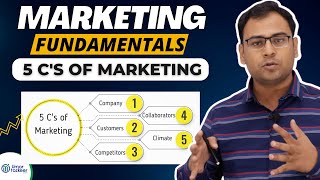
The 5 Cs Framework is a situational analysis tool used before building any marketing strategy. It forces you to examine five areas: Customer, Company, Competitors, Collaborators, and Context. Together, these five lenses give you a complete picture of the environment your brand operates in.
The framework grew out of Kenichi Ohmae's 3C model (Company, Customer, Competitor), which he introduced in his 1982 book "The Mind of the Strategist." Practitioners later added Collaborators and Context to capture the full picture of a market.
Most strategists run a 5C analysis at the start of a planning cycle, before writing a campaign brief, entering a new market, or launching a product. Without it, you risk building a strategy on assumptions instead of evidence.
Real-World Example
In 2021, Quibi shut down just six months after launch, despite raising $1.75 billion from investors. A thorough 5C analysis before launch would have surfaced the core problem: their target customer was already loyal to YouTube and TikTok, their competitors offered the same short-form content for free, and their context (COVID-19 lockdowns) meant users were watching on TV screens, not phones.
Quibi raised $1.75 billion and launched in April 2020, then shut down in December 2020. A 5C analysis would have flagged that the customer already had free alternatives (YouTube, TikTok), the context had shifted (people were home, not commuting), and no collaborator ecosystem existed to drive discovery. The company skipped situational analysis and paid the full price.
Why It Matters
The U.S. ice cream category, where Nestle and Unilever each held more than 21% market share before Halo Top entered Halo Top mapped the competitive field and found that neither dominant incumbent was serving buyers who wanted a genuinely low-calorie, high-protein pint they could eat in one sitting. Halo Top positioned directly against the gap in Nestle's and Unilever's ice cream lineups instead of competing head-on for the same indulgent-dessert positioning.
Result: Sales soared 680% to $373 million in 2017, pulling share directly from Ben & Jerry's and Haagen-Dazs. (2012-2017).
SourceA 2025 report by Crayon found that 44% of companies have zero visibility into what their competitors are doing. Sales teams with strong competitive intelligence are 108% more likely to report positive revenue impact, yet most businesses skip this step entirely.
The 5C analysis solves a specific business problem: it prevents you from designing a strategy in a vacuum. It is most useful when:
- You are entering a new market or category
- A competitor has made a major move and you need to respond
- Your existing strategy has stopped working and you need to diagnose why
- You are briefing an agency or new team member on your market
How It Works
MVMT's 2013-2018 growth window, as Instagram-native direct-to-consumer shopping was still new to the watch category Traditional watch brands were still selling primarily through department stores and jewelers; MVMT read the shift toward social-commerce discovery before its competitors adapted to it. MVMT built its entire go-to-market around Instagram-native, influencer-led discovery, a context traditional watch retailers had not yet built for.
Result: Revenue grew from $60M (2016) to $71M (2017), and Movado Group acquired MVMT for roughly $100M upfront (up to $200M total with earnouts) in 2018. (2013-2018).
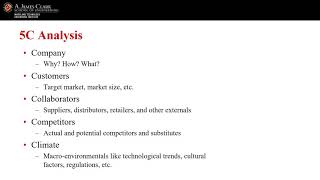
SourceEach "C" is a structured set of questions you answer before strategy work begins.
Customer, Who buys from you? What do they need? What job are they hiring your product to do? What are their frustrations with current options?
Company, What are your internal strengths and weaknesses? What resources, capabilities, and assets do you have? What is your brand known for?
Competitors, Who else is competing for the same customer? What are their strengths, weaknesses, and positioning? Where are the gaps you can occupy?
Collaborators, Who are your partners, suppliers, distributors, and agencies? What relationships enable your business to function?
Context, What external forces are shaping the market? This includes economic conditions, regulations, technology shifts, and cultural trends. Some versions call this "Climate" or use the PESTLE lens (Political, Economic, Social, Technological, Legal, Environmental).
Run the analysis by answering 3 to 5 specific questions under each heading. Write your answers in a shared document so the whole team is working from the same facts. Revisit it at least once a year, markets change, and stale analysis leads to stale strategy.
Common Mistakes
The most common mistake is treating the 5C analysis as a one-time document that gets filed and forgotten. It has value only when it drives decisions. Run it before every major strategy cycle, update it when your market shifts, and make sure the findings actually change something in your plan. If the output does not challenge at least one assumption your team held going in, you have not dug deep enough.
Start with the Customer "C" first, not the Company. Most teams default to listing internal strengths before they understand what the customer actually needs. Reversing the order forces outside-in thinking, which is where good strategy begins.
The One-Line Takeaway
You cannot build a strategy worth executing until you understand the terrain, and the 5 Cs give you the map.