The Psychology of Social Proof
When we don't know what to do, we look at what everyone else is doing. That single shortcut, millions of years old, baked into the survival circuitry of a social primate, is why a five-star rating outsells a three-star one, why empty restaurants stay empty, and why Booking.com tells you that 34 other people are looking at the same hotel room.
Social proof is the most quietly powerful lever in modern marketing, and most teams use only a fraction of it.
Quick Summary
- Social proof is a brain shortcut: when uncertain, people copy what others do
- Volume, specificity, and similarity to the viewer are the three dials that make proof work
- Displaying 5+ reviews can increase conversions by up to 270% (Spiegel Research Center, 2017)
- Negative social proof backfires badly, framing "most people do X" for a bad behavior increases that behavior
- Fake social proof (invented reviews, fake timers) carries FTC fines up to $53,088 per violation, the current inflation-adjusted rate in force in 2026
The Origin (Real Research)
The term social proof was coined by psychologist Robert Cialdini in his 1984 book Influence: The Psychology of Persuasion. But the underlying science is older.
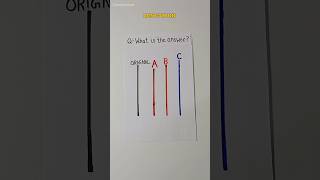
Muzafer Sherif's 1935 autokinetic-effect study showed that participants asked to judge an ambiguous moving light in a dark room quickly converged on whatever estimate the group produced, even when each person's private guess was wildly different. Solomon Asch's 1951 conformity experiments pushed further: 75% of subjects gave at least one obviously wrong answer about line lengths just to match the group.
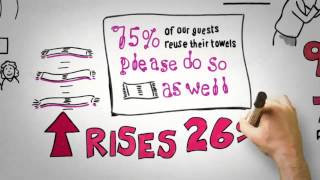
Cialdini later ran a famous field study with Noah Goldstein and Vladas Griskevicius (published in the Journal of Consumer Research, 2008) at a hotel chain. A door hanger reading "75% of guests in this room reused their towels" lifted reuse rates by 33% over the standard environmental message. The norm beat the moral appeal.
Social proof is one of Cialdini's 6 Principles of Persuasion (alongside reciprocity, commitment, authority, liking, and scarcity). It is the only one that works by outsourcing the decision to other people rather than making a direct argument. That is what makes it so scalable online.
How It Actually Works
Social proof is a heuristic (a fast decision shortcut the brain uses when information is incomplete or stakes feel uncertain). It runs strongest when three conditions hit at once:
- Uncertainty about what to do
- Similarity to the crowd making the choice
- Visible volume of people choosing
The vivid real-world proof: a 2014 Harvard Business School study by Michael Luca found that a one-star jump in Yelp rating drove a 5-9% revenue increase for independent restaurants. Nothing about the food changed, only the visible verdict of strangers.
Why the Numbers Are So Big
Here are the key statistics from 2024-2025 research:
- 93% of consumers read online reviews before deciding to purchase (Trustmary, 2025)
- 98% of consumers read online reviews for local businesses before visiting (BrightLocal, 2024)
- Showing just 5 reviews on a product page can increase conversions by 270% (Spiegel Research Center)
- Just 10 reviews on a page increases conversion rates by 53% (Yotpo, 2024)
- Shoppers who engage with reviews and user-generated content convert at 161% higher rates than those who do not (Yotpo, 2024)
- Customer photos on a product page increase purchase likelihood by 137% (Yotpo, 2024)
- 92% of B2B buyers are more likely to purchase after reading a trusted review (Trustmary, 2025)
- Replacing a landing page hero with a video testimonial can boost conversions by 80% (Trustmary, 2025)
- Products with 200+ reviews generate twice the revenue of products with fewer (Trustmary, 2025)
Booking.com layers social proof five times per page. On a single hotel listing you see: "Booked 15 times in the last 6 hours" (demand signal), "34 people are looking at this property" (scarcity signal), "9.1 Superb, based on 1,245 reviews" (quality signal), a "Most popular" badge (crowd wisdom), and user-uploaded photos (visual UGC). Each line targets a different type of uncertainty. Booking.com has credited these stacked nudges with double-digit conversion lifts (Taggstar, 2025).
The Six Types of Social Proof
Leatherman's ecommerce homepage, via a shoppable gallery of real customer photos and videos pulled from Instagram UGC reads as more authentic than brand-created content because it's visibly made by real buyers rather than a marketing team, exactly the 'wisdom of the crowd' + peer-similarity mechanism this section describes. Leatherman built a shoppable visual gallery linking each customer photo directly to the product shown, on top of a collected base of 22,000+ reviews.
Result: The shoppable UGC gallery achieved a 12% click-through rate, and shoppers who viewed the UGC gallery were 48% more likely to return to the site afterward. (Measured across the gallery's rollout period).
SourceNot all social proof is equal. Different buyers respond to different signals.
| Type | Example | Works Best For |
|---|---|---|
| Customer reviews | Star ratings + written text | E-commerce, SaaS trials |
| Expert endorsement | "Recommended by dermatologists" | Health, finance, B2B |
| Celebrity / influencer | Brand partnership posts | Consumer goods, fashion |
| User-generated content (UGC) | Customer photos and videos | Fashion, food, travel |
| Wisdom of the crowd | "10,000+ companies use this" | Enterprise software |
| Peer / friend activity | "Your colleague Sarah uses this" | B2B, LinkedIn ads |
UGC (user-generated content) is photos, videos, or posts made by real customers, not the brand. Consumers rate UGC as 2.4 times more authentic than brand-created content (Trustmary, 2025).
Real Company Examples
Mutjutin (E-commerce, 2023)
A Finnish e-commerce brand added customer reviews and social proof badges to its product pages and social media ads. Result: 140% sales increase and a 22% reduction in marketing spend, the same budget went further because trust was already established before the click (Trustmary, 2025).
MVMT Watches (D2C, 2024)
MVMT, the direct-to-consumer watch brand, built a system to collect reviews at scale. They crossed 30,000 reviews and answered over 1,350 customer questions publicly on product pages.
The public Q&A acts as social proof on its own, it signals that real buyers had real doubts, and those doubts got real answers (Yotpo, 2024).
Leatherman (Tools, 2024)
Leatherman added shoppable UGC galleries (grids of real customer photos, each linked to the product shown). The result: a 12% higher click-through rate from those galleries compared to standard product links (Yotpo, 2024).
Notification Popups (Aggregate, 2025)
Real-time purchase notification tools (such as Provesrc and Fomo), which show "Sarah from Austin just bought this 4 minutes ago," report an average conversion lift of 10-15% across 18,000+ stores. Some campaigns have seen lifts as high as 32% (Provesrc, 2025).
How to Apply Social Proof (Step by Step)
1. Show volume, not just stars
"4.8 stars (12,431 reviews)" beats "4.8 stars" because volume is the credibility signal. A 5.0 with three reviews looks like the founder's friends wrote them.
2. Match the proof to the buyer
A B2B SaaS landing page should show logos and quotes from companies that look like the prospect's company, not generic Fortune 500 trophies if you're selling to startups. Similarity is the multiplier.
3. Use specific, recent proof
"Joined by 2,847 marketers this month" outperforms "Join thousands" because specificity signals truth. Round numbers feel made up. Stale reviews hurt: 83% of consumers consider reviews untrustworthy if they are more than one month old (Trustmary, 2025).
4. Surface negative reviews intentionally
Northwestern's Spiegel Research Center (2017) found that products with a perfect 5.0 rating actually convert worse than products in the 4.2-4.5 range, buyers recognize that perfection is suspicious. Let negative reviews show. Respond to them professionally.
5. Place it near the decision point
The conversion lift from social proof is highest when it appears next to the "Buy" or "Sign Up" button, not buried on a testimonials page that 4% of visitors ever see.
6. Automate collection
Set up email or SMS triggers to request a review 3-7 days after delivery or first use. Waiting longer than 30 days means the emotional high of a new purchase has faded.
For B2B companies: case studies beat testimonials because they tell a story. The formula that works is: "Company X had Problem Y. They used our product to do Z. Result: specific metric in specific timeframe." Avoid vague language like "we saw improvements." Buyers want numbers.
Where Social Proof Backfires
The Negative Social Proof Trap
Social proof curdles fast when you accidentally signal a bad behavior as the norm. Telling people "30% of customers don't complete setup" actually increases incomplete setups, you've made incompletion feel normal.
The textbook case: the Petrified Forest National Park in Arizona once posted signs reading "Many past visitors have removed petrified wood from the park, changing the natural state of the Petrified Forest." Theft rates tripled. When rangers switched to signs highlighting that most visitors leave the park untouched, theft dropped.
If you must reference a bad behavior, frame the positive: "Most of our customers complete setup in under 10 minutes."
Fake Social Proof and the FTC
Fashion Nova's website review system, using a third-party review-management tool The FTC alleged the displayed rating didn't reflect all submitted reviews, only 4- and 5-star ones were auto-published while lower-starred reviews were held back indefinitely, exactly the artificially-inflated-average pattern that misleads buyers. From late 2015 to November 2019, Fashion Nova automatically posted 4- and 5-star reviews but never approved or posted the hundreds of thousands of lower-starred reviews it received, in the FTC's first case over a company concealing negative reviews.
Result: Fashion Nova paid a $4.2 million settlement to the FTC and was barred from suppressing customer reviews going forward, with the FTC issuing consumer refunds from the case as late as 2025. (Practice ran 2015-2019; settlement finalized 2022).
SourceIn 2024, the FTC issued a final rule banning fake reviews, fake testimonials, and suppression of negative reviews. Fines reach $53,088 per violation (the current inflation-adjusted rate). Beyond the legal risk, the reputational damage is worse: a single Reddit thread exposing a fake "Only 2 left!" widget or a purchased review can drive a public backlash that no ad budget can undo.
Do NOT invent social proof. This includes: fake "X people are viewing this right now" counters with no real data, purchased reviews, reviews from employees posing as customers, and suppressing negative reviews to maintain an artificially high rating. Each of these is now explicitly covered by the 2024 FTC rule. The fine per violation is $53,088, and that is before reputational damage.
The Empty Restaurant Problem
Social proof can also work in reverse during launch. A product page with zero reviews, a follower count of 41, and no customer logos signals "nobody has tried this yet." This is the cold-start problem.
Solutions: launch with a beta group who leave genuine reviews, partner with a respected figure for a genuine endorsement, or use early-adopter counts ("Be one of our first 100 customers") to frame scarcity rather than emptiness.
The One-Line Takeaway
If you want people to choose you, show them that people like them already did.